
What the Research Actually Shows
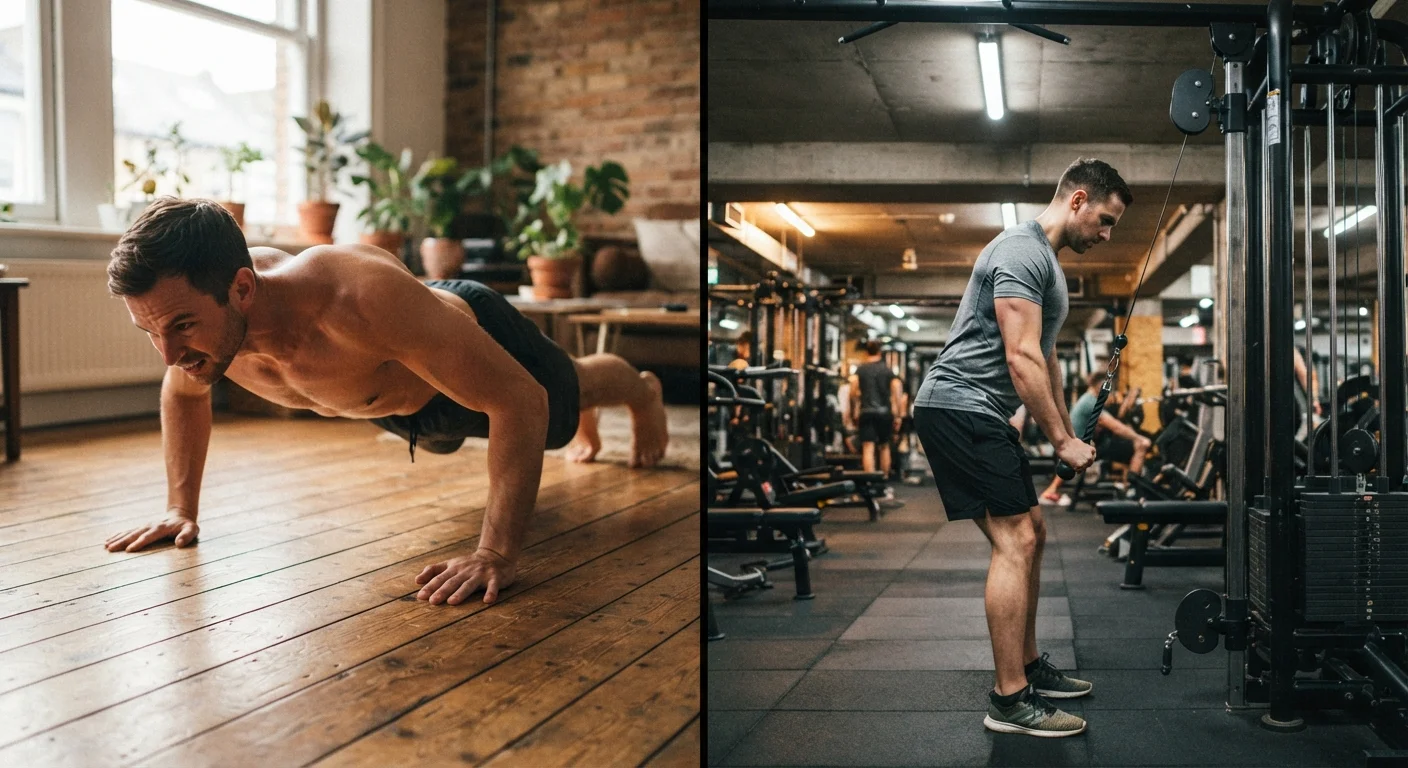
The strength-training literature has grown substantially over the past decade, and the findings challenge a common assumption: that gym machines are inherently superior for building strength. Studies comparing resistance modalities - including a 2019 review published in the Journal of Human Kinetics - suggest that when total training volume (sets × reps × load) is equated, bodyweight and machine-based training produce similar gains in muscular strength and endurance, particularly in untrained or recreationally active individuals.
Where machines hold a measurable edge is in load precision. Being able to add 2.5 or 5 pounds to a stack makes progressive overload - the gradual increase in training stimulus that drives adaptation - straightforward to track and manage. Bodyweight training requires more creativity to achieve the same effect: elevating feet during push-ups, slowing tempo, reducing rest periods, or advancing to harder movement variations like single-leg squats.
That said, bodyweight training engages a broader array of stabilizing muscles because the body must control its own position in space. This can support what researchers call functional fitness - strength that transfers to everyday movement. For readers building a zero-cost fitness routine, this is meaningful: you're not sacrificing quality, just trading equipment convenience for adaptability.
$432
Average annual US gym membership cost
Based on reported averages from fitness industry surveys; actual costs vary widely by location and facility type.
~Equal
Strength gains: bodyweight vs. machine (equated volume)
Multiple resistance training reviews suggest similar hypertrophy and strength outcomes when training volume is matched between modalities.
50%+
Adults who report dropping gym memberships within 6 months
Industry data consistently shows high gym dropout rates, often attributed to cost, inconvenience, and time barriers.
Head-to-Head: Key Practical Differences
Beyond the laboratory, practical factors determine which approach actually works for a given person's life.
| Criterion | Bodyweight Training | Gym Machines |
|---|---|---|
| Cost | $0 ongoing | $30-$60/month typical |
| Location flexibility | Anywhere | Gym only |
| Load progression ease | Requires creative variation | Simple weight increments |
| Stabilizer muscle engagement | High | Lower (guided movement) |
| Isolation exercises | Limited | Extensive options |
| Injury risk for beginners | Low with proper form | Low with machine guidance |
| Strength gains (equated volume) | Comparable per research | Comparable per research |
The cost difference is the most significant for budget-conscious readers. A standard gym membership in the US ranges from roughly $30 to $60 per month - that's $360 to $720 annually, not counting initiation fees. Bodyweight training carries no ongoing cost. Over a few years, that gap is substantial. For a deeper look at what free fitness actually demands of you, see the honest trade-offs of exercising without a gym or coach.
Progressive Overload Without Equipment
The most common concern about bodyweight training is the ceiling problem: once push-ups feel easy, what's next? The answer is a structured progression ladder. Research supports tempo manipulation, range-of-motion increases, and leverage changes as valid substitutes for adding external load - they increase mechanical tension and metabolic stress in ways that drive continued adaptation.
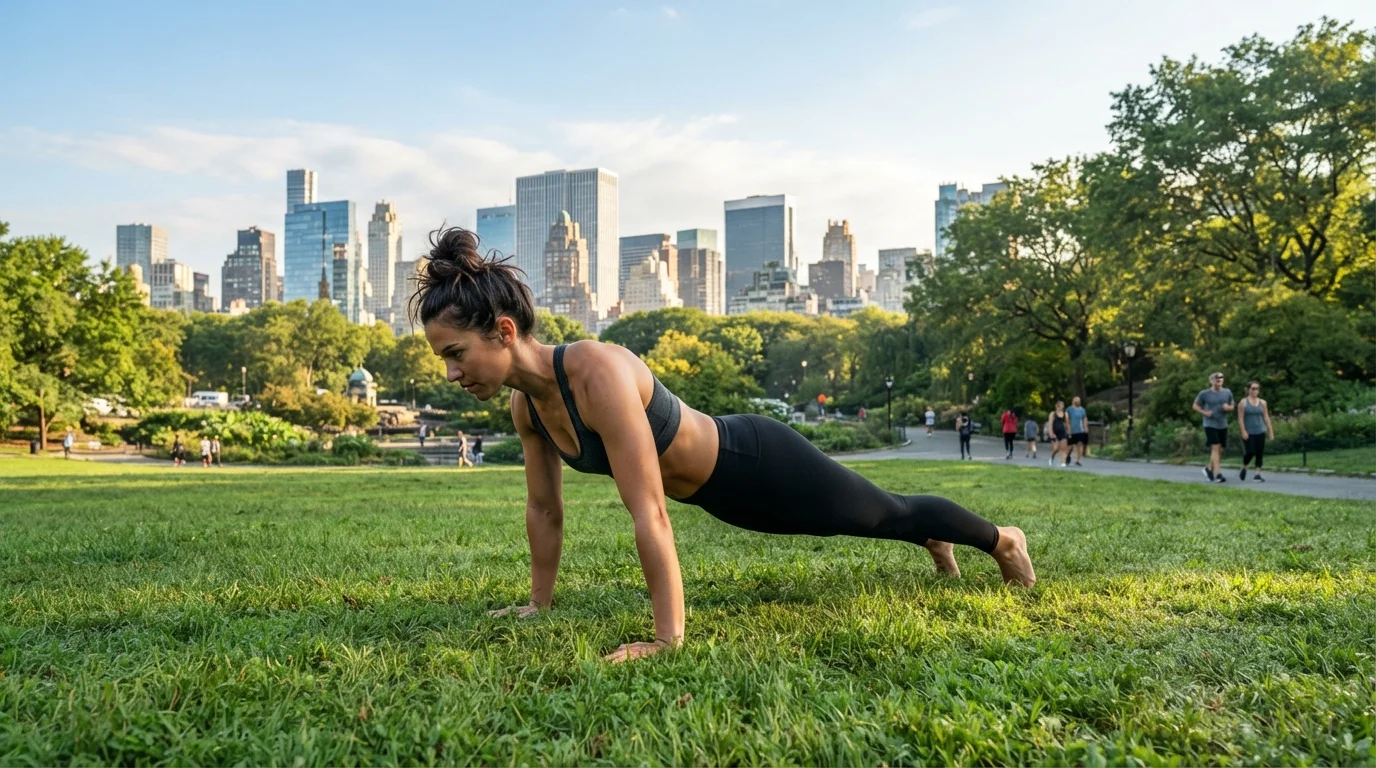
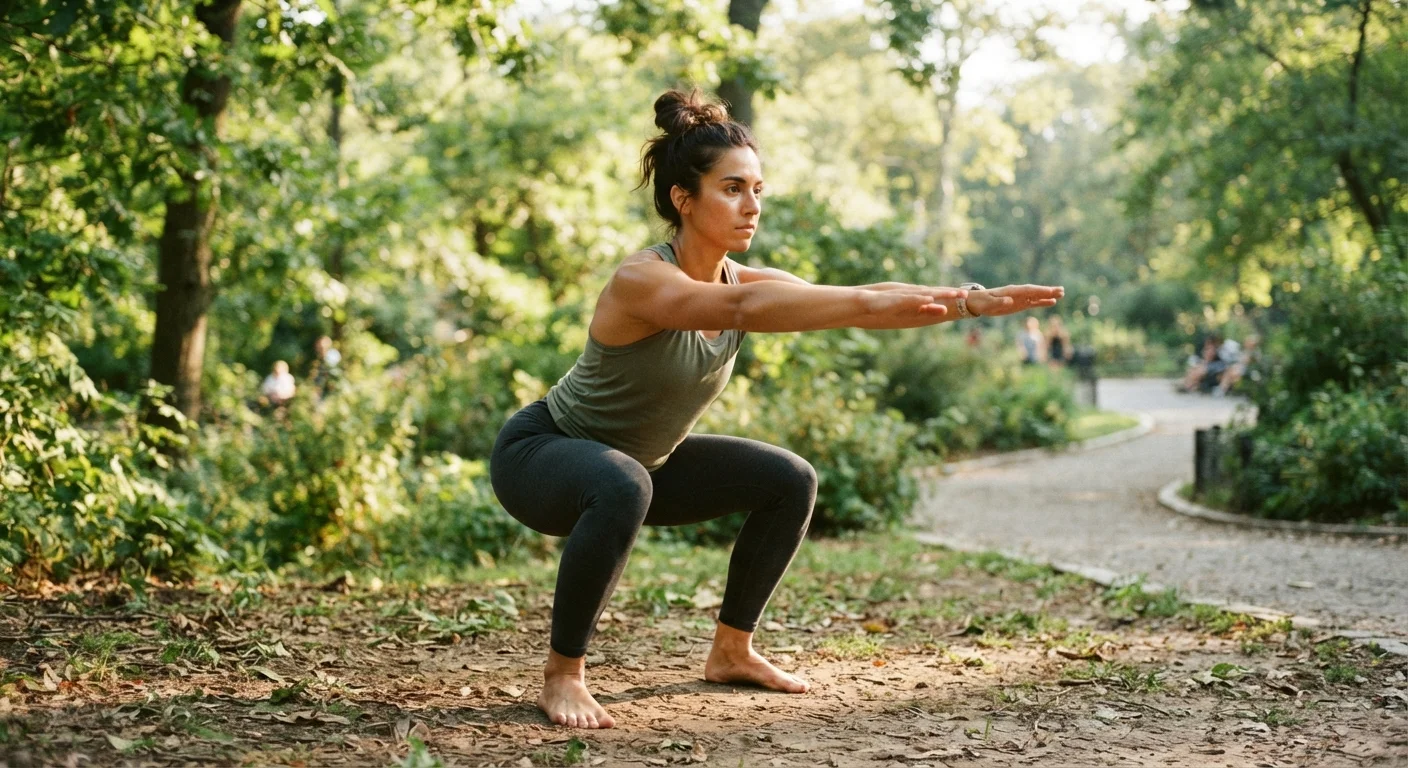
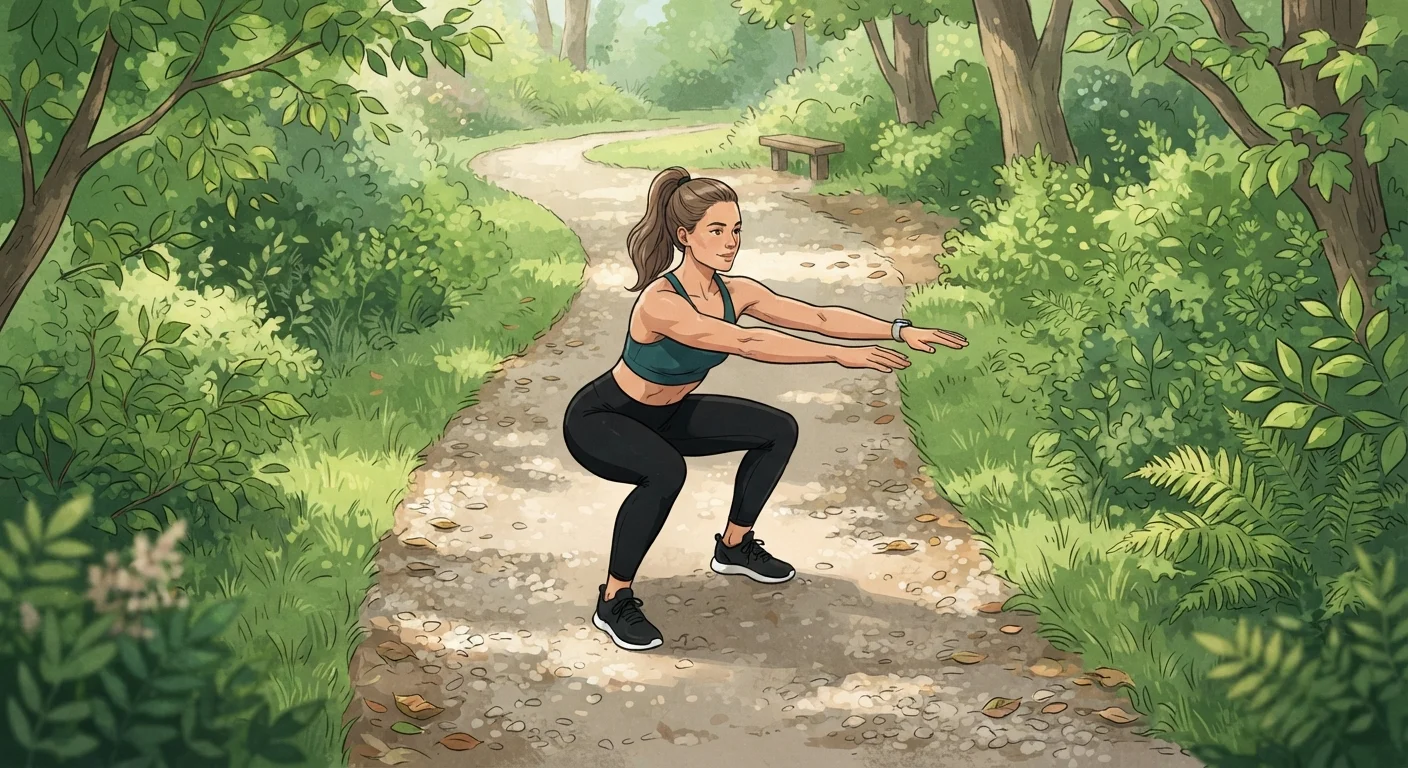
A rough progression for upper-body pushing, for example, moves from incline push-ups → standard push-ups → decline push-ups → archer push-ups → eventually pseudo-planche variations. Each step increases difficulty without any equipment. Similarly, lower-body work progresses from two-leg squats to Bulgarian split squats to pistol squats. A complete reference for equipment-free fitness can help you map out these movement progressions in detail.
If you want to audit whether your current approach is actually creating enough progressive challenge, the free fitness audit checklist is a practical starting point.
This article is for general informational purposes only and does not constitute medical or fitness advice. Consult a qualified healthcare or fitness professional before starting a new exercise program, especially if you have any existing health conditions or injuries.