
Why Most Beginners Stall Before They Start
The most common reason people never establish an exercise habit isn't laziness - it's decision overload. When every fitness source tells you to track macros, buy resistance bands, and follow a six-day split, starting feels like a project that requires research, money, and gear you don't own. That friction is enough to indefinitely postpone day one.
The reality is simpler: your body does not require a gym membership, a fitness tracker, or a specific program to begin adapting. It requires movement, applied consistently enough to create a new pattern. Everything else - the apps, the equipment, the optimized schedules - comes later, if at all.
The other common stall point is an all-or-nothing mindset. Beginners often feel that a 15-minute walk "doesn't count" compared to a real workout. It counts. What doesn't count is skipping it because it felt too small.
Lower the bar to build the habit
If day one feels too ambitious, make it smaller. A 10-minute walk around the block still counts. The psychological win of completing something - however modest - builds more momentum than skipping a harder session. Start embarrassingly small if you need to.
What Exercise Actually Does to Your Body
Understanding what's happening under the surface helps you stay patient during the weeks before results are visible. When you exercise, your cardiovascular system works harder to deliver oxygen to muscles. Over time, your heart becomes more efficient at this - a process called cardiovascular adaptation. Your muscles, placed under load, develop small tears that repair slightly thicker and stronger. This repair process is why rest days are not optional.
Early gains for beginners are largely neurological: your brain gets better at recruiting muscle fibers efficiently before those fibers actually grow. This is why beginners often feel stronger after just a week or two even when no visible muscle change has occurred.
Cardiovascular adaptation
The process by which your heart and lungs become more efficient at delivering oxygen during exercise, improving over weeks of consistent aerobic activity.
DOMS
Delayed onset muscle soreness - the mild achiness felt one to two days after unfamiliar exercise. It's a normal sign of muscle adaptation, not injury.
Bodyweight exercise
Any movement that uses your own body as resistance - squats, push-ups, lunges - requiring no equipment or cost.
Minimum effective dose
The smallest amount of exercise that produces a genuine training benefit - useful for setting realistic starting expectations without overcommitting.
Progressive overload
Gradually increasing the challenge of your workouts over time - more reps, harder variations, or longer duration - so your body keeps adapting.
Recovery
The rest period between exercise sessions when your muscles repair and grow stronger. Without adequate recovery, progress stalls and injury risk rises.
Sleep and nutrition support these adaptations, but you don't need a perfect diet to benefit from starting. Movement and recovery are the two core inputs. For a plain-language overview of movement types and recovery concepts, the Free Fitness Habits reference guide is a useful companion to this article.
The Minimum Effective Dose: How Little Is Enough to Begin
"Minimum effective dose" means the smallest amount of exercise that produces a real training effect. For an absolute beginner, that threshold is low - which is encouraging news. Research consistently shows that even short bouts of moderate activity, accumulated over the week, produce meaningful health improvements compared to sedentary baselines.
A practical starting target: 20 to 30 minutes of movement, two to three times per week. That movement can be walking, bodyweight exercises, or a mix of both. The goal in week one is not to be tired - it's to finish each session feeling like you could have done a little more. That margin is what keeps you coming back.
- Walking: Free, low-impact, and genuinely effective for cardiovascular health. A brisk 20-minute walk counts.
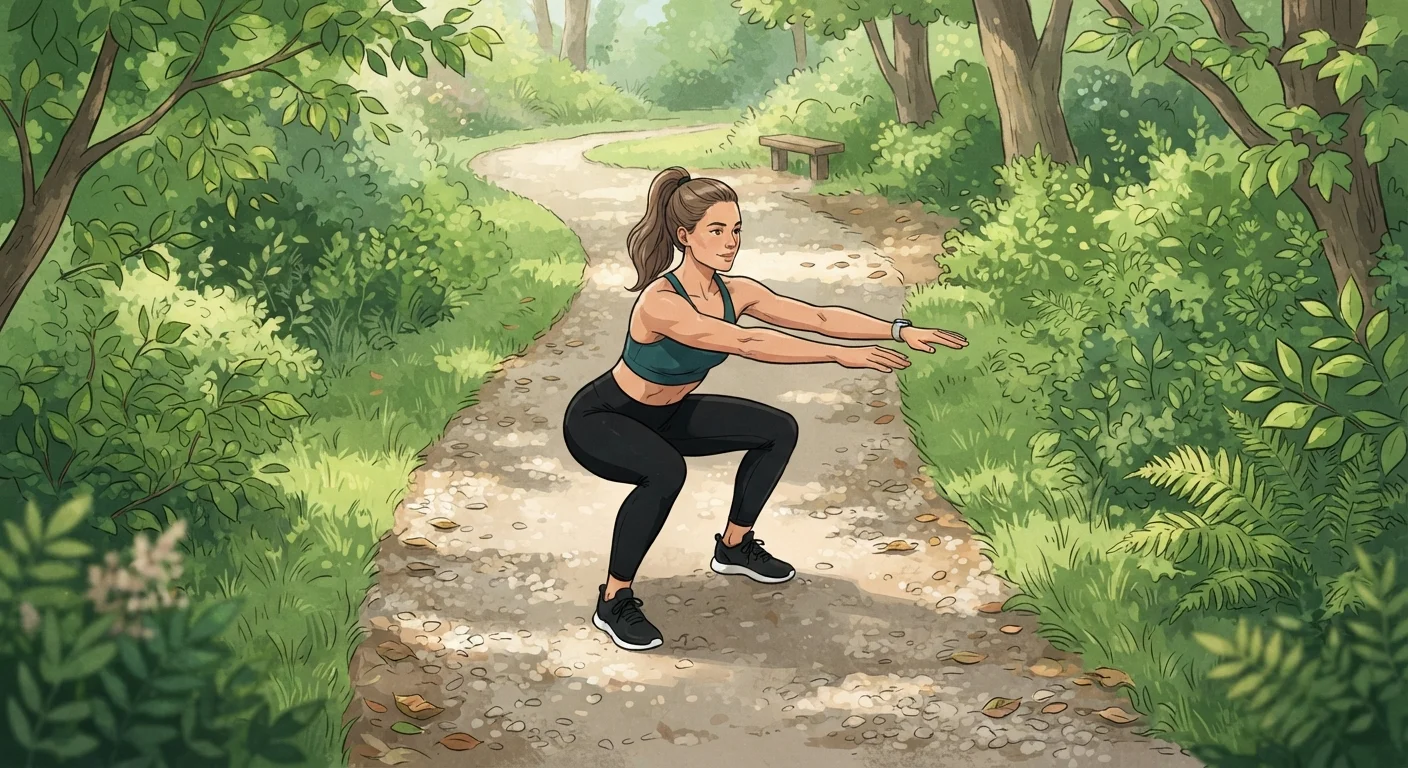
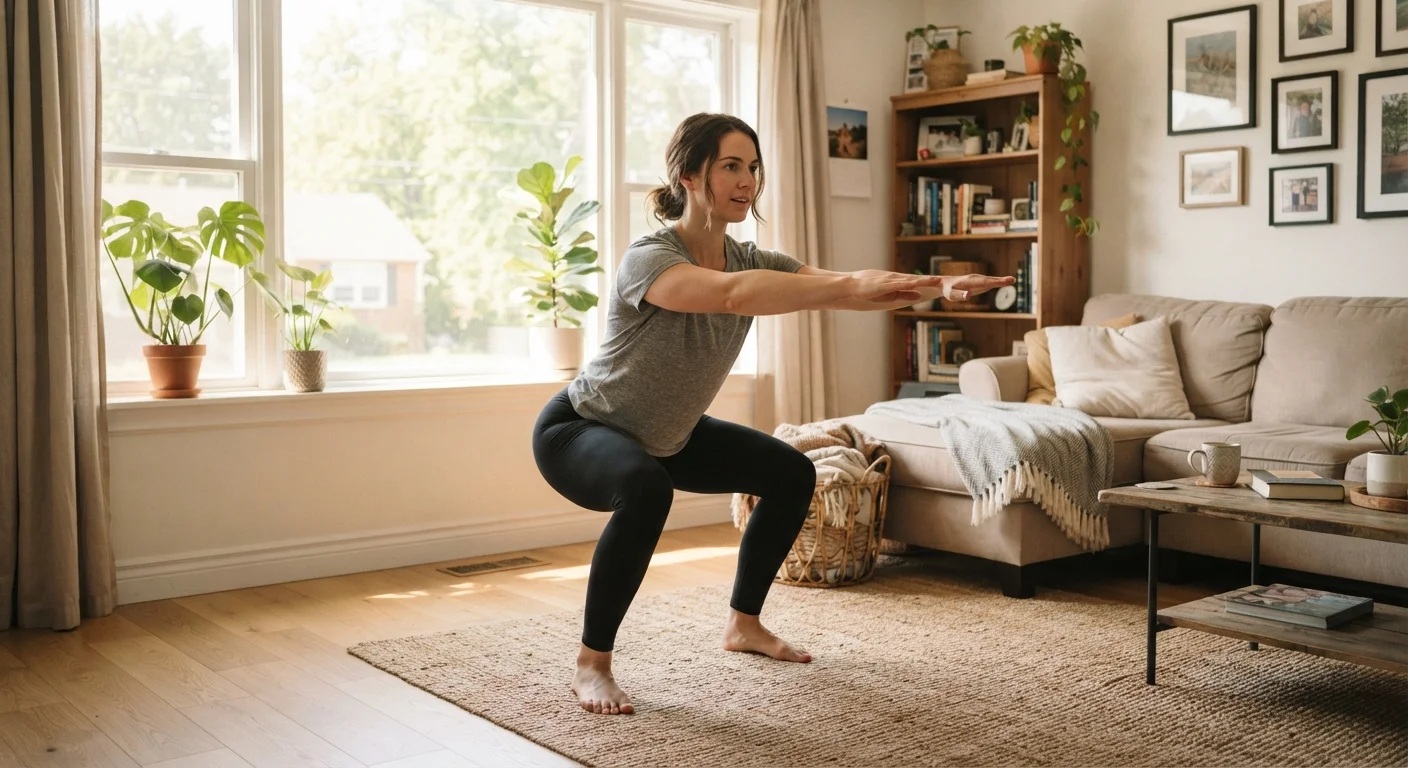
- Bodyweight squats, push-ups, and lunges: These hit major muscle groups without any equipment.
- Static stretching or mobility work: Underrated for beginners who have been sedentary - it reduces injury risk and improves how movement feels.
This article provides general fitness information only and is not a substitute for personalized medical or exercise advice. If you have any health conditions or concerns, consult a qualified healthcare professional before beginning a new exercise routine.
Your First Four Weeks: A Simple, Free Framework
Structure reduces the number of decisions you have to make in the moment, which is why loose plans fail and simple frameworks stick. Here's a four-week approach that requires nothing but time and floor space.
- Weeks 1-2: Build the on-ramp
- Two sessions per week. Each session: 10 minutes of walking (outdoors or around your home), followed by 10 minutes of bodyweight movement - squats, push-ups from knees if needed, and a standing march. Keep effort at a level where you can hold a conversation.
- Weeks 3-4: Add a third session
- Three sessions per week. Extend your movement block to 15-20 minutes. Introduce one or two new exercises - lunges, glute bridges, or a plank hold. Notice which movements feel harder than expected; those are the ones worth prioritizing.
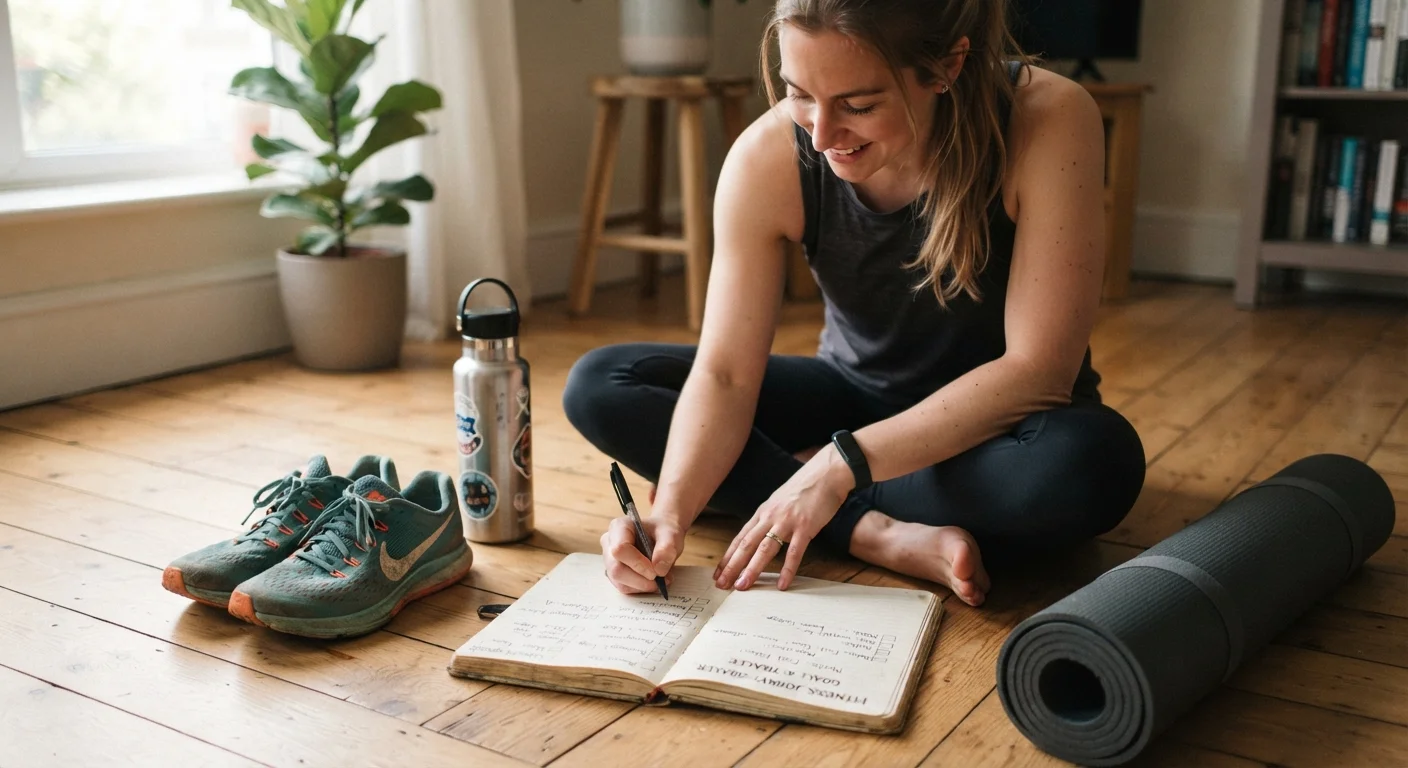
Pair this with a consistent time slot - same days, same approximate hour. Habit research suggests that linking new behaviors to existing routines (after morning coffee, before dinner) improves follow-through. Once you've completed four weeks, you'll have a real baseline to build from. The weekly fitness schedule guide covers how to structure a more balanced routine using free outdoor and indoor spaces once you're ready to expand.
How to Know You're Progressing
Beginners often measure progress by how they look, which is both the slowest signal and the least reliable motivator in the early weeks. Faster and more useful signals include:
- Effort perception: The same workout feels easier than it did two weeks ago.
- Recovery speed: Post-session soreness fades in one day instead of three.
- Movement quality: Your squat goes deeper, your push-up form is steadier.
- Energy and mood: Consistent reports from exercisers include better sleep quality and reduced daytime fatigue within two to four weeks of starting.
When a session starts feeling genuinely easy - not just manageable - that's your cue to add a small challenge: one more set, slightly faster walking pace, or a harder variation of an exercise. Progression doesn't require big jumps. Five percent harder, applied consistently, compounds over months.
If you want to check whether your emerging routine is balanced and effective, the Free Fitness Audit offers a practical checklist. And for a longer view, the lifelong fitness habit guide covers how to sustain and evolve a free routine over the long term.
Progress isn't always linear
Some weeks you'll feel stronger; others you'll feel flat. Life stress, poor sleep, and even weather affect how exercise feels. A bad week doesn't erase a good month. Consistency over a four-week span matters far more than how any single session felt.