

What Zero-Cost Fitness Actually Means
Zero-cost fitness is not a fitness trend or a lifestyle brand - it's a straightforward principle: your body is sufficient equipment. You don't need a monthly membership, a rack of weights, or a fitness app subscription to get meaningfully fitter. What you do need is an understanding of a few non-negotiable training concepts.
The foundational idea is that physical adaptation - getting stronger, fitter, or more mobile - is a biological response to physical stress. Your body doesn't know whether that stress came from a $200 gym machine or a set of push-ups on your kitchen floor. What it responds to is consistent challenge, adequate recovery, and gradual progression over time.
Zero-cost fitness works when you treat it with the same seriousness as any paid program. That means scheduling sessions, tracking progress in some form, and building in rest. Our complete reference guide covers the key movement types and effort levels to help you structure this intentionally.
This Is General Information, Not a Training Plan
The principles described here are based on broadly accepted exercise science concepts. Individual fitness needs vary depending on age, health status, and goals. If you have a health condition or haven't been active for an extended period, consult a healthcare professional before starting a new exercise routine.
The Core Ingredients: Movement, Progression, and Recovery
Three variables drive fitness improvement regardless of whether you're spending money or not: movement volume (how much you do), progressive overload (gradually increasing challenge), and recovery (allowing your body to adapt).
In a zero-cost context, progressive overload doesn't require adding weight plates. You can increase difficulty by adding reps, slowing the tempo of a movement, reducing rest time between sets, or advancing to harder exercise variations - for example, moving from a standard push-up to an incline push-up, then a decline push-up. This keeps your body adapting without spending a dollar.
Recovery is equally important and equally free: adequate sleep, hydration, and stretching are the primary tools. Many people underestimate how much improvement happens during rest, not during the workout itself.
150 min
Weekly moderate aerobic activity recommended for adults
Per U.S. Department of Health and Human Services Physical Activity Guidelines for Americans, this target is fully achievable through free activities like walking, jogging, or bodyweight circuits.
2x/week
Muscle-strengthening sessions recommended per week
The same federal guidelines recommend muscle-strengthening activities on at least two days per week - a target met entirely through bodyweight exercises.
~$600
Average annual gym membership cost in the U.S.
Industry data consistently places average U.S. gym membership costs between $40-$70 per month, making zero-cost alternatives a meaningful financial saving over time.
Free Spaces Are Real Training Environments
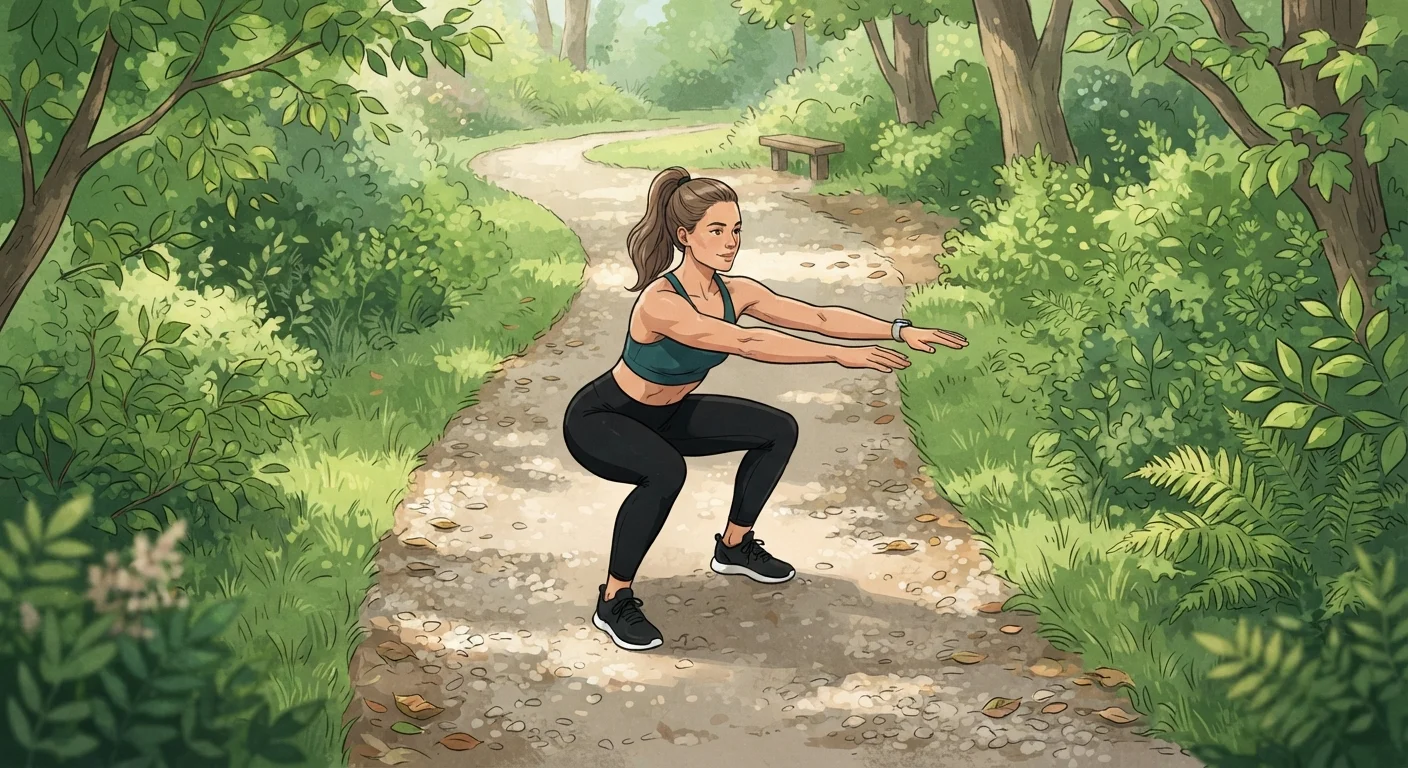
A common misconception is that exercising for free means working out in a cramped apartment with poor results. In reality, outdoor environments offer varied terrain, fresh air, and enough space for circuits, interval runs, and mobility work that challenge the body in ways a treadmill can't replicate.
Public parks with open grass, stairways, park benches, and playground equipment provide genuine resistance training opportunities. Pavements and trails support walking and running programs. Walking, in particular, is backed by decades of research as one of the most accessible and effective low-impact fitness tools available.
For indoor options, your living room floor provides enough space for a comprehensive bodyweight circuit targeting every major muscle group. See how to structure a full weekly schedule using only these spaces for a practical framework.
Honest Limitations Worth Knowing
Zero-cost fitness is genuinely effective - but it isn't without trade-offs. Without coaching or structured accountability, it's easier to skip sessions, plateau, or develop poor movement habits that lead to injury over time. Bodyweight training also has limits for building maximum strength or muscle mass, since heavy external load is difficult to replicate without equipment.
Motivation can also be harder to sustain when there's no social environment or financial commitment to justify showing up. These are real challenges, not excuses. Understanding what you gain and give up by going gym-free helps you plan for these gaps rather than being caught off guard by them.
The solution isn't to abandon the approach - it's to compensate with structure. A written weekly plan, a consistent time slot, and a clear sense of your current fitness goal do more to sustain progress than any paid service.
Start With a Written Weekly Plan
Write down your intended workout days and times before the week begins - even if it's just three sessions. Research on habit formation consistently shows that a specific implementation plan (when, where, and what) significantly increases follow-through. A free notes app or a piece of paper is all you need.
This article provides general health and fitness information for educational purposes only. It is not a substitute for professional medical or fitness advice. Consult a qualified healthcare professional before beginning any new exercise program, particularly if you have an existing health condition.