
Why At-Home Grooming Is Worth Learning
Professional grooming appointments can run anywhere from $50 to over $100 per session depending on your dog's size and coat - and many groomers recommend visits every four to eight weeks. That adds up quickly. Learning to handle the basics at home isn't about doing it perfectly; it's about doing it consistently and cost-effectively.
Beyond the savings, regular hands-on grooming lets you notice changes in your dog's skin, coat, eyes, and ears early - before a small issue becomes a vet visit. As explored in the real cost of skipping routine pet grooming, neglecting grooming often leads to health problems that are far more expensive to treat. This guide is part of a broader hands-on home pet care resource for owners who want to do more themselves.
Essential Tools to Get Started
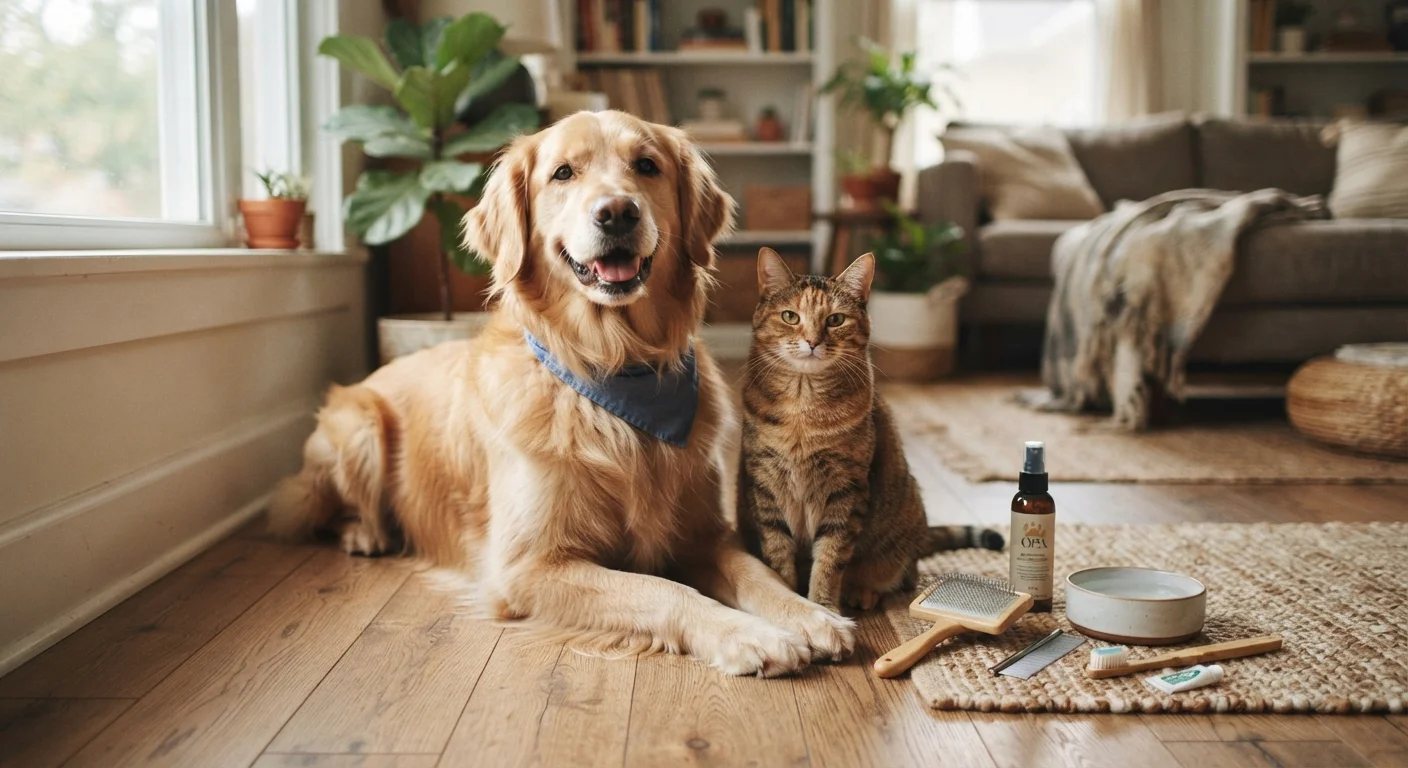
You don't need a full salon setup - just a handful of reliable tools suited to your dog's coat type. Here's what covers most grooming tasks:
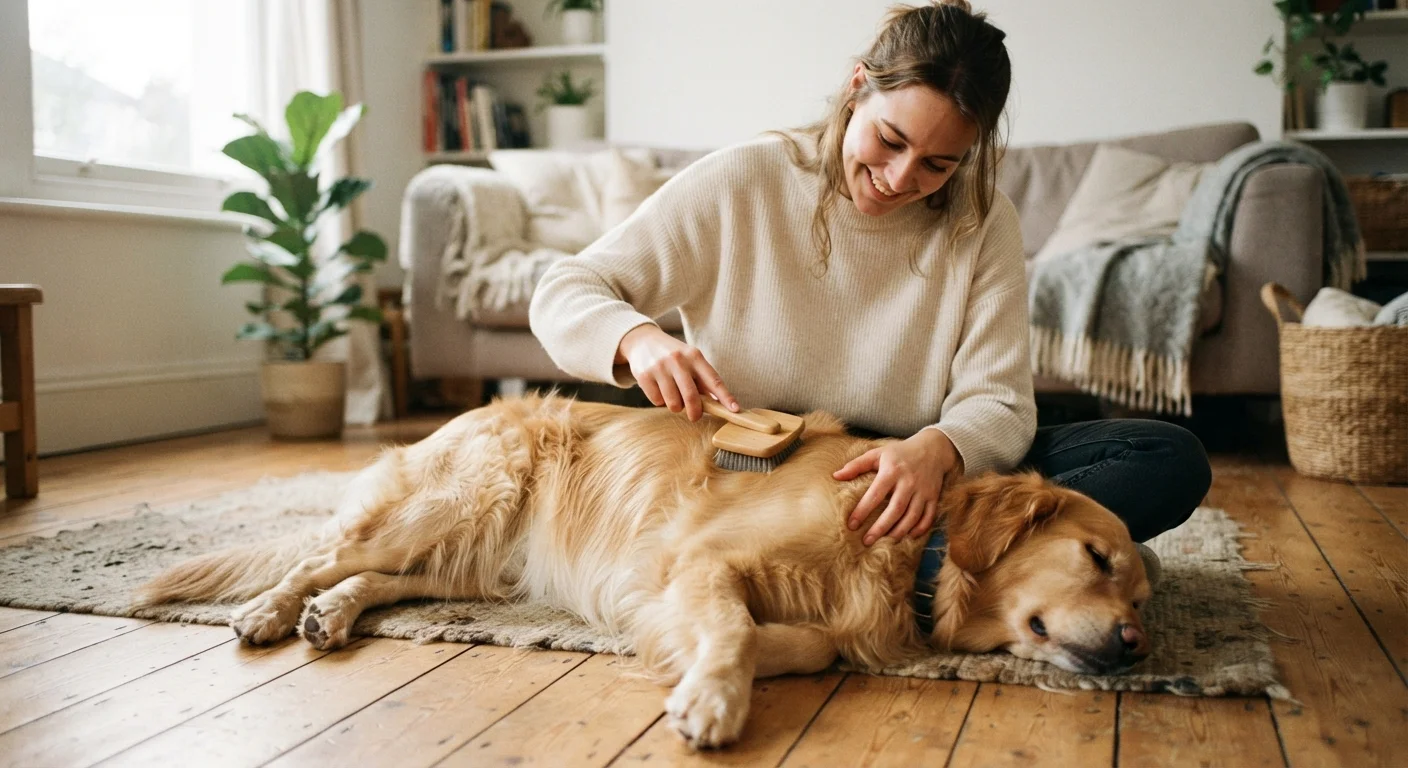
- Slicker brush: Removes loose hair and detangles most coat types. A staple for nearly every dog owner.
- De-shedding tool or undercoat rake: Useful for double-coated breeds that shed heavily. See how at-home brushing compares to professional deshedding to understand what each approach achieves.
- Dog-safe shampoo and conditioner: Formulated for canine skin pH - never use human products.
- Blunt-tipped scissors and thinning shears: For trimming around the face, ears, and paws.
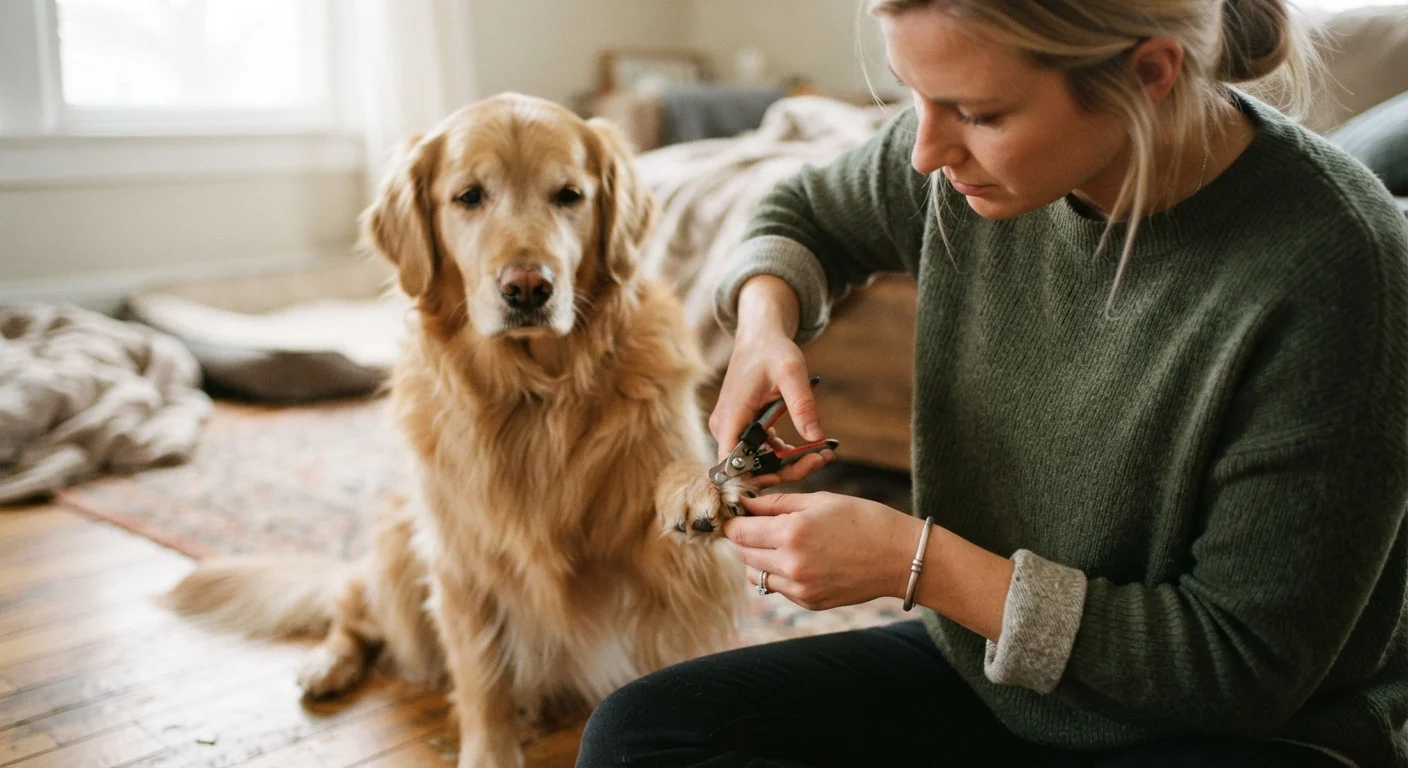
- Dog nail clippers: Either guillotine-style or scissor-style; choose what feels comfortable in your hand.
- Styptic powder: Stops bleeding quickly if you accidentally cut a nail too short.
- Cotton balls and veterinarian-recommended ear cleaner: For gentle outer-ear maintenance.
Quick
The blood vessel and nerve that runs through each of your dog's nails. Cutting into it causes pain and bleeding, which is why trimming small amounts at a time is important.
Double coat
A two-layered coat consisting of a dense, soft undercoat beneath a coarser outer layer. Common in breeds like Golden Retrievers and Huskies, it requires specific brushing tools and techniques.
Matting
Tangles in a dog's fur that have tightened into dense, knotted clumps. Mats can pull on the skin, cause discomfort, and hide skin problems - regular brushing prevents them from forming.
Styptic powder
A clotting agent applied to a bleeding nail to stop the flow of blood quickly. It's a standard safety item to keep on hand during nail trimming sessions.
Canine skin pH
Dogs have a different natural skin acidity level than humans. Using products formulated for dogs maintains this balance; human shampoos can disrupt it and cause irritation.
Undercoat rake
A grooming tool with widely spaced teeth designed to reach through the outer coat and remove loose fur from the dense undercoat without cutting the hair.
Bathing Your Dog the Right Way
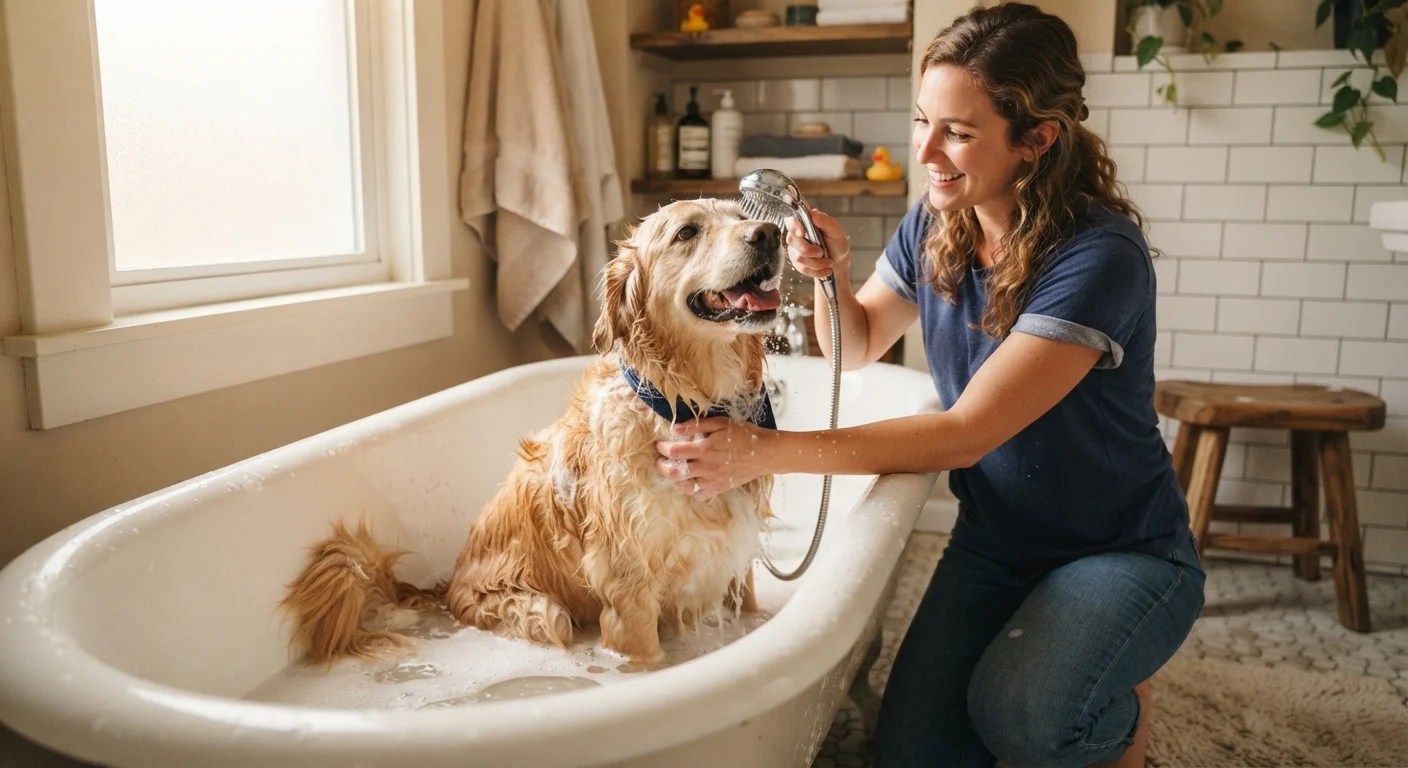
Before getting your dog wet, brush out any tangles - matted fur tightens further when soaked. Use lukewarm water and wet your dog thoroughly from the neck back, avoiding the eyes and ears. Apply a dog-formulated shampoo, lather gently working toward the skin, then rinse completely. Leftover shampoo residue is a common cause of itchy, flaky skin.
Dry your dog with an absorbent towel first, then a low-heat hair dryer on a gentle setting if your dog tolerates it - keeping the dryer moving and at a safe distance from skin. Never leave a wet dog in a cold room.
Make Bath Time Less Stressful
Place a non-slip mat in the tub before you start - this gives your dog secure footing and reduces anxiety significantly. Begin by letting your dog sniff and investigate the space before turning on water. A few small treats during the process can reinforce that bath time is a calm, positive experience.
Frequency matters: most dogs do well bathed every four to six weeks. Over-bathing strips natural oils from the coat. If your dog rolls in mud regularly or has a skin condition, your veterinarian can advise on a schedule that's right for your specific pet.
Brushing, Trimming, and Coat Care
Brushing frequency depends entirely on coat type. Short-haired dogs may only need weekly brushing, while long-haired or curly-coated breeds can require daily attention to prevent painful matting. Work section by section, brushing in the direction of hair growth and checking the skin underneath as you go.
For light trimming around the paws, face, or sanitary areas, use blunt-tipped scissors and work slowly with your dog in a calm, settled position. If your dog is uncomfortable or the coat requires a full cut, this is one area where weighing DIY versus professional grooming honestly makes sense. Some coat types - particularly tightly curled or double-layered - are genuinely easier to manage with occasional professional help even if you handle most grooming yourself.
Nails, Ears, and Teeth: The Often-Skipped Steps
These three tasks are the ones most home groomers put off - and the ones most likely to cause health problems when neglected.
Nails: Overgrown nails force an unnatural gait and can cause joint pain over time. Trim a small amount regularly rather than cutting back severely. Our detailed guide to nail trimming at home covers the most common mistakes and how to avoid them. Keep styptic powder nearby in case you nick the quick.
Ears: Wipe the visible outer ear with a cotton ball moistened with a veterinarian-approved ear cleaner. Never probe the canal. If you see redness, smell an odor, or notice your dog shaking its head frequently, those are reasons to contact your vet rather than clean more aggressively.
Teeth: Dental disease is one of the most common - and preventable - health issues in dogs. Use a soft toothbrush and dog-formulated toothpaste (never human toothpaste, which contains ingredients toxic to dogs) several times per week. Dental chews can complement brushing but are not a substitute for it.
All three of these routines become easier with repetition. Pairing them with calm praise and occasional treats - the same principles covered in teaching your dog to cooperate with basic commands - can dramatically reduce resistance over time. For more ways to protect your dog's health affordably, explore the budget pet health hub.
This article is for general informational purposes only and is not a substitute for personalized veterinary advice. Always consult a licensed veterinarian for concerns about your pet's health, skin conditions, or grooming needs specific to your dog's breed or medical history.