
Why Venue Type Matters More Than Destination
It's a pattern that repeats across continents: two travelers visit the same city, eat every meal within 200 meters of the main square, and leave convinced the destination is expensive. Meanwhile, a third traveler eats just as well — often better — for a third of the price, simply because they knew which types of venues to look for.
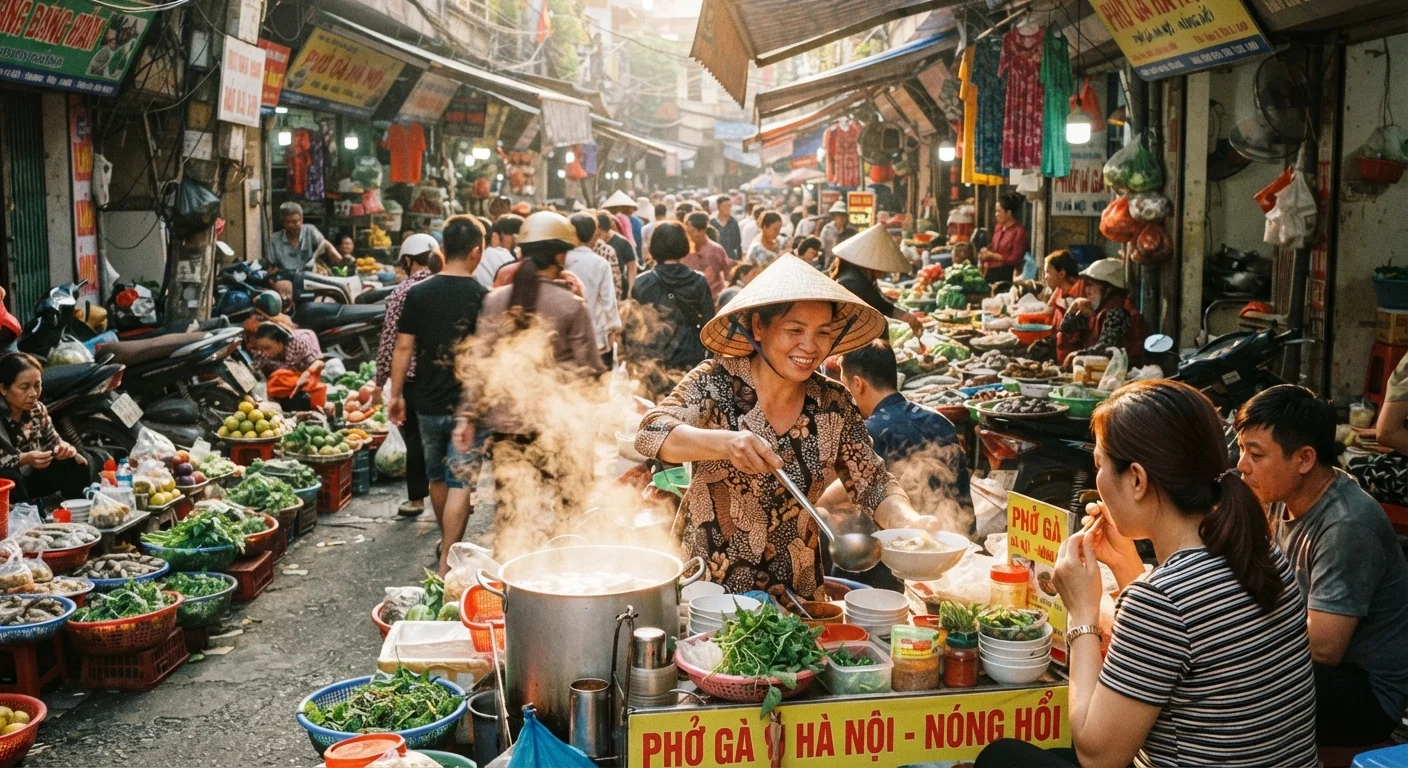
Food costs abroad aren't fixed by country; they're set by venue type. A bowl of pho in a Hanoi tourist café and the same bowl in a street-level family kitchen can differ by 300%. The dish is identical. The location and the clientele are not. Understanding this distinction is the foundational skill of eating well on a travel budget — and it applies whether you're in Bangkok or Mexico City, Eastern Europe, or Latin America.
The venues listed below aren't obscure or difficult to find. Most are in plain sight. What separates budget travelers who use them from those who don't is simply knowing what to look for — and being willing to walk past the first restaurant with an English menu and a laminated photo board.
Municipal and Covered Markets
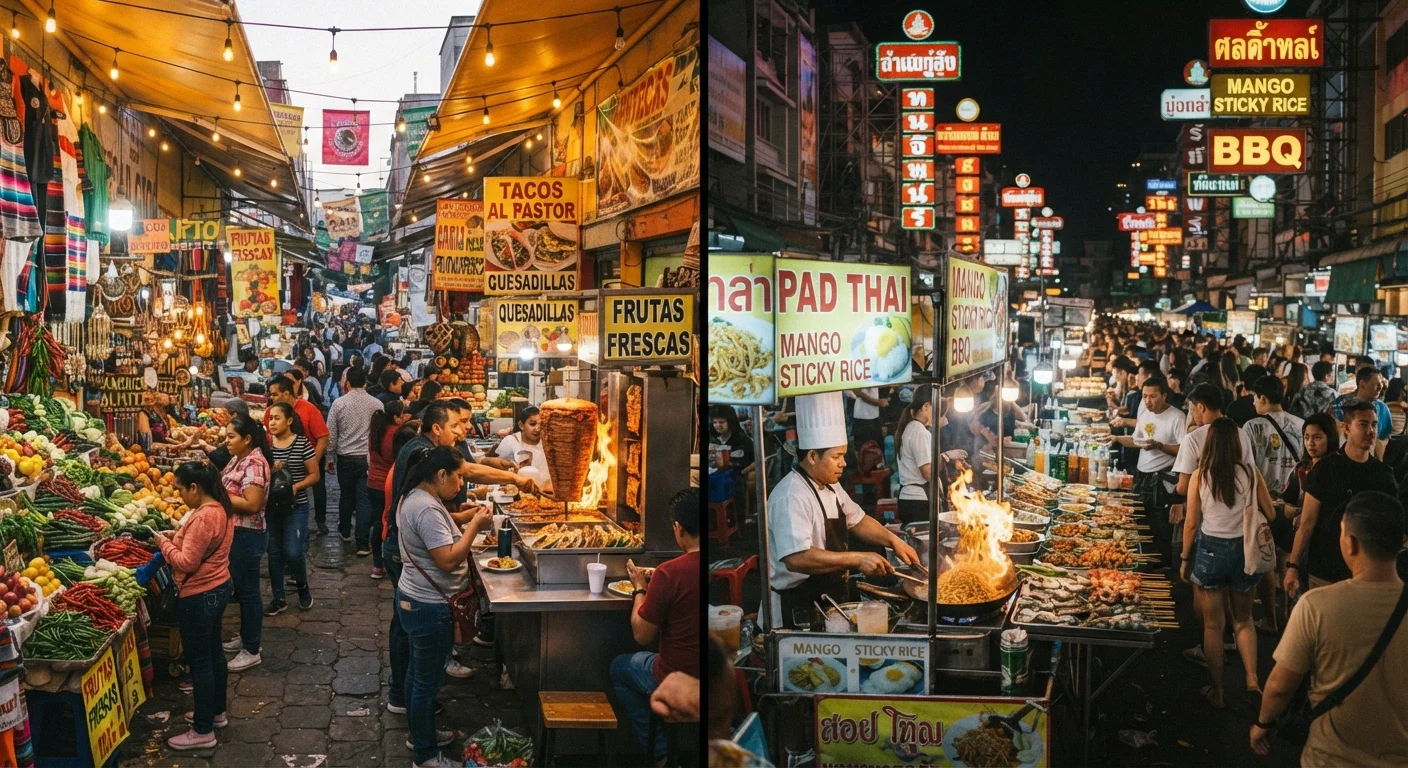
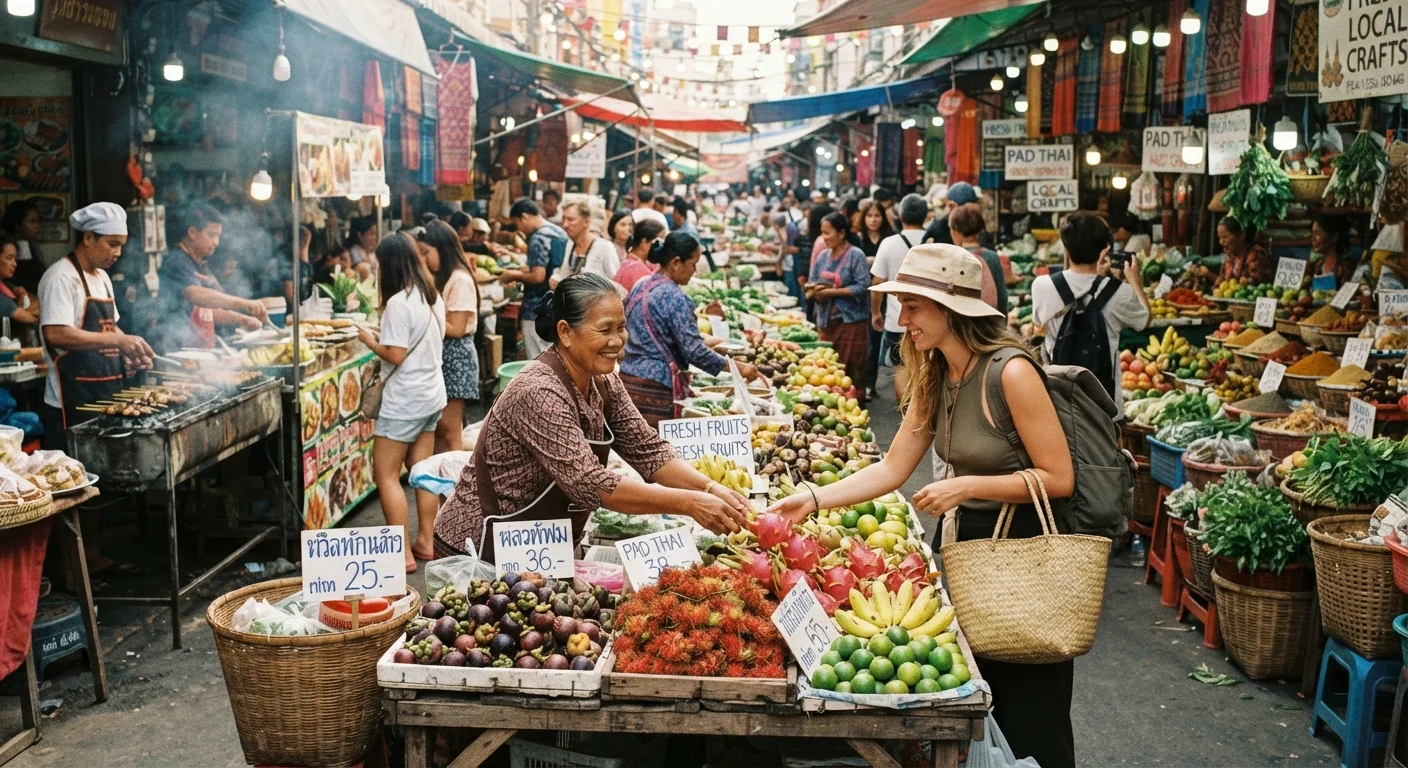
Most cities of any size have a covered or open-air municipal market — mercados in Latin America, souks in North Africa and the Middle East, wet markets across Southeast Asia. These aren't tourist attractions, even when tourists stumble into them. They exist to feed local residents, which means prices are calibrated to local incomes.
The food stalls concentrated around the edges and interior of these markets typically serve cooked meals: soups, stews, rice dishes, grilled meats, fresh juices. Portions are generous because the clientele are workers and families, not visitors trying a sample. In many markets, a full cooked lunch costs less than a coffee at a tourist café down the street.
Navigation tip: Head to the section with plastic stools and handwritten menus. If there's a queue of people who work in the market itself, that's the stall to eat at.
Market food stalls serve local workers — which means prices are calibrated to local incomes, not tourist budgets.
Worker Canteens and Lunch Counters
In many countries, workplaces don't have staff cafeterias — instead, workers eat at nearby canteens or lunch counters that have operated in the same spot for decades. These places are not listed in guidebooks. They often have no sign visible from the street, or a sign entirely in the local language. They open at lunch, serve two or three options, and close when the food runs out.
Finding them requires a short walk into the surrounding streets of any commercial or industrial neighborhood — away from the historic center or tourist zone. In parts of Southern Europe, these are sometimes called comedores or trattorias di quartiere. In parts of Asia, they operate as kopitiam stalls or simple rice shops. The format varies; the principle is consistent: low margin, high volume, food cooked for repeat customers who will return tomorrow.
These venues typically offer a set meal — a protein, sides, and sometimes a drink included — at a fixed price that reflects what working people can afford to spend daily.
Worker canteens operate on low margins and repeat customers — not one-time visitors — which keeps prices honest.
Set-Menu Lunch Restaurants
Across Europe, Latin America, and parts of Asia, sit-down restaurants that would feel expensive at dinner operate a fixed-price lunch menu — sometimes called menú del día, pranzo fisso, or lunch set — that offers multiple courses at a fraction of the à la carte price. This isn't a budget version of the restaurant; it's the same kitchen, often the same dishes, priced for the local midday crowd.
In Spain and Portugal, a three-course menú del día including bread and a drink commonly runs between €10–€14 in non-tourist neighborhoods. The same restaurant's dinner entrées might start at €18–€22. The gap is substantial, and the experience is nearly identical.
The key is to eat your main meal at lunch rather than dinner — a habit most locals already follow. For a more detailed breakdown of where this works best, see set lunch menus by region.
The same kitchen that charges €20 at dinner often serves three courses for €12 at lunch — same quality, different pricing logic.
Side-Street Food Stalls Two Blocks Off the Main Square
Proximity to tourist attractions is the single most reliable predictor of inflated food prices. Restaurants within direct sightlines of a cathedral, monument, or major museum pay higher rents and capture captive foot traffic — they price accordingly. Walking two blocks in any direction breaks that premium almost entirely.
This isn't speculation. The price markup near tourist attractions is well-documented: menus within a short walk of major landmarks frequently run 50–100% higher than equivalent food served nearby. The two-block rule — simply committing to walk two blocks minimum before choosing a place to eat — is one of the most consistently effective tactics for reducing daily food spend without sacrificing quality.
Street stalls and small restaurants in these adjacent streets serve local office workers, residents, and shopkeepers. Their continued existence depends on repeat business from people who know the difference between good food and tourist-grade mediocrity.
Committing to walk two blocks from any major landmark before choosing a restaurant is one of the highest-return food habits in travel.
University Canteens and Student-Area Restaurants
University neighborhoods — found in virtually every city with a significant student population — reliably contain some of the best-value food in any destination. Student budgets are tight by definition, and the restaurants that survive in those neighborhoods price to match.
Many universities operate canteens that are technically open only to enrolled students, but student-adjacent streets typically cluster with affordable noodle shops, cheap set-lunch spots, falafel counters, and casual cafes priced for people spending their own money on a limited income. The food quality is often excellent because competition is high and repeat business essential.
Identifying the nearest university district when you arrive in a city — and building in at least one meal there — is a simple strategy that consistently delivers value. These areas also tend to have good coffee, reliable Wi-Fi, and a relaxed atmosphere, which makes them practical as well as affordable.
Student neighborhoods are economically forced to keep prices low — which makes them reliably useful for budget travelers.
Supermarket Hot Food and Prepared Sections
Local supermarkets in many countries maintain hot food counters, prepared meal sections, or rotisserie stations that offer ready-to-eat food at grocery prices rather than restaurant prices. In Portugal, large supermarkets commonly sell roast chicken, rice, and salad as a complete meal. In Japan, convenience stores offer hot bento boxes and steamed items that represent genuine, balanced meals. In Eastern Europe, supermarket delis often sell pierogies, roasted meats, and soups by weight.
This isn't a compromise option — it's a structurally different pricing model. Supermarkets compete on price in a way that restaurants cannot. Prepared food sections benefit from that same competitive pressure. Grocery stores abroad are systematically underused by travelers who default to sit-down dining for every meal.
Combining one or two supermarket meals per day with one restaurant or market meal is a practical rhythm that many long-term budget travelers settle into — it allows for cultural eating experiences without blowing the daily food budget entirely.
Supermarket hot food counters operate on grocery margins, not restaurant margins — a consistent price advantage most travelers overlook.
Putting It Into Practice
None of these venues require special access, language fluency, or insider knowledge. They require willingness to look past the obvious and a basic mental checklist: Who is eating here? Is the menu written in the local language? Is this place within two blocks of a major attraction? The answers will usually tell you everything about what you're about to pay.
Use Queue Length as a Quality Signal
In markets and canteen-style settings, a line of local customers is one of the most reliable indicators of food quality and turnover — both of which matter for taste and food safety. A stall with no customers at peak lunch hour is a warning sign; one with a queue of workers or regulars is a good bet. This heuristic works across most regions and requires no language skills to apply.
Timing helps too. Many of the best-value venues — canteens, market stalls, set-lunch spots — operate on local meal schedules that don't align with tourist hours. Arriving at 11:30 a.m. rather than 1:00 p.m. often means fresher food, shorter queues, and the full menu still available. For a deeper look at how meal timing and location interact, see our guide on eating well abroad without spending like a tourist.
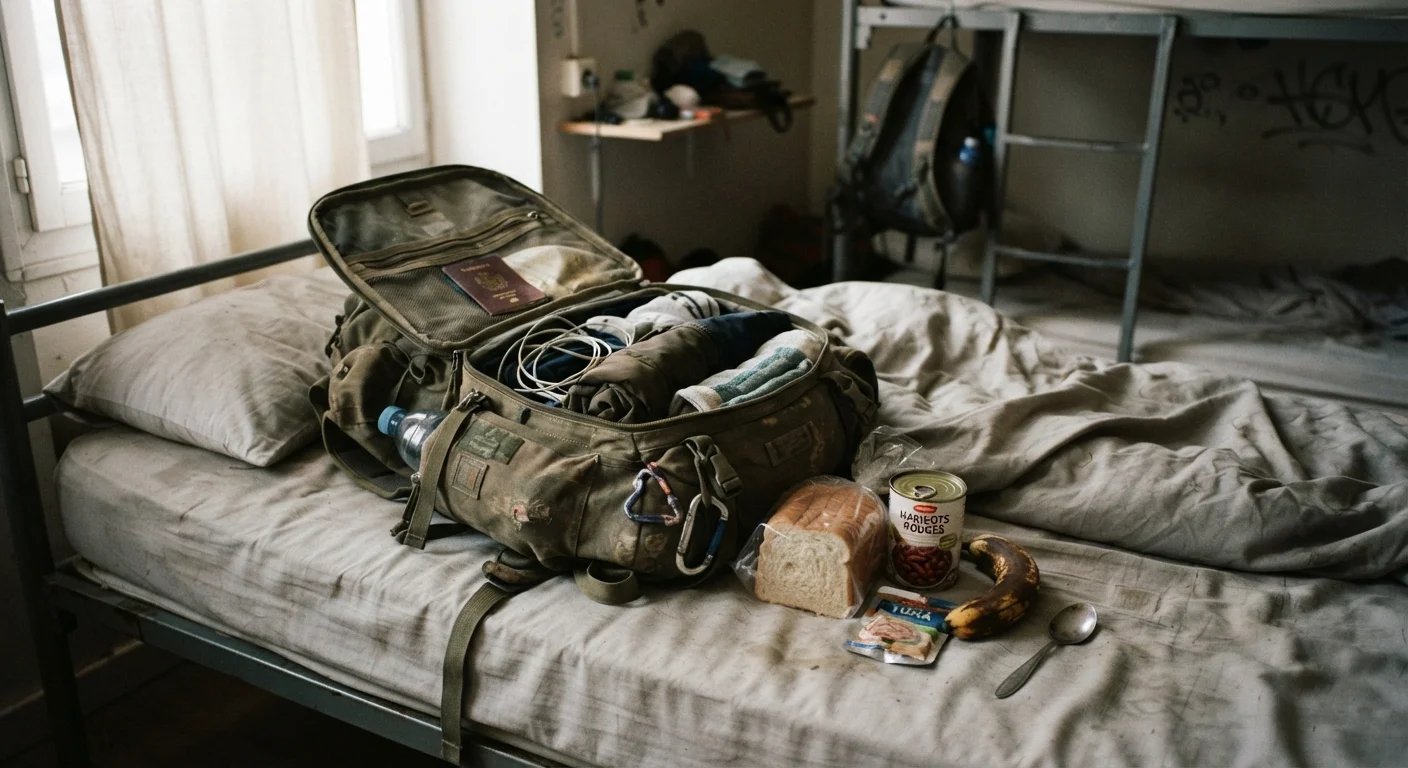
If you're budgeting tightly across a longer trip, it's also worth understanding the trade-offs of extreme food budgeting — because eating well on the road isn't just about price. Nutrition, energy, and enjoyment are part of the equation too.