
Why Southeast Asia Holds Its Ground as a Budget Benchmark
Few regions in the world combine accessibility, infrastructure, and sheer cost-per-experience value the way Southeast Asia does. While costs have risen in tourist corridors over the past decade, the underlying economics remain structurally favorable for travelers from high-income countries. That's not hype — it's purchasing power arithmetic.
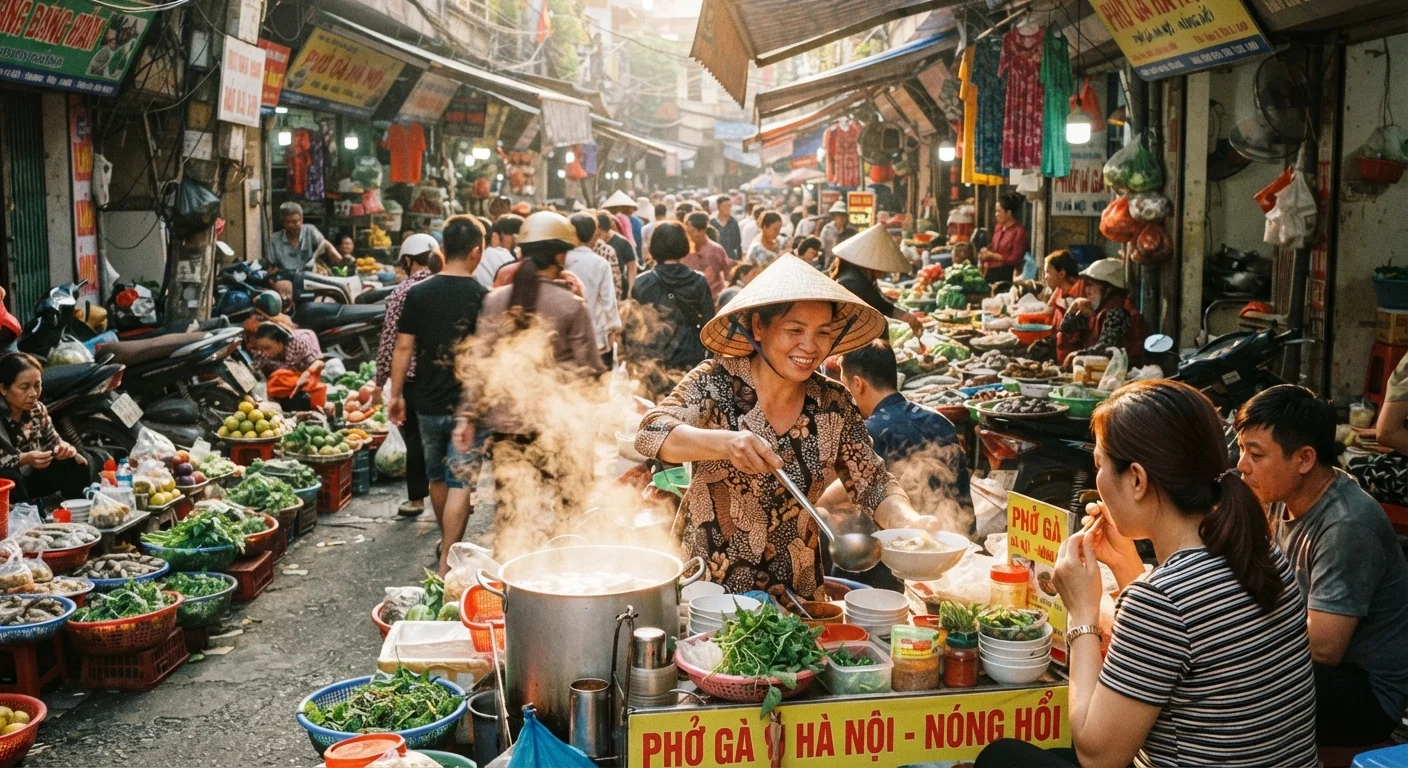
A bowl of pho in Hanoi costs roughly $1.50 at a street stall. A guesthouse room in Kampot, Cambodia might run $12 a night. A sleeper train from Bangkok to Chiang Mai can be booked for under $20. These aren't anomalies; they reflect a regional economy where the local wage floor keeps everyday goods and services genuinely inexpensive, even accounting for tourist markup in popular areas.
That said, this advantage isn't uniform. Understanding where affordable countries still produce expensive trips is essential — Bali's Seminyak strip and Singapore's central business district can drain a budget as fast as any European city. The value is real, but it requires knowing where to look.
$30–$45
Typical shoestring daily budget (USD)
Rough traveler-reported range for Vietnam, Cambodia, and inland Thailand, covering dorm accommodation, street food, and local transit — subject to individual choices and exchange rates.
$1–$3
Street meal cost across much of the region
A standard street food meal in Vietnam, Thailand, or Cambodia commonly falls in this range at stalls catering to local customers rather than tourist-facing restaurants.
11
Countries in the ASEAN bloc
Southeast Asia's 11-country ASEAN grouping means diverse travel options within a relatively compact, regionally connected area — with widely varying cost profiles between them.
Street Food: The Structural Backbone of Cheap Eating
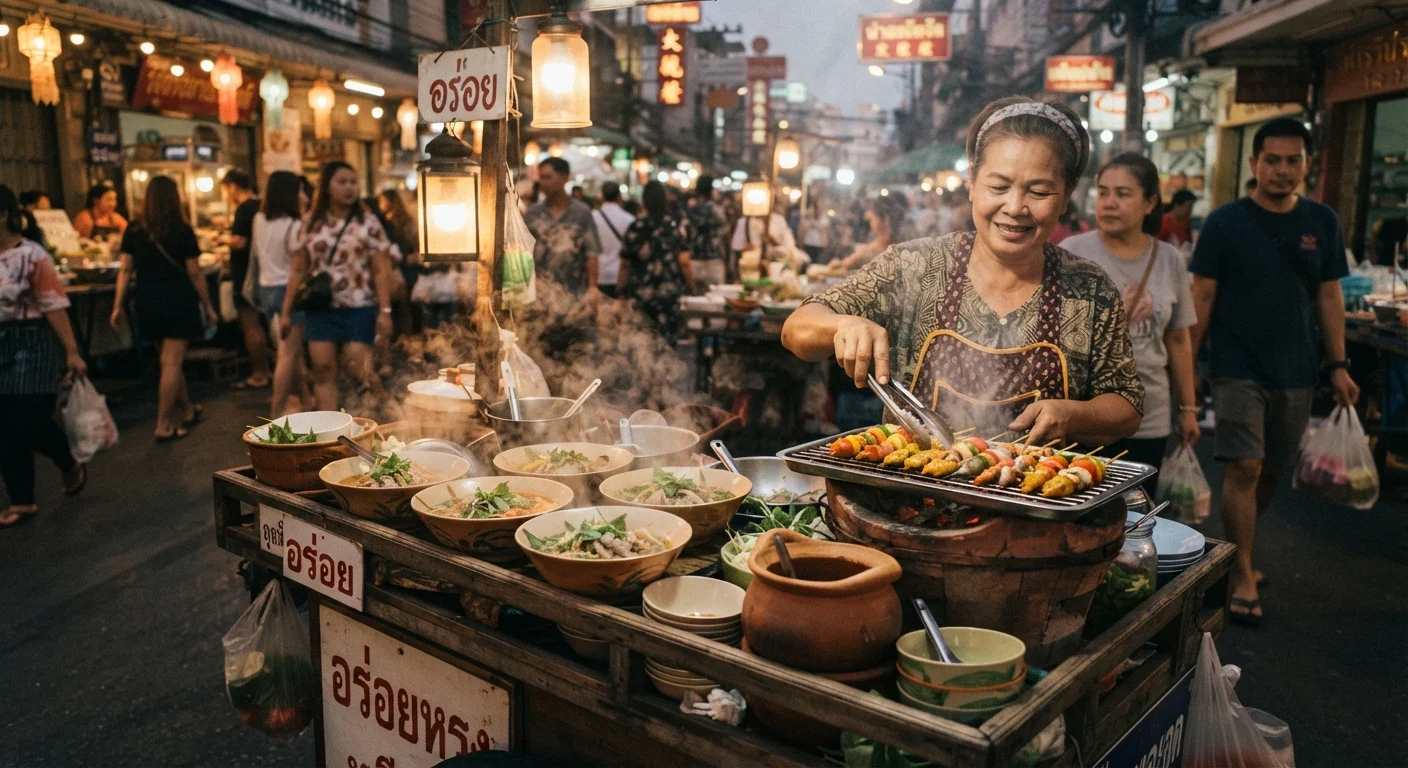
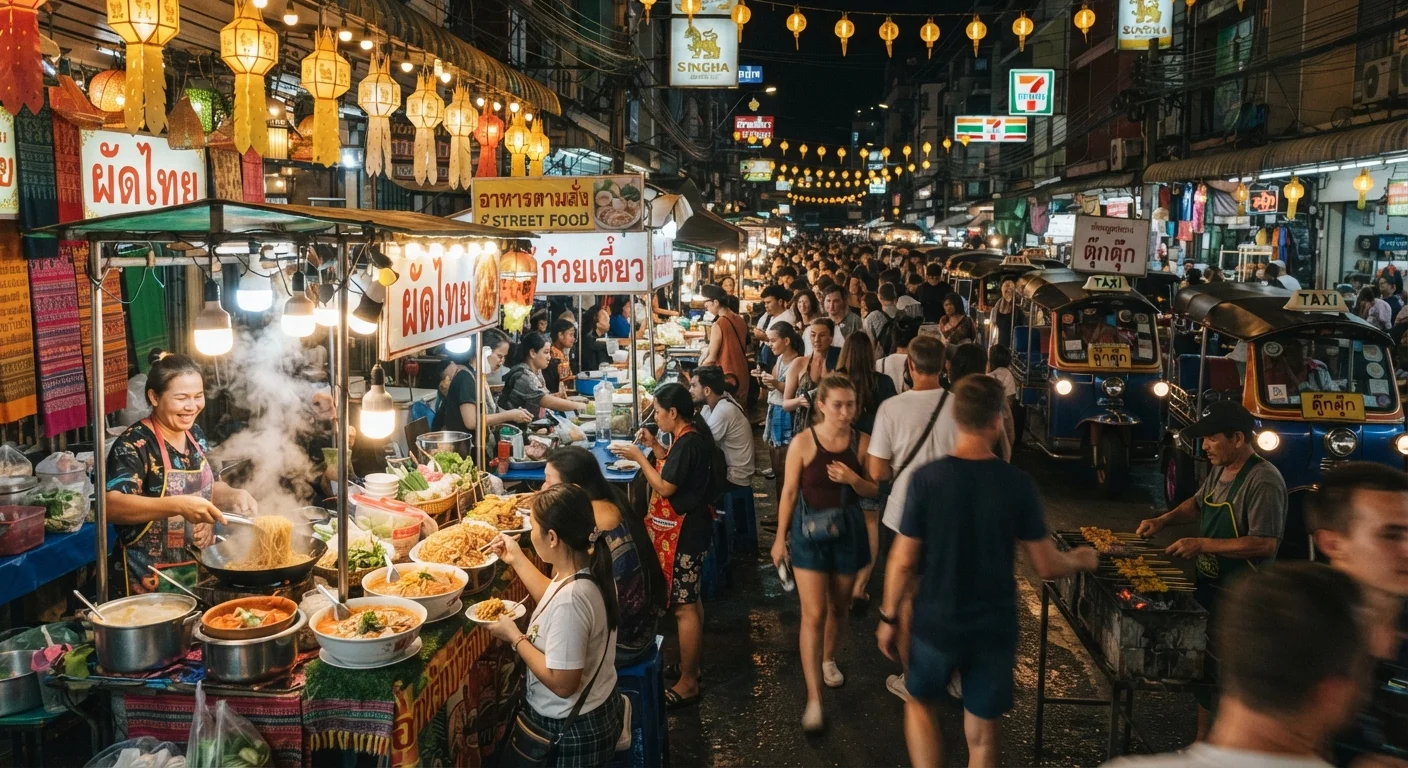
In Southeast Asia, street food isn't a budget compromise — it's the culinary default. Markets, hawker centers, and roadside stalls serve the food that locals actually eat daily, at prices that reflect local wages rather than tourist expectations. This matters enormously for budget travelers because food can easily consume 30–40% of a daily travel budget elsewhere.
Thailand's night markets, Vietnam's pho shops, Malaysia's hawker centers, and Indonesia's warung stalls all operate on the same principle: high volume, low margin, fresh ingredients, fast service. The result is that eating well doesn't require strategic sacrifice in most of the region. Eating like a local is almost always the financially smarter move, and in Southeast Asia it's also the tastiest one.
For travelers wanting to go deeper on finding where locals actually eat, markets, canteens, and side streets offer the real value — not the restaurant strips catering to tour groups.
Transport, Hostels, and the Infrastructure Built for Budget Travel
Southeast Asia has, over decades, developed a travel infrastructure that functions almost specifically for independent, budget-conscious travelers. Night buses between major cities are a fixture — they eliminate one night's accommodation cost while covering ground. Budget airlines operate dense regional networks. Shared minivans, tuk-tuks, and motorbike taxis fill the gaps at prices calibrated to local incomes.
Hostel culture is mature here in ways it isn't in many other budget regions. Major cities and popular destinations have clusters of well-reviewed, socially active hostels with reliable facilities for $8–$18 per dorm bed. This ecosystem makes it relatively straightforward to travel continuously without the logistical friction that can inflate costs elsewhere.
Experienced budget travelers consistently apply the same habits regardless of region: use local transit, time arrivals to avoid peak pricing, and stay one neighborhood removed from the main tourist drag. In Southeast Asia, these habits yield outsized rewards compared to most other destinations.
For context, Eastern Europe offers comparable value in different ways — but Southeast Asia's food and transport costs remain in a different league for most U.S. travelers.
One Neighborhood Back, Half the Price
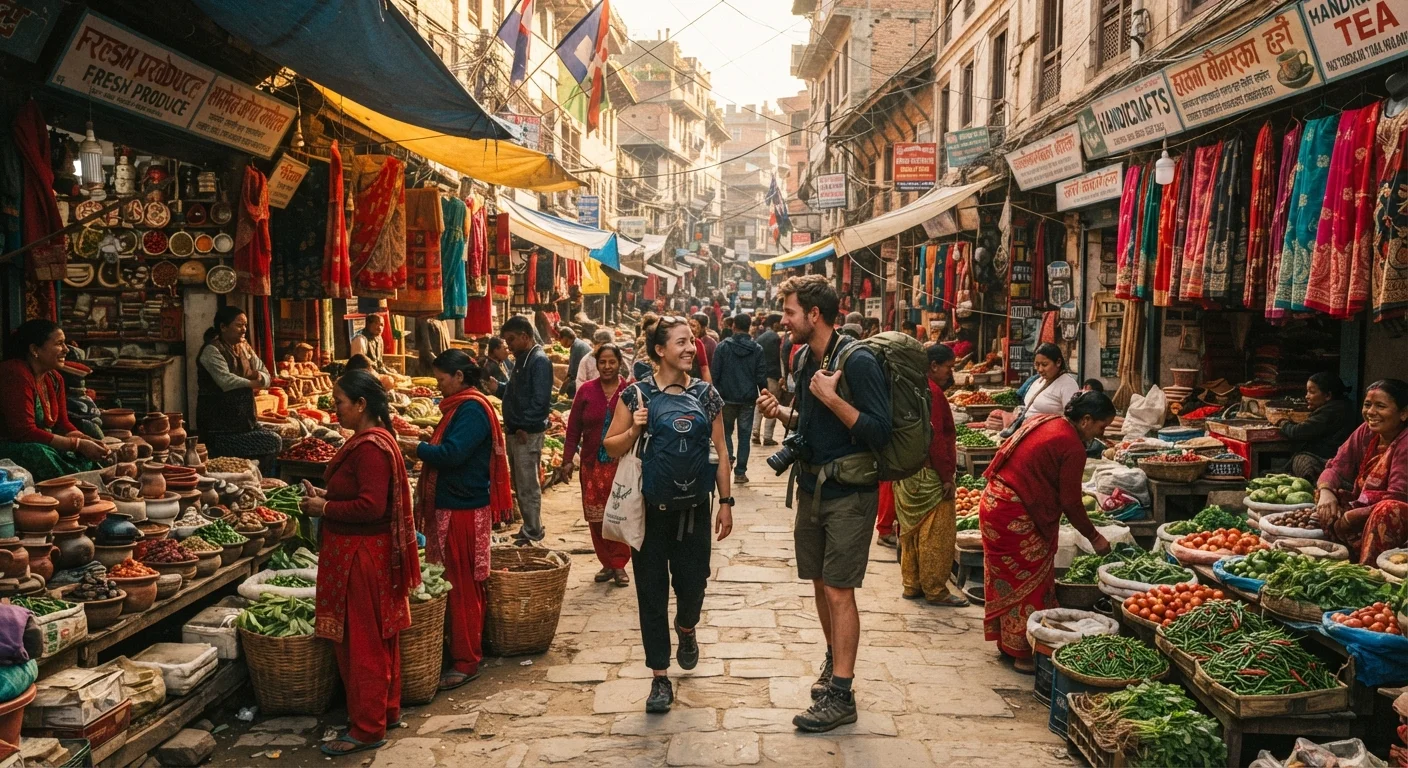
In most Southeast Asian cities, accommodation and food prices drop noticeably just one or two streets away from the main tourist drag. Identify where the local wet market is — accommodation clustered near it tends to be priced for residents, not visitors. This single habit can reduce your nightly rate by 30–50% without sacrificing walkability to the attractions you came for.
Where the Value Holds — and Where It Doesn't
Honest budget planning means acknowledging that Southeast Asia's affordability is uneven. Vietnam's cities, Cambodia's provincial towns, and inland Thailand deliver the strongest value. Island destinations — Koh Samui, Gili Islands, Boracay — have developed tourist pricing that undercuts the regional advantage considerably.
Activities with no local equivalent also carry premium pricing: zip-lining operations, scuba diving courses, and organized trekking companies set prices for international travelers, not locals. These aren't necessarily overpriced in absolute terms, but they don't reflect the broader regional cost advantage.
The travelers who extract the most value from the region are those who understand where tourist infrastructure ends and local life begins. Eating well without spending like a tourist applies just as much to accommodation and transport choices as it does to food. A $40/night beach bungalow with a swim-up bar is a legitimate choice — it's just not a shoestring one.
Prices, entry requirements, and travel conditions mentioned in this article are subject to change. Always verify current information with official sources and government travel advisories before booking travel.