
The Price-Safety Assumption — and Why It Doesn't Hold
One of the most persistent travel myths is that cheap food is inherently risky food. Budget-conscious travelers are routinely warned off street stalls in favor of sit-down restaurants, implicitly told that paying more buys safety. The evidence doesn't support this cleanly.
Foodborne illness is driven by factors like temperature control, cross-contamination, ingredient freshness, and personal hygiene — not ticket price. A street cart that grills meat to order over high heat and serves it immediately can present lower risk than a mid-range restaurant where food sits in a bain-marie for hours. Cost is a proxy measure at best, and a misleading one in many contexts.
That said, food safety is genuinely important. This article isn't a blanket endorsement of eating anything anywhere — it's an argument for replacing price-based assumptions with observable, evidence-grounded cues. For a deeper framework on what to actually watch for, see our practical safety guide for eating cheap abroad.
Myth
Street food is cheap because corners are cut on food safety and ingredient quality.
Fact
Low overhead — not compromised safety — explains most street food pricing. Vendors pay little or nothing for premises, staffing, or tableware.
Street food vendors typically operate with minimal infrastructure costs. Rent, servers, linens, and dishwashing equipment don't factor into their pricing the way they do for formal restaurants. The savings are structural, not a result of skimping on ingredients or hygiene. Many street vendors source from the same wholesale markets as restaurants and have strong personal incentives — reputation, repeat customers, regulatory exposure — to maintain standards.
Myth
Expensive restaurants are always safer than cheap street food.
Fact
Price correlates poorly with food safety. Foodborne illness outbreaks have been documented at upscale establishments as well as budget ones.
Food safety failures — improper refrigeration, cross-contamination, ill food handlers — occur at every price point. Public health agencies in multiple countries have recorded outbreaks linked to formal restaurants, hotel buffets, and catered events, not only street stalls. A higher bill doesn't guarantee safer food handling in the kitchen, which remains invisible to the diner regardless of the restaurant's tier.
Myth
You can tell a food stall is safe by whether it looks clean and modern.
Fact
Aesthetic presentation is a weak safety indicator. Operational practices — cooking temperature, turnover rate, ingredient handling — matter far more.
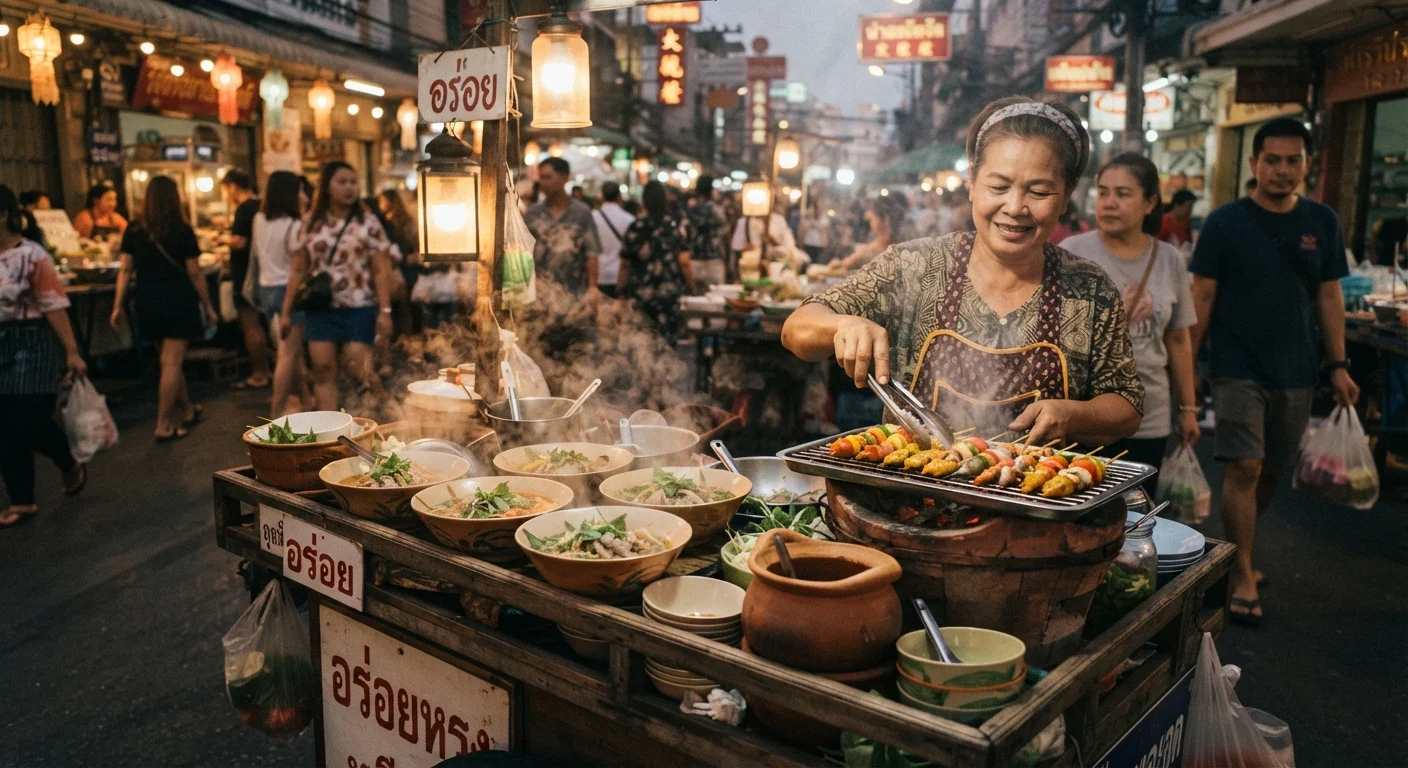
A stall with a worn cart and mismatched equipment may prepare food more safely than a photogenic, Instagram-friendly setup if it cooks everything to order at high heat and serves it immediately. Conversely, a visually tidy vendor who pre-cooks food hours in advance and holds it at ambient temperature poses a real risk. Watching how food is handled — not how the stall looks — is the more informative assessment.
Myth
Getting sick from food abroad is almost inevitable, especially if you eat cheaply.
Fact
Traveler's diarrhea and foodborne illness are real risks but not inevitable outcomes, and budget eating is not the primary risk factor.
Risk factors for traveler's diarrhea include destination region, time of year, and individual health factors — not simply price bracket. Travelers eating at street stalls using sensible, observable cues (high turnover, food cooked to order, clean water sources) frequently experience no illness. Meanwhile, staying exclusively in tourist restaurants is no guarantee of protection and typically costs significantly more. Washing hands before eating remains one of the most consistently supported preventive measures.
Myth
Local tap water used in cooking at cheap stalls makes street food dangerous everywhere.
Fact
Water safety varies enormously by destination, and cooking typically mitigates risk — raw applications like ice or salads are the more relevant concern.
Cooking food thoroughly neutralizes most waterborne pathogens even when local tap water is not potable. The more relevant risk is water in its raw form: ice made from tap water, raw vegetables washed in it, or beverages prepared with it. In destinations where tap water is not considered safe for drinking, travelers are generally advised to be cautious about ice and raw salads specifically — not to avoid all cooked street food. Always verify current water safety guidance for your specific destination from official public health sources before traveling.
Reading the Real Signals — What Actually Matters
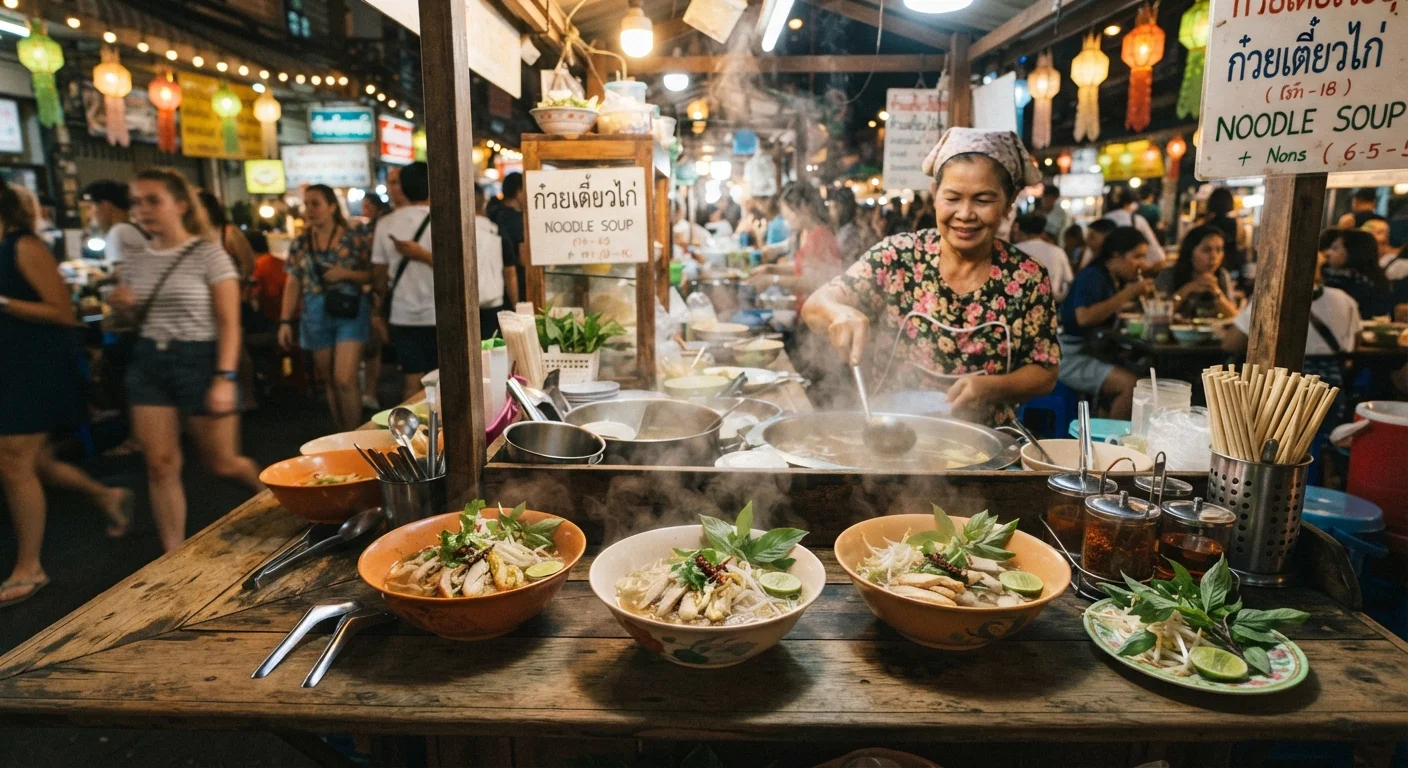
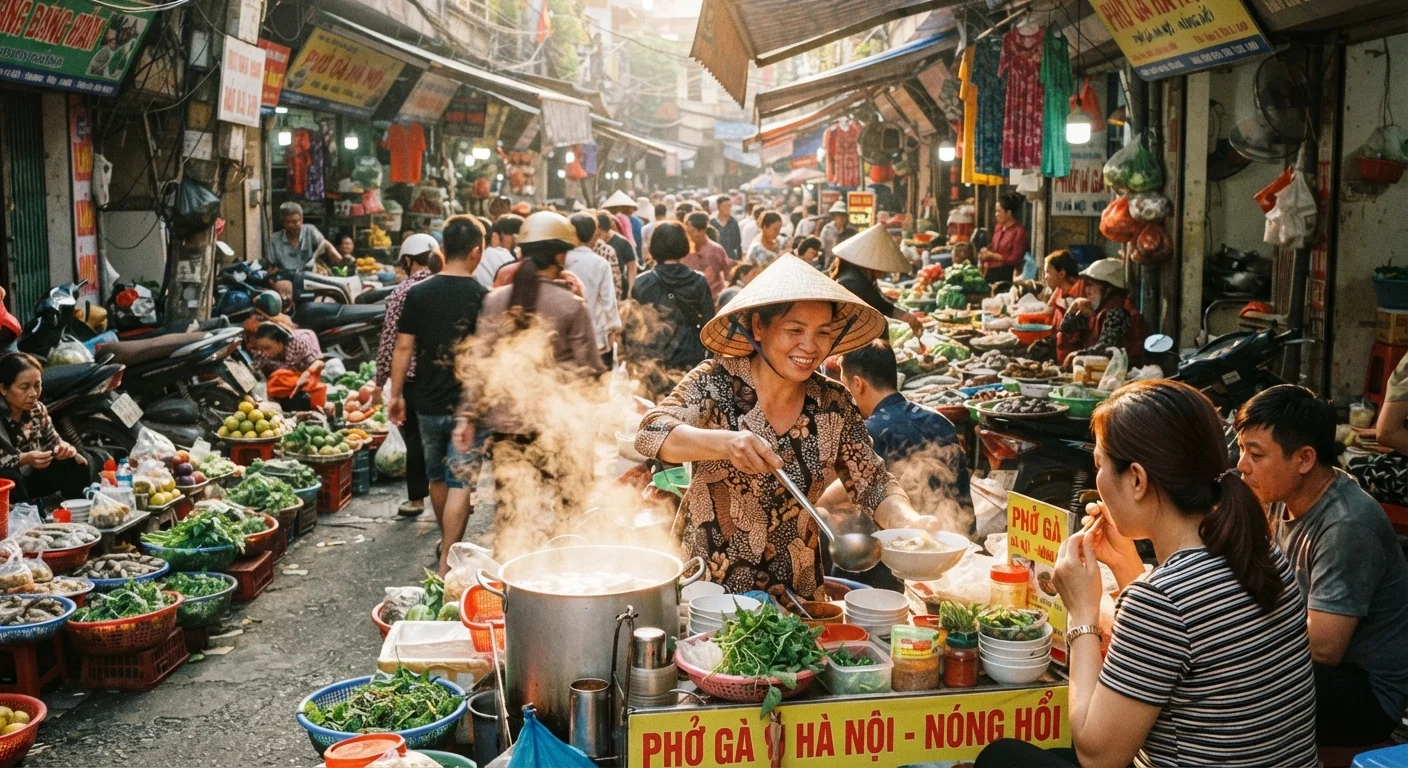
Once you set aside price as the primary filter, more useful signals emerge. High customer turnover is one of the most reliable: a stall doing brisk business cycles through ingredients quickly, reducing the time food sits at unsafe temperatures. A vendor with a queue of local workers at lunchtime is a meaningful endorsement.
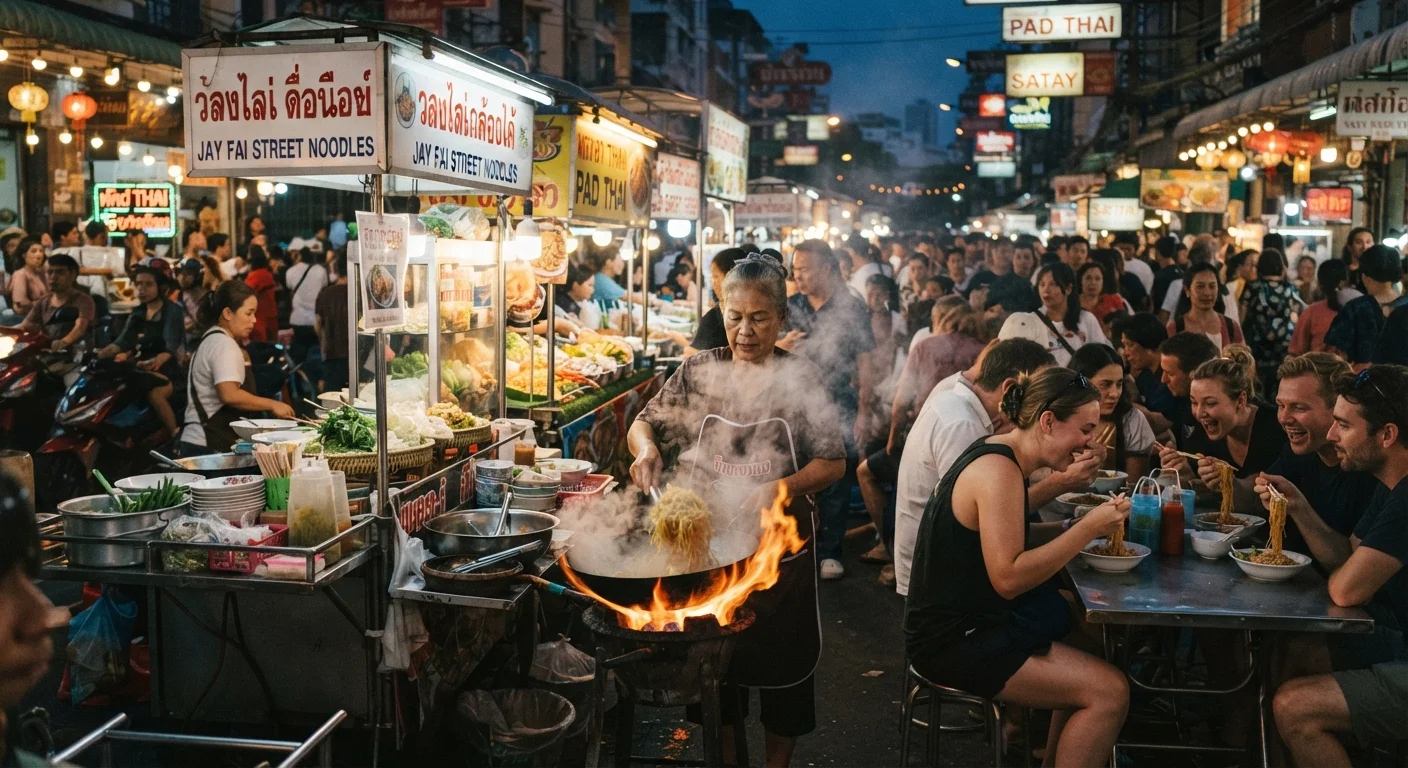
Visible preparation is another strong cue. Food cooked in front of you — grilled, stir-fried, fried, or boiled to order — has less opportunity for temperature abuse than pre-cooked food held warm. Watching a vendor handle raw and cooked ingredients separately, or use clean utensils, costs you nothing and tells you a great deal.
Water, Ice, and Raw Ingredients Still Warrant Caution
Even if cooked street food is lower risk than assumed, raw applications of non-potable water remain a genuine concern. Be attentive to ice in drinks, raw salads, and fresh-cut fruit washed in tap water in destinations where potable water is not reliable. Always verify current food and water safety guidance for your specific destination through official government or public health sources before you travel — conditions vary and change.
Local eating culture itself is informative. Street food markets in many cities are deeply embedded institutions with vendors who have operated for years or generations, with reputations built on repeat local customers — not tourists. As explored in why eating like a local is always the better deal, the locals eating beside you are often your best quality signal.
For a broader look at the types of venues — markets, canteens, side-street stalls — where budget travelers consistently find safe, quality meals, see where budget travelers actually find good food. It's also worth noting that food budget decisions fit into a wider travel planning picture — understanding what a 'cheap country' actually costs can help you allocate realistically.
600M+
Annual foodborne illness cases globally
According to the World Health Organization, approximately 600 million people worldwide fall ill from contaminated food each year — spanning all dining contexts and price points.
~30–70%
Travelers affected by traveler's diarrhea by region
The U.S. Centers for Disease Control and Prevention notes that traveler's diarrhea rates vary significantly by destination region, from roughly 30% to 70% of travelers in high-risk areas — regardless of dining budget.