
The Three Fee Categories You'll Actually Encounter
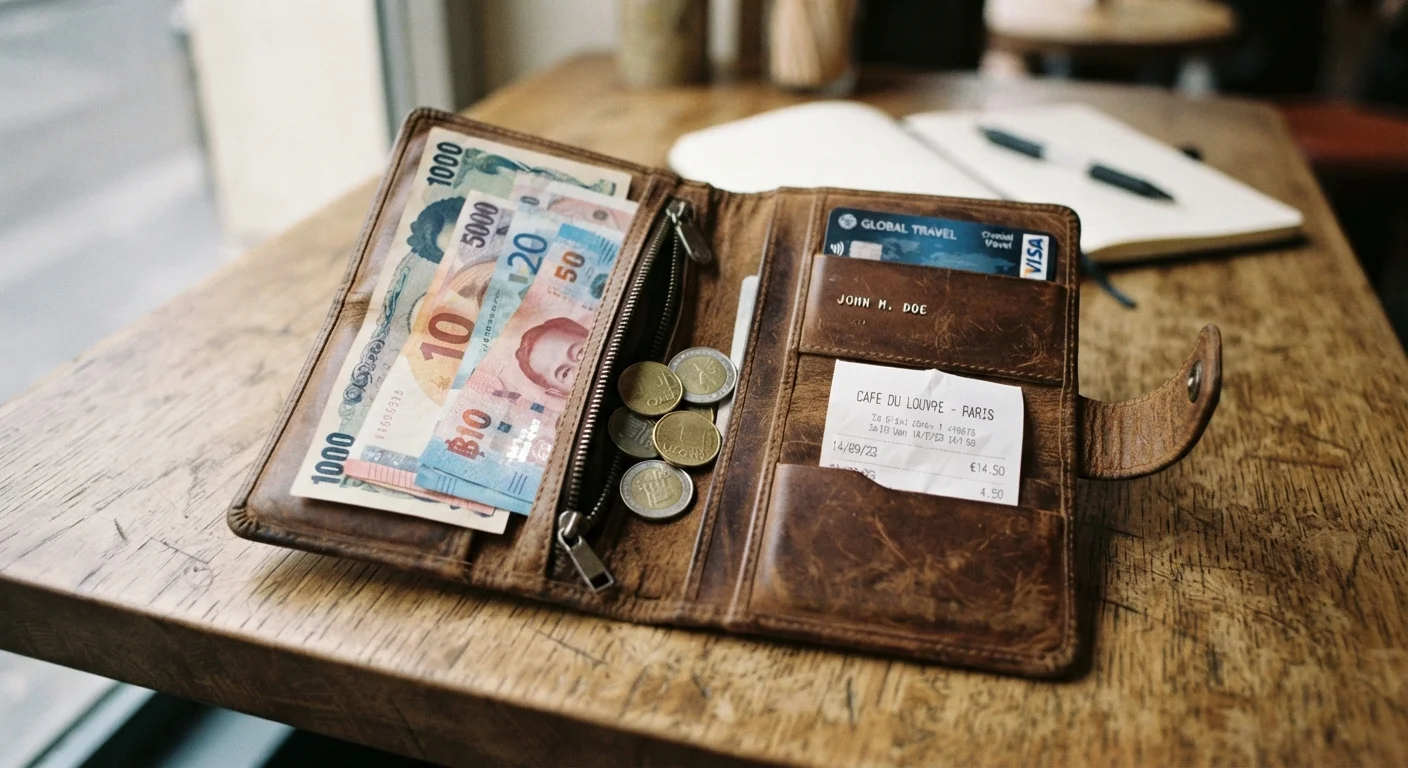
When you spend money abroad, charges come from three distinct sources. Mixing them up is what leads to budget surprises. Here's how to separate them:
- Foreign transaction fees: A percentage your card issuer charges on any purchase processed in a foreign currency — typically 1–3% of the transaction amount. This applies whether you pay in-store, online, or through a payment app.
- Currency conversion fees (spread): Built into the exchange rate itself. When a bank or exchange bureau gives you a rate that's worse than the mid-market rate (the rate you'd see on Google), the difference is their profit. This spread can range from under 1% at a competitive bank to 10%+ at an airport kiosk.
- ATM fees: Two separate charges can apply — one from your home bank (often $3–5 flat per withdrawal) and one from the foreign ATM operator. These stack, meaning a single cash withdrawal may cost $8–12 in combined fees before you've spent a cent.
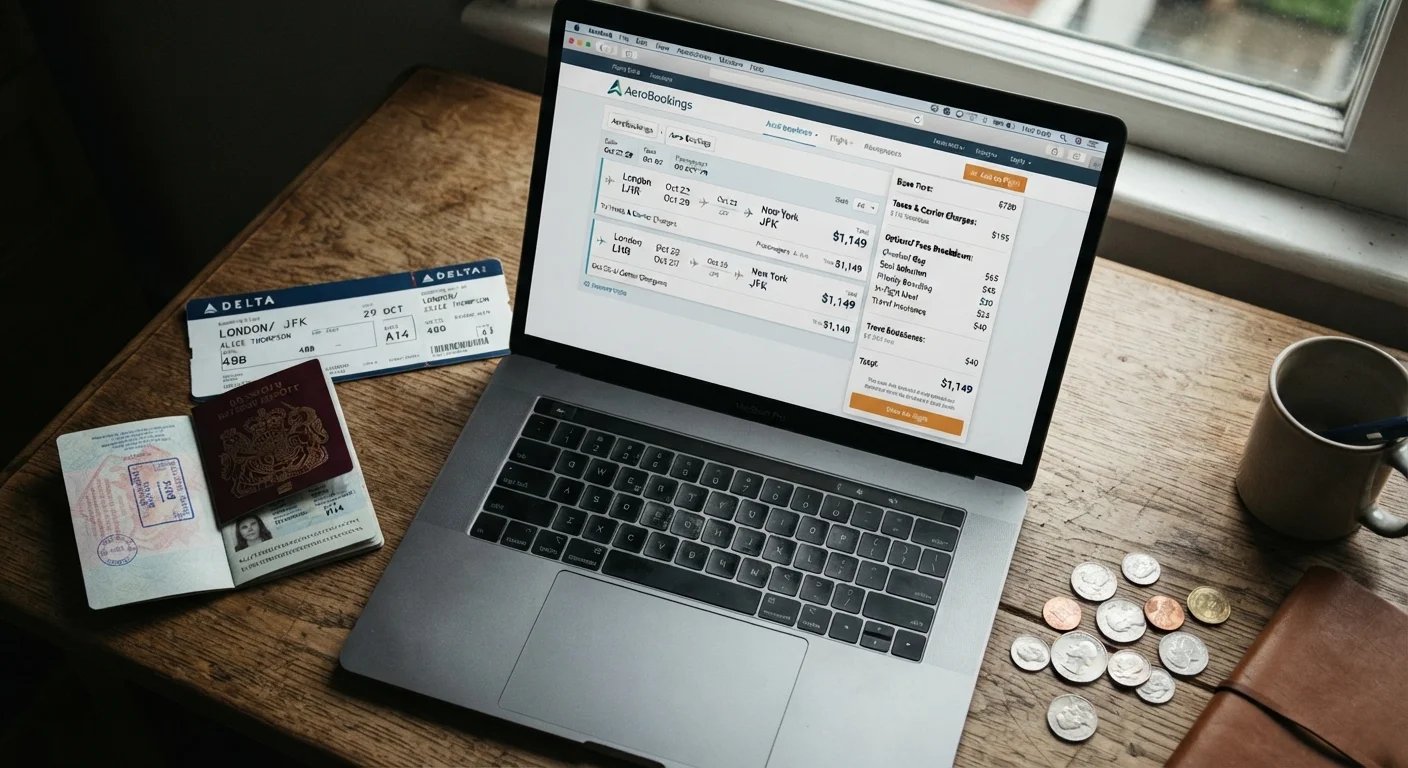
Understanding which institution is charging what — and why — is the foundation for reducing your total cost. For similar layered-fee logic applied to flights, see our breakdown of hidden flight charges.
| Typical foreign transaction fee | 1–3% per transaction (General industry range; varies by card issuer) |
| Airport kiosk spread vs. mid-market rate | Up to 10–12% worse (General consumer finance guidance) |
| Combined ATM fees per withdrawal | $5–12 (home bank + foreign operator) (Approximate range for US cardholders abroad) |
| Mid-market rate benchmark tools | Google Finance, XE.com |
| DCC surcharge vs. local currency charge | DCC typically 3–6% worse (General consumer guidance on Dynamic Currency Conversion) |
ATM Withdrawals: What to Know Before You Tap
ATMs remain one of the most cost-efficient ways to access local currency — but only when used strategically.
Withdraw larger amounts less frequently
If your bank charges a flat withdrawal fee, taking out a single larger sum costs proportionally less than multiple small withdrawals. A $5 fee on $200 is 2.5%; on $40 it's 12.5%.
Always decline "Dynamic Currency Conversion" (DCC)
ATMs and card terminals in many countries will offer to charge you in your home currency instead of the local one. This sounds convenient but typically uses an unfavorable exchange rate that benefits the operator. Always choose to be charged in the local currency.
Use bank-affiliated ATMs where possible
Standalone ATMs in tourist areas often add their own surcharges on top of your bank's fees. ATMs attached to a local bank branch are generally more transparent about their fees before you confirm the transaction.
Check your bank's international partner network
Many US banks have fee-free or reduced-fee withdrawal agreements with international bank networks. Check your bank's website before departure — this can eliminate the foreign ATM operator fee entirely.
Mid-market rate
The midpoint between the buy and sell prices of two currencies on global markets. It's the rate shown on financial data services and is considered the fairest baseline for comparison. Virtually no retail exchange gives you the full mid-market rate — the gap is where fees hide.
Dynamic Currency Conversion (DCC)
A service offered at foreign ATMs and card terminals that lets you pay in your home currency rather than the local one. It appears convenient but uses an exchange rate set by the merchant or terminal operator, which is almost always worse than your card's rate.
Foreign transaction fee
A fee your card issuer charges when a purchase is processed in a foreign currency or through a foreign bank. It's typically a percentage of the transaction total and appears on your statement separately from the purchase amount.
Currency spread
The difference between the rate at which a bank or exchange bureau buys currency from you and the rate at which they sell it. This spread is how exchange providers make a profit and represents a hidden cost embedded in the quoted rate.
ATM operator fee
A surcharge charged by the owner of the ATM machine you use — separate from any fee your own bank charges. In tourist areas, this can be a flat amount of several dollars per withdrawal.
Currency Exchange: Where You Lose the Most (and Least)
Not all exchange points are equal. Here's a general ranking from least to most costly, based on how far their offered rates typically deviate from the mid-market rate:
- Using your debit card at a foreign ATM — usually the best rate if your bank has low or waived withdrawal fees.
- Bank branches in the destination country — competitive rates, particularly for common currency pairs.
- Pre-ordered currency from your US bank — rates vary; worth comparing against ATM costs for your specific destination.
- Independent exchange bureaus in city centers — quality varies widely; compare the displayed rate against the mid-market rate before committing.
- Hotel front desks — convenient but consistently unfavorable rates.
- Airport exchange kiosks — generally the worst rates available, often 8–12% below mid-market. Avoid exchanging large amounts here.
As a rule: the more captive your situation (just landed, in a resort, at a train station), the worse the exchange rate tends to be. Plan ahead and you sidestep the most egregious markups. This kind of pre-trip cost planning pairs well with thinking through ground transport decisions and accommodation trade-offs before you arrive.
Practical Steps to Reduce Your Overall Money Costs
A few consistent habits significantly reduce how much you lose to fees across a trip:
- Know your card's fee structure before departure. Check whether your card charges a foreign transaction fee. Some travel-oriented cards waive these entirely — though card selection is a personal finance decision worth evaluating based on your own situation.
- Keep a small emergency cash reserve. Some vendors, markets, and rural areas don't accept cards. Having a modest amount of local cash on hand prevents being forced into a costly last-minute exchange.
- Track the mid-market rate. Services like Google Finance or XE.com show the mid-market exchange rate in real time. Use this as your benchmark when evaluating any exchange offer.
- Understand your card's DCC opt-out. Some cards let you set a preference to always decline DCC. Check your card issuer's app or settings.
- Budget for fees explicitly. Assume 2–4% of your total cash spending will go to conversion costs and fees in most destinations. Building this into your travel budget avoids end-of-trip surprises.
These costs add up across a trip the same way restaurant surcharges do — see how restaurant fees layer onto meal costs for parallel thinking applied to eating abroad. If you're also managing travel rewards cards, understanding how those rewards actually work helps you evaluate whether the card's benefits offset its costs.
This article provides general financial information for educational purposes. It is not personalised financial or legal advice. Consult a qualified financial professional for guidance specific to your situation.