
How Each Financing Path Actually Works
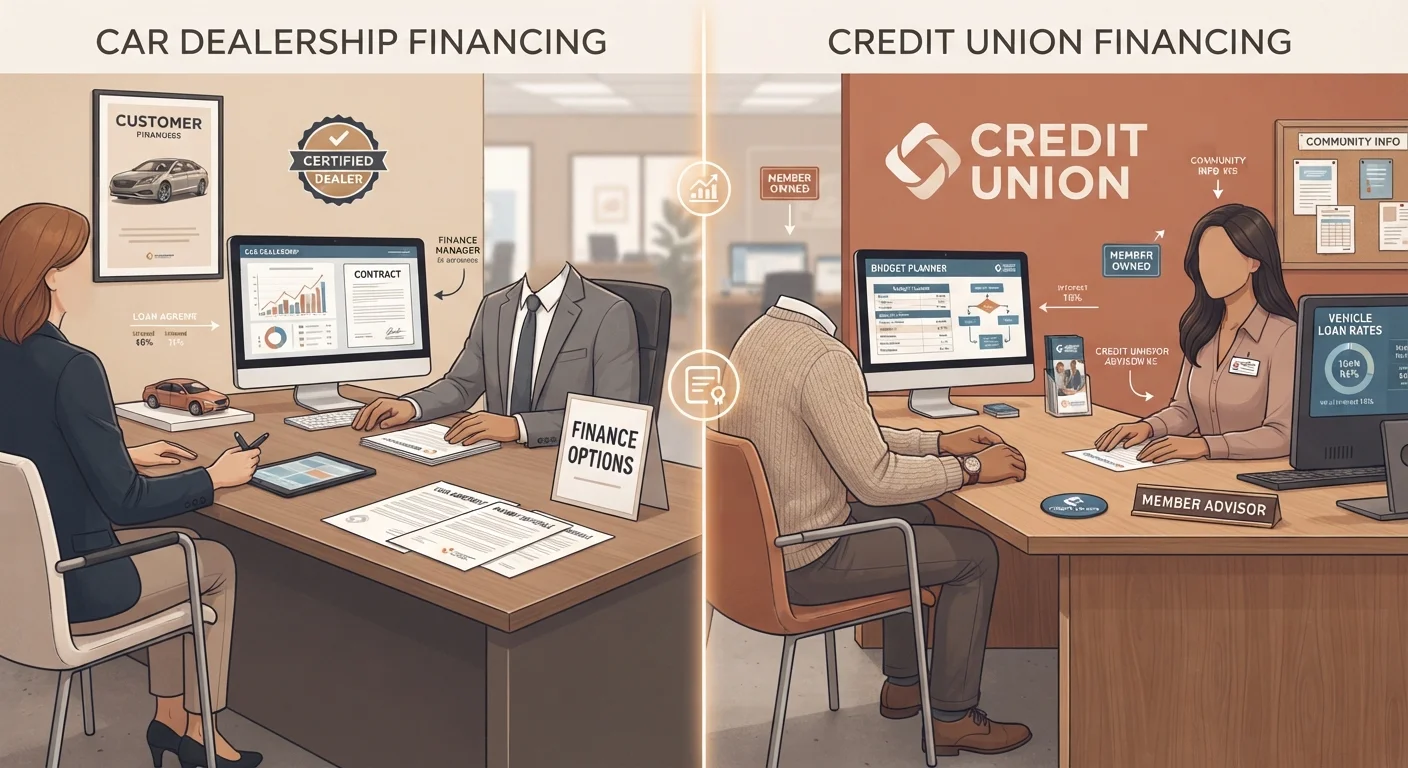
When you finance through a dealership, the dealer's finance-and-insurance (F&I) office submits your application to one or more lenders on your behalf. The lender sets a base rate - called the buy rate - and the dealer is typically permitted to mark that rate up, often by 1-2.5 percentage points, keeping the difference as compensation. You generally never see the buy rate; you only see the final offer.
When you finance directly through a bank or credit union, you apply independently before or after finding a vehicle. The lender assesses your credit and quotes you their standard rate. Credit unions, which are member-owned nonprofits, often price loans below commercial bank rates and tend to work more flexibly with members who have limited or imperfect credit histories.
Before comparing numbers at a dealer, it's worth understanding the terminology involved. Our plain-language guide to auto loan terms walks through APR, loan-to-value ratio, and other figures you'll encounter during the process.
The Real Cost Difference: Rate Markups and Total Interest
A 1.5 percentage point rate markup may sound small, but on a $22,000 used car financed over 60 months, it can add $800-$1,000 in total interest paid - money that goes to the dealer, not toward your car. The longer the loan term, the more that markup costs you.
1-2.5%
Typical dealer rate markup range
Consumer Financial Protection Bureau research has documented that dealers are commonly permitted to mark up wholesale loan rates by this margin.
$900+
Estimated extra interest on marked-up loan
On a $22,000, 60-month loan, a 1.5 percentage point markup can add roughly $900 in total interest compared to the base lender rate.
This is why low monthly payments can be deceptively expensive - a dealer may offer you a slightly lower payment by stretching your term while quietly embedding a higher rate. Always compare loans by total interest paid, not just the monthly figure.
One practical move: get a pre-approval from your bank or credit union before visiting any dealer. This gives you a concrete benchmark. If the dealer beats it, take it. If they don't, you already have a loan ready to go. You're under no obligation to use dealer financing simply because you're buying from a dealership.
Get Pre-Approved Before You Shop
Apply for pre-approval at your bank or credit union before visiting a dealership. Most lenders offer rate quotes with only a soft credit inquiry at the initial stage, which doesn't affect your score. Having a written offer in hand lets you evaluate any dealer financing offer objectively - and gives you a ready fallback if dealer terms aren't competitive.
When Dealer Financing Can Legitimately Win
Dealer financing isn't always the worse choice. Automakers periodically offer manufacturer-subsidized loans - sometimes as low as 0% APR - through their captive finance arms (e.g., the financing divisions attached to major brands). These promotions can represent genuine savings that an outside lender cannot match.
The catch: these rates are typically reserved for buyers with strong credit scores, often 720 or above, and apply only to specific new models in specific trim levels. They may also require you to forgo a cash rebate. Run both scenarios - the low APR deal and the rebate with outside financing - to see which actually saves more over the full loan term.
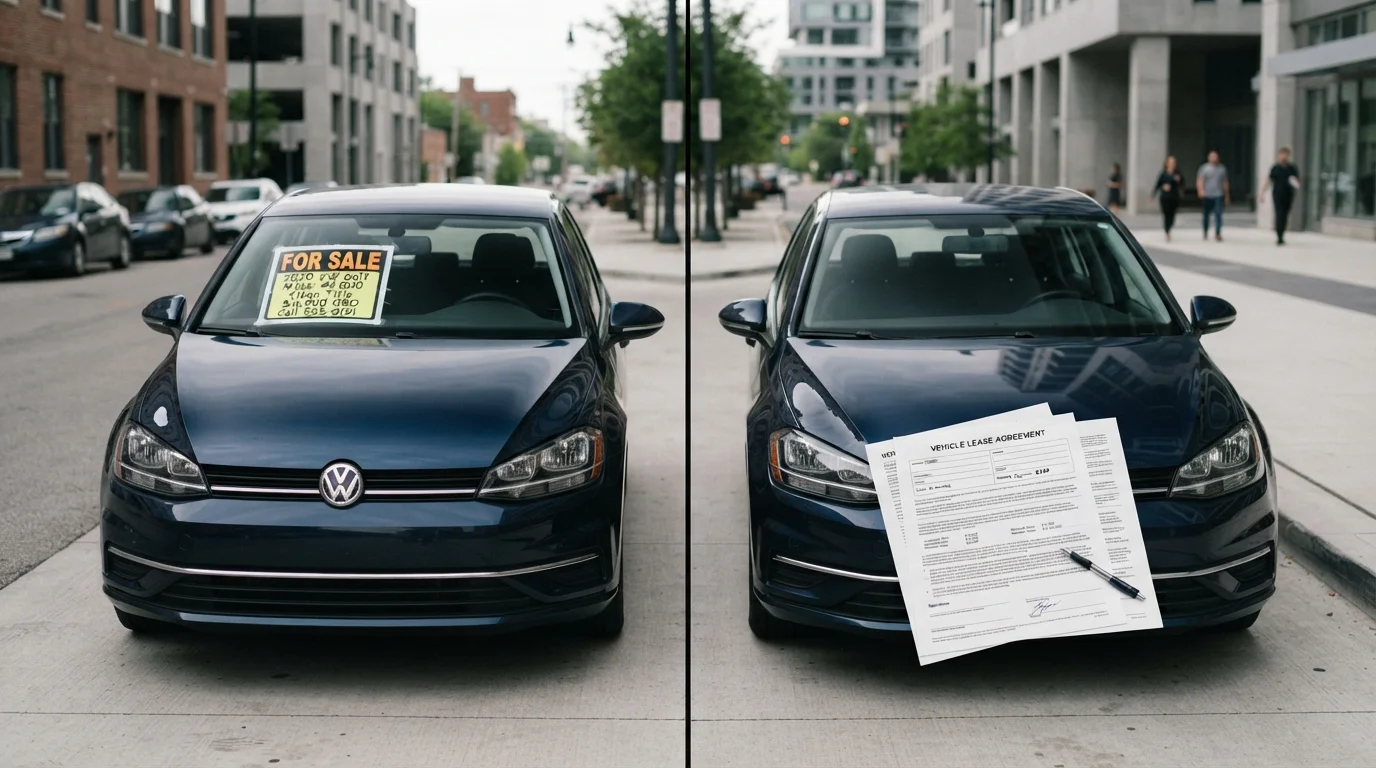
For used vehicles, manufacturer subsidized rates are rarely available, making outside financing the stronger default. If you're weighing whether to buy at all, owning vs. leasing on a tight budget covers how financing structure intersects with that broader decision.
Comparison at a Glance
The table below summarizes the key differences between dealer financing, bank loans, and credit union loans across the dimensions that matter most to budget-conscious buyers.
| Dealer Financing | Bank Loan | Credit Union Loan | |
|---|---|---|---|
| Rate transparency | Buy rate often hidden; markup possible | Rate quoted directly to you | Rate quoted directly to you |
| Convenience | One-stop, handled at dealership | Requires separate application | Requires membership; separate application |
| Typical rate competitiveness | Variable; can be high or promotional | Moderate; market-driven | Often lowest, especially for members |
| Pre-approval available | No - tied to vehicle purchase | Yes | Yes |
| Best for credit profile | Excellent (for promo rates) | Good to excellent | Moderate to good |
| Negotiating leverage created | Low - dealer controls offer | High - you bring a benchmark | High - you bring a benchmark |
For more context on how to approach the overall buying process, see our guide on researching a car purchase before visiting any seller. Arriving informed - including with a financing offer already in hand - is one of the most effective ways to avoid paying more than you should.
This article provides general financial information and education only. It is not personalized financial or lending advice. Loan rates, terms, and eligibility vary by lender and individual circumstances. Consult a qualified financial professional for guidance specific to your situation.