
Why This Decision Deserves More Than a Price Comparison
Most buyers start - and end - their private seller vs. dealership analysis by looking at the sticker price. That's understandable: the difference can be several thousand dollars on the same make and model. But price is only one layer of a decision that also involves legal protections, financing access, vehicle history transparency, and what happens if something goes wrong the week after you buy.
Understanding both channels clearly before you commit can protect you from surprises that erase any savings you thought you'd locked in. See our research guide for car buyers for how to build your knowledge base before contacting any seller.
The Case for Buying From a Private Seller
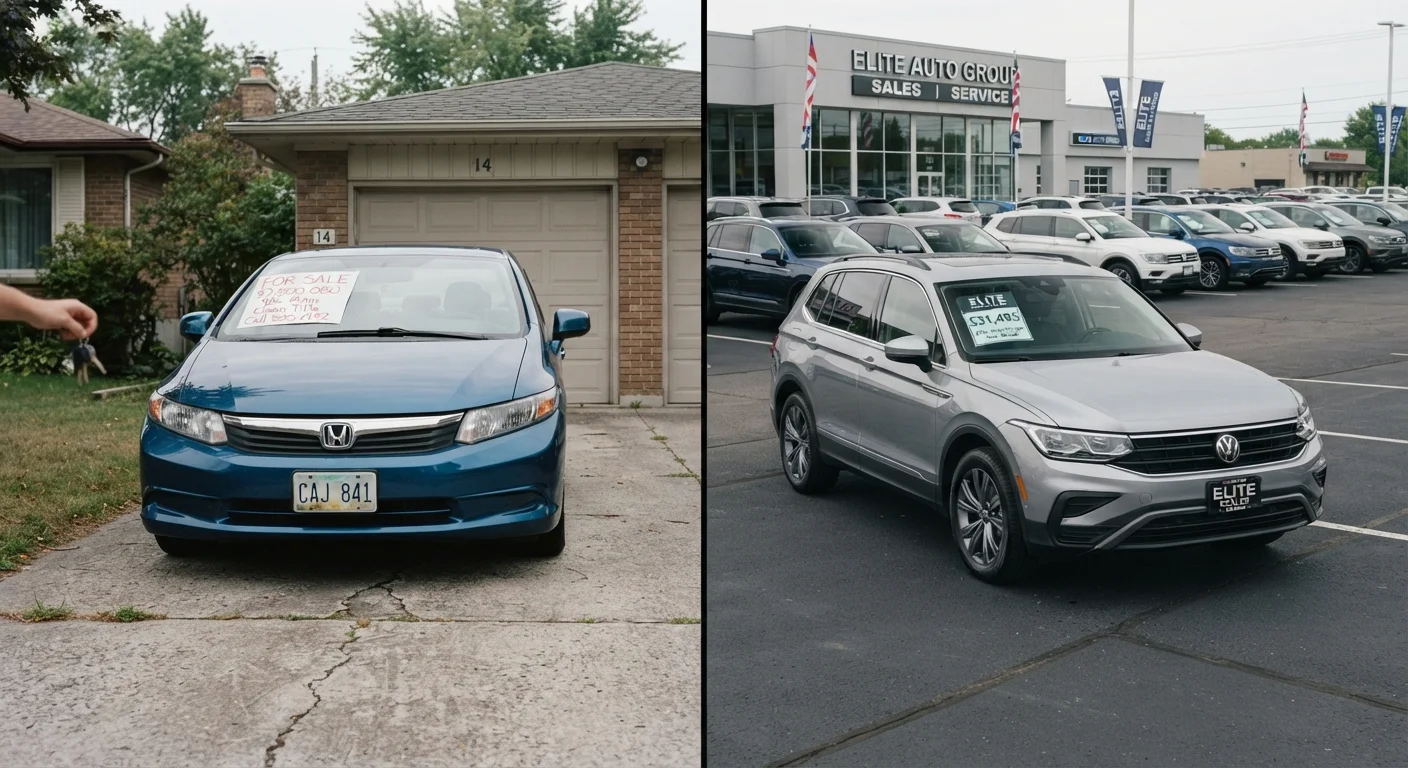
Private sales exist because both sides benefit under the right conditions. The seller avoids trade-in depreciation from a dealer; the buyer avoids dealer markup. When a private seller has maintained a vehicle well and prices it honestly, the transaction can be a genuine win.
Lower purchase price than comparable dealer listings
Private sellers don't carry the overhead costs of a dealership, and many simply want a quick, fair sale. This can translate to prices noticeably below dealer retail for equivalent vehicles.
Room to negotiate directly with the owner
You're negotiating with one person rather than a sales process designed to protect margin. Motivated sellers - those relocating, upgrading, or facing financial pressure - often accept reasonable offers.
Richer vehicle history from the source
A long-term private owner can often tell you exactly how the car was used, what was serviced, where it's been driven, and why they're selling - context a dealership rarely provides accurately.
No dealer add-ons or documentation fees
Dealerships often add fees for documentation, nitrogen tire inflation, paint protection, and dealer-installed accessories. These are largely absent in private sales, keeping the final cost cleaner.
That said, the advantages are conditional. Lower price only materializes if you've done the comparison work - checked market values on independent pricing tools, understood what condition adjustments are fair, and aren't being misled about the car's history. The negotiating dynamic is also different: you're dealing with an individual who may have emotional attachment to the vehicle or an urgent need to sell, both of which can work in your favor or complicate the conversation.
The Real Risks of Private Transactions
Private sales in most US states are completed "as-is." That single phrase carries enormous weight: once money changes hands, legal recourse is limited unless the seller has made provably fraudulent misrepresentations. There's no cooling-off period, no implied warranty of merchantability in most private auto transactions, and no regulatory body watching over the deal.
Sold as-is with no warranty protection
Most private auto sales carry no warranty. If a mechanical fault surfaces days after the sale, you typically bear the full cost unless you can prove deliberate fraud - which is difficult and expensive to pursue.
No regulatory oversight of the transaction
Dealers are licensed and regulated by state agencies; private sellers are not. There's no complaint mechanism, no bond requirement, and no state authority holding a private seller accountable for misrepresentation in the same way.
Financing is more complicated to arrange
Private-party auto loans require more lead time, have stricter vehicle eligibility criteria (age, mileage, condition), and may carry slightly higher rates than loans processed through a dealer's finance office.
Title and paperwork risks fall on the buyer
Verifying a clean title, checking for outstanding liens, and handling the DMV transfer process are the buyer's responsibility. Errors or omissions in this process can create significant legal complications.
No certified inspection or standardized condition grading
Unlike CPO programs, private sellers have no obligation to inspect or disclose every fault. The burden of uncovering mechanical or safety issues rests entirely with the buyer and any mechanic they hire.
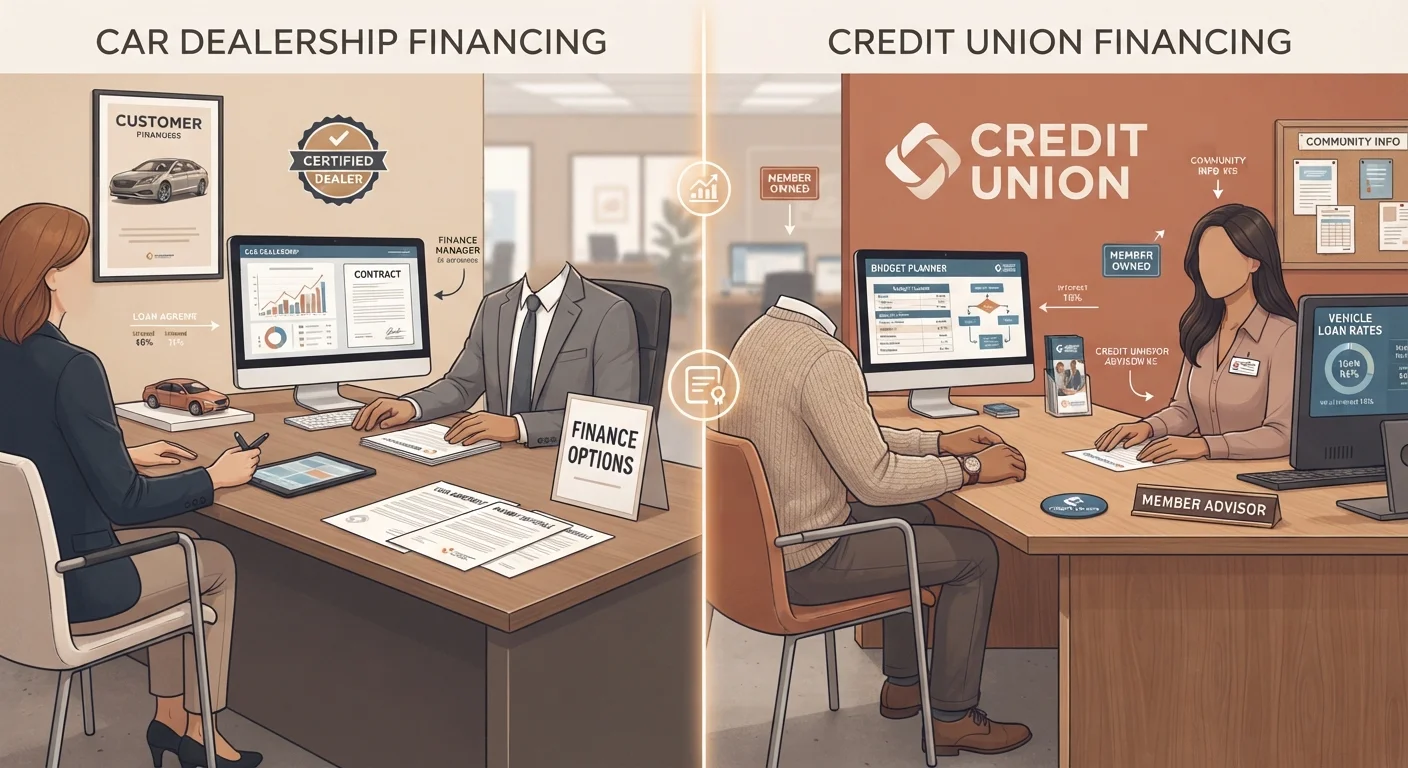
Financing is another friction point. Many lenders won't finance older vehicles or those with high mileage, and coordinating a private-party auto loan takes more lead time than a dealer's in-house finance office. Always confirm financing before meeting a seller - arriving with a pre-approved loan from your bank or credit union puts you in control. Learn how those options compare in our article on financing through a dealer vs. a bank or credit union.
Get a Pre-Purchase Inspection - Always
Before finalizing any private-party purchase, have an independent mechanic inspect the vehicle at a shop of your choosing. A thorough inspection typically costs $100-$200 and can surface issues worth far more in repair costs. If a private seller refuses to allow an independent inspection, treat that as a serious red flag and walk away.
What Dealerships Actually Provide for the Extra Cost
Dealerships carry overhead - facilities, staff, compliance costs - and that overhead is baked into their prices. But some of what you're paying for has tangible value. Certified pre-owned (CPO) programs, for instance, require multi-point inspections and often include manufacturer-backed limited warranties, which are meaningfully different from dealer-only warranties that vary widely in coverage.
$1,000-$3,000+
Typical savings buying private vs. dealer
Industry pricing data consistently shows private-party listings below dealer retail for comparable vehicles, though the gap varies by make, model, age, and local market conditions.
~$400
Average US dealer documentation fee
Documentation fees vary widely by state - some states cap them, others do not - but they represent a recurring cost that's absent from private-party transactions.
Dealer transactions also tend to be cleaner administratively. Title transfers, odometer disclosures, and lemon-law protections (which apply to new vehicles in every state and to some used vehicles under select state laws) create a documented trail. If you're financing, the dealer's relationships with multiple lenders can surface rate options quickly - though it's worth noting you should compare those rates against your own bank or credit union before accepting any offer. Budget-minded buyers sometimes discover that cutting car costs across ownership - insurance, maintenance, fuel - matters as much as the purchase price itself.
How to Protect Yourself Regardless of Which Route You Choose
A few practices apply whether you're buying from a neighbor or a franchise dealer. First, run a vehicle history report using the VIN - this surfaces accidents, title issues, odometer rollbacks, and prior ownership patterns. Second, budget for a pre-purchase inspection (PPI) by an independent mechanic you choose, not one recommended by the seller. Expect to pay $100-$200 for a thorough inspection; that's cheap relative to discovering a transmission problem post-sale.
Third, understand the total cost of ownership - not just the purchase price. Insurance rates, registration fees, expected maintenance, and fuel costs vary by vehicle, and they affect your monthly budget long after the purchase is complete. Our comparison of owning vs. leasing on a tight budget explores how ongoing costs shape the real affordability picture. Avoid common misconceptions that inflate or deflate your sense of a deal - common car-buying myths are more widespread than most buyers realize.