
How Your Environment Shapes What You Buy
Most unplanned purchases aren't random - they're predictable responses to specific situational cues. Retailers, app designers, and marketers invest heavily in understanding the conditions that soften your resistance to spending. Knowing what those conditions are is the first practical defense.
These triggers don't require weakness or poor planning to take hold. They work on nearly everyone because they exploit how human decision-making actually functions under mild stress, distraction, or social influence. The goal here isn't to shame spending - it's to surface the mechanics so you can make more deliberate choices.
For a deeper look at the cognitive biases underneath these patterns, see The Psychology Behind Why We Overspend.
The Most Common Spending Triggers
1. Store Layout and Sensory Design
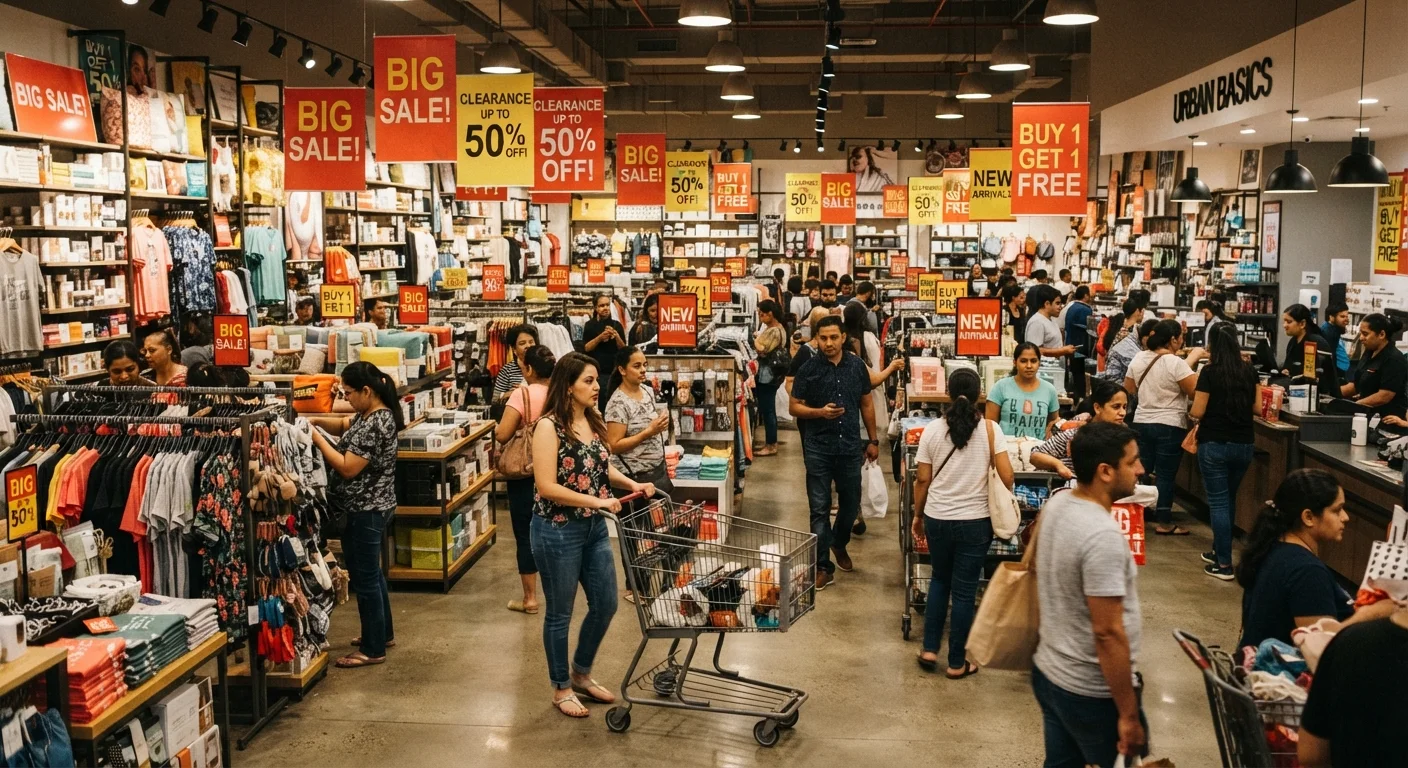
Physical retail spaces are designed around a documented principle: the longer you browse, the more you spend. Essential items like dairy and staples are typically placed at the back of grocery stores, routing shoppers past high-margin products. Ambient music tempo, lighting warmth, and scent are all variables that studies in retail psychology consistently link to dwell time and basket size.
2. Scarcity and Urgency Signals
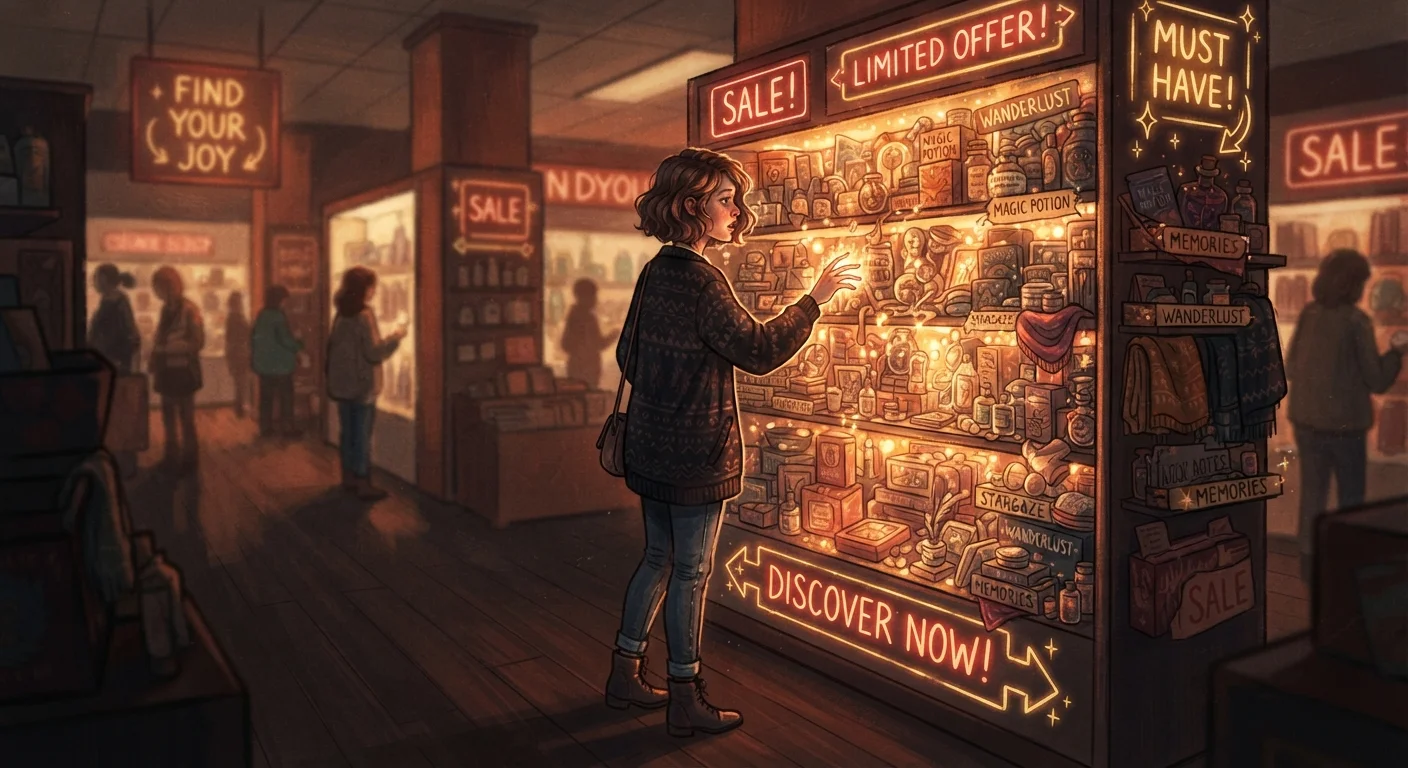
"Only 3 left" and countdown timers are engineered to activate loss aversion - the well-documented tendency to weigh potential losses more heavily than equivalent gains. These signals are effective even when the scarcity is artificial. Understanding how sale signage exploits cognitive bias helps you assess whether urgency is real or manufactured.
3. Price Anchoring
Displaying a crossed-out "original" price next to a sale price creates a reference point that makes the current price feel like a bargain - regardless of whether the original price was ever charged widely. Consumer research consistently shows that the anchor number, not the actual price, drives perceived value.
4. Emotional State
Hunger, fatigue, stress, and boredom are among the most reliable predictors of impulse spending. Shopping while any of these states are elevated reduces your capacity for deliberate evaluation. A practical countermeasure: eat before grocery runs, and avoid browsing retail apps as a boredom substitute.
5. Social Comparison
Seeing peers acquire items - whether in person or through social media - activates a comparison process that can feel like need. This is distinct from genuine utility. Pausing to ask "would I want this if no one knew I had it?" is a quick diagnostic.
6. Friction Removal in Digital Retail
One-click purchasing, saved payment details, and auto-filled forms eliminate the natural pause points that historically slowed spending. Each removed step reduces the likelihood of reconsidering. Adding deliberate friction - like removing saved cards or using a 24-hour cart rule - restores some of that buffer.
Loss aversion
A cognitive bias in which people weigh potential losses more heavily than equivalent gains. Retailers exploit this by framing purchases as avoiding a loss (e.g., missing a sale) rather than acquiring a gain.
Price anchoring
A psychological effect where the first price seen (the "anchor") disproportionately influences how subsequent prices are evaluated, often making a discounted price appear more attractive than it may be.
Impulse purchase
An unplanned buying decision made at the point of sale or during browsing, typically driven by situational cues rather than a pre-existing need or intention.
Friction (retail context)
Any step, delay, or barrier in the purchasing process that slows a buyer down. Digital retail increasingly removes friction; intentionally re-adding it can support more deliberate spending decisions.
Social comparison
The process of evaluating one's own possessions or status relative to others. In a consumer context, it can create a perceived "need" for items that serve status rather than genuine utility.
Turning Awareness Into Action
Recognizing a trigger in the moment is useful; having a pre-committed response is more reliable. System-based strategies that work even when motivation is low outlines environment design changes that reduce exposure to triggers before they activate.
Before any non-essential purchase, a brief self-audit covers most of these triggers in under a minute. See Before You Checkout: A Self-Audit for Smarter Purchase Decisions for a structured checklist. For supermarket-specific situations, The Budget Shopper's Supermarket Checklist applies these principles to a practical pre-shop routine.
When evaluating a specific discount or sale, a systematic approach beats gut instinct. How to evaluate any discount before it tempts you provides a concrete framework for that assessment.
This article is for general informational and educational purposes only and does not constitute financial or professional advice. Readers should consult a qualified professional for decisions specific to their circumstances.