
What Break-Even Actually Means
The break-even point is the exact number of uses at which a durable good's total cost equals what you would have spent buying disposable equivalents for the same number of uses. After that point, every use is money saved. Before it, the disposable option has technically cost you less.
The formula is straightforward:
Break-even uses = Durable upfront cost ÷ Cost per disposable unit
Example: a reusable silicone food storage bag costs $12. A comparable disposable zip bag costs roughly $0.15 per bag. Break-even = 12 ÷ 0.15 = 80 uses. If you use it daily for lunch, you hit 80 uses in under three months. If you pull it out once a month for camping, it takes nearly seven years - and by then it may have cracked or been lost.
This is the core insight that most purchase decisions skip. For a deeper framework, see how to calculate total cost of ownership before committing to any higher-priced alternative.
Track Your Actual Usage First
Before buying a durable alternative, spend two weeks counting how often you use the disposable version. This single step eliminates most bad durable purchases. If you're going through two paper towels a week, a $30 set of cloth towels will take years to break even - if ever. Real numbers beat optimistic estimates every time.
The Hidden Costs That Shift the Math
Break-even analysis only works if you account for all costs on both sides of the ledger - not just the purchase price.
Durable-side costs to include:
- Maintenance: razor cartridges for safety razors, filter replacements for water pitchers, blade sharpening for knives
- Storage: reusable items often need space, bags, or cases
- Upkeep time: washing cloth napkins, drying reusable produce bags - time has real value
- Early failure: if a durable item breaks at use 40 and break-even was 80, you lost money
Disposable-side costs to include:
- Frequency creep: disposables are often used more wastefully because the cost feels invisible per unit
- Cumulative waste fees: in some municipalities, excess trash volume incurs additional costs
- Subscription lock-in: printer ink, coffee pods, and proprietary filters can escalate over time
Once these factors are folded in, the adjusted break-even point often shifts - sometimes dramatically. The lifetime value formula is a practical tool for running this comparison on any specific purchase.
| Factor | Durable Goods | Disposable Alternatives | |
|---|---|---|---|
| Upfront cost | Higher | Low to zero | |
| Per-use cost (long run) | Lower after break-even | Fixed, repeating | |
| Maintenance required | Yes - cleaning, parts | None | |
| Best for high-frequency use | Yes | No - costs compound fast | |
| Best for infrequent use | Rarely | Usually yes | |
| Risk of early failure | Possible - delays break-even | Not applicable | |
| Storage demand | Yes | Minimal |
Categories Where Durables Almost Always Win
Certain product categories have usage patterns that make reaching break-even nearly inevitable for most households:
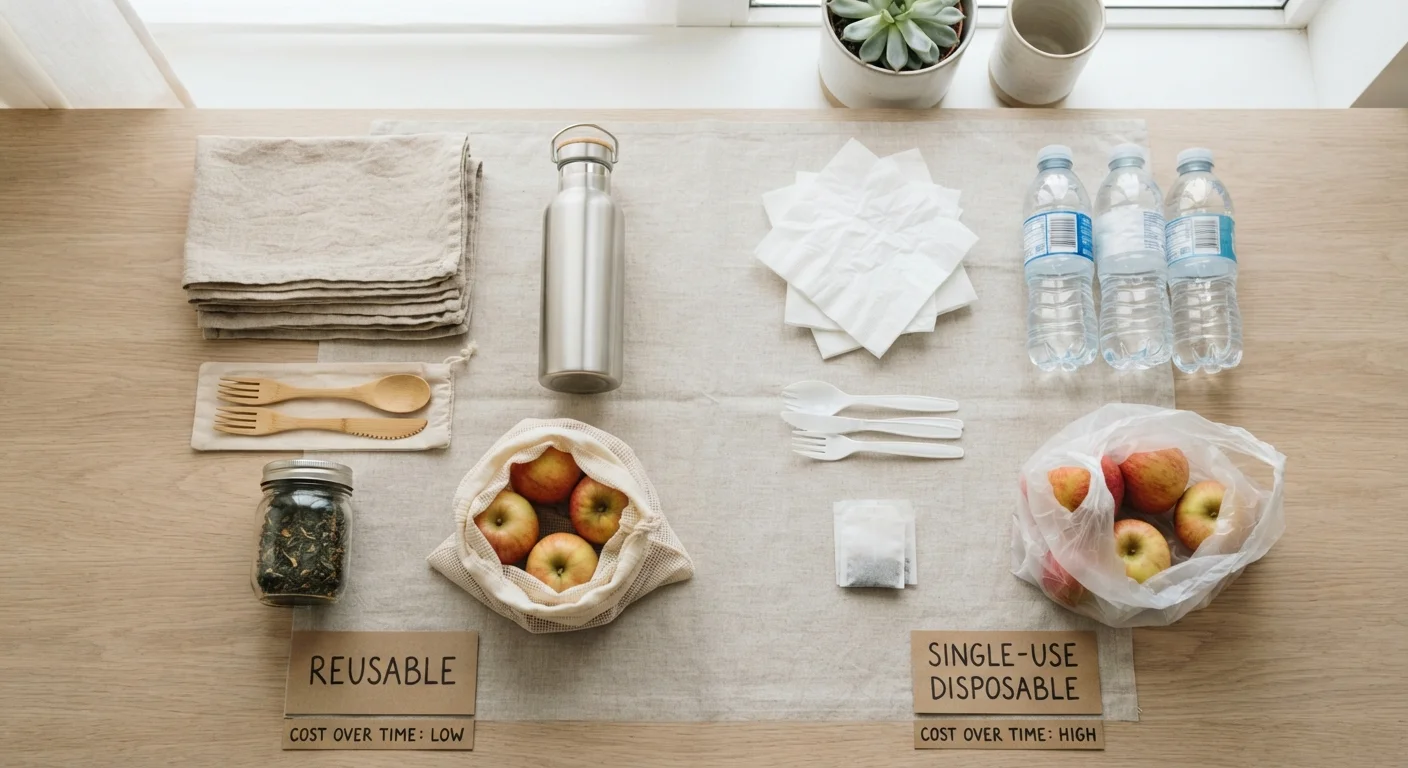
- Kitchen basics: cast iron cookware, reusable containers, cloth towels - high daily use, decades of lifespan
- Hydration: insulated water bottles used multiple times daily break even against bottled water within weeks
- Grooming tools: quality razors with replaceable blades, electric toothbrush heads - lower cost-per-use than disposable equivalents at typical usage rates
- Batteries: rechargeable batteries used in frequently-cycled devices (remotes, game controllers) typically recover their cost within 3-6 months
These categories share a profile: the durable version is used consistently, has a long functional life, and the disposable substitute must be repurchased often enough to accumulate real cost fast. See where low prices reliably backfire for the flip side of this dynamic.
Categories Where Disposables Often Make More Sense
Not every category favors the durable option - even when the math looks promising on paper:
- Medical and hygiene items: sterile single-use products exist for legitimate safety reasons; the break-even calculus doesn't override sanitation requirements
- Infrequent specialty tools: a durable item used once or twice a year may never break even before it deteriorates from non-use
- Travel-specific needs: trial-size or single-use toiletries often make practical sense when volume restrictions, spills, and luggage limits apply
- Items with rapidly changing specifications: technology accessories can become obsolete before a durable version recovers its cost
Honest self-assessment is the deciding variable. Research consistently suggests that consumers tend to overestimate how often they'll use an item they're considering buying - a bias sometimes called the optimism gap. If you're not already in the habit of using the disposable version regularly, a durable upgrade is unlikely to change that behavior. This same dynamic affects bulk buying decisions; when bulk buying saves vs. costs more explores the parallel trap.
Applying This to Your Own Purchases
Before any durable-vs-disposable decision, run a quick three-question check:
- What is my realistic weekly usage rate? Not aspirational - actual. Base it on current disposable consumption.
- How many uses until break-even? Divide the durable's price by the per-unit disposable cost.
- Does the durable's expected lifespan exceed that break-even number? If yes, the durable wins financially. If no, it doesn't.
The metric that ties this together most cleanly is cost-per-use. Cost per use - total price divided by number of uses - lets you compare any two options on equal footing, regardless of how different their upfront prices look.
Applied consistently, this framework steers you away from both reflexive cheapness and reflexive premium-buying. The goal isn't to always choose the reusable or always choose the disposable - it's to know exactly which one earns its place in your budget. For a broader system around these decisions, the smarter spending habits hub offers additional frameworks built around the same principles.