
What Bulk Buying Actually Means (and Doesn't)
Bulk buying — purchasing items in larger-than-usual quantities to reduce per-unit cost — is a staple advice in personal finance. The logic is straightforward: pay more now, pay less per item. But that simple equation hides several variables that determine whether a bulk purchase is genuinely smart or just an expensive-looking deal.
Understanding those variables starts with separating two things people often conflate: a lower unit price and actual savings. The two are not the same. For a deeper framework on when a lower price translates to real value, see our guide to smarter spending decisions.
Lower cost per unit on frequently used items
Buying in larger quantities typically reduces the price per ounce or per unit, which adds up meaningfully over time on products you consume consistently, such as cleaning supplies or dry pantry staples.
Fewer shopping trips and time saved
Stocking up on staples reduces how often you need to replenish them, cutting both time spent shopping and the incidental impulse purchases that accompany frequent store visits.
Hedge against price inflation on stable goods
Purchasing non-perishables in quantity when prices are favorable can provide a buffer against future price increases, particularly for commodity products like cooking oil, canned goods, or paper products.
Reduces packaging waste per unit consumed
Larger containers typically use less packaging material relative to the product quantity, which is a modest environmental benefit alongside the financial one.
Where Bulk Buying Genuinely Pays Off
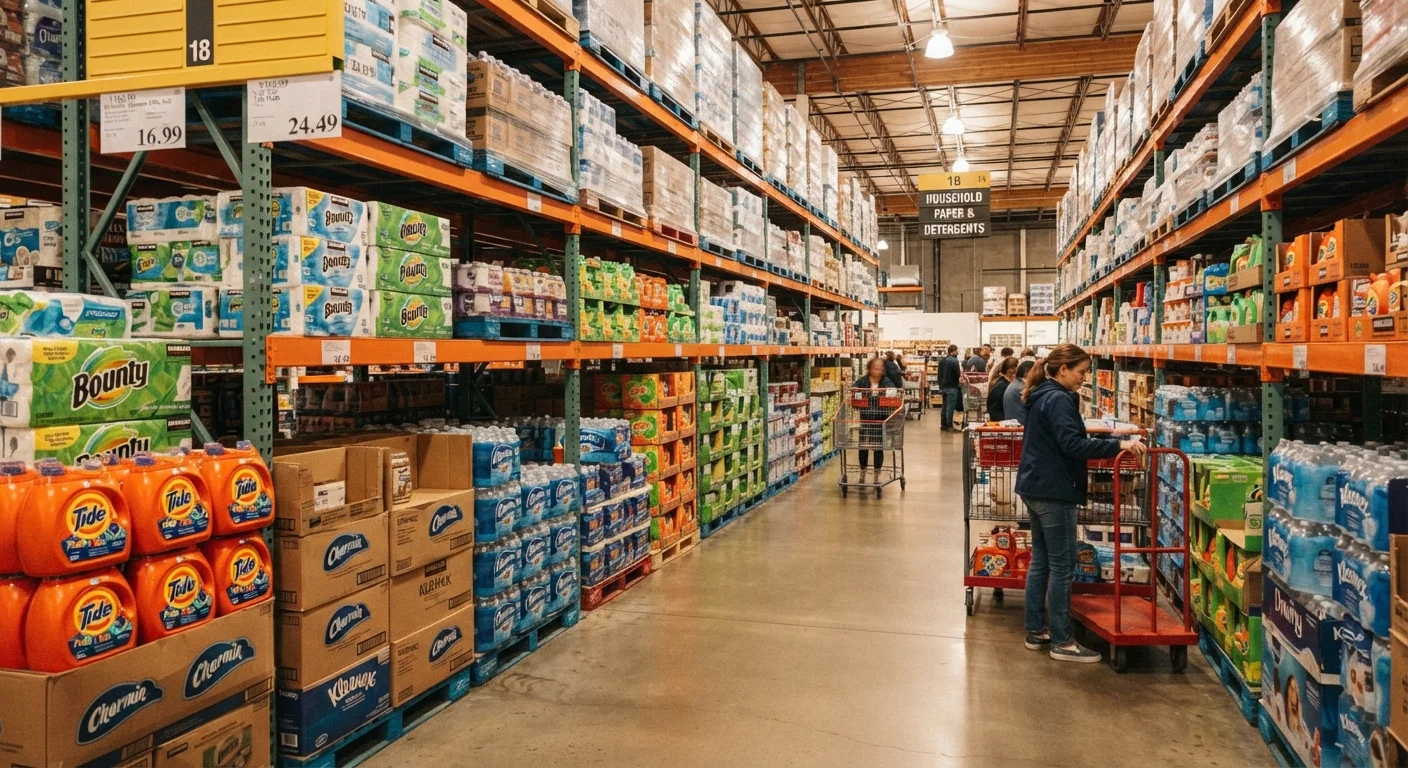
The clearest wins are concentrated in a specific category: non-perishable items you use at a known, steady rate. Think laundry detergent, dish soap, toilet paper, canned goods, rice, pasta, and dry beans. These have no spoilage risk, stack or store easily, and your usage rate is predictable enough that you will eventually consume everything you bought.
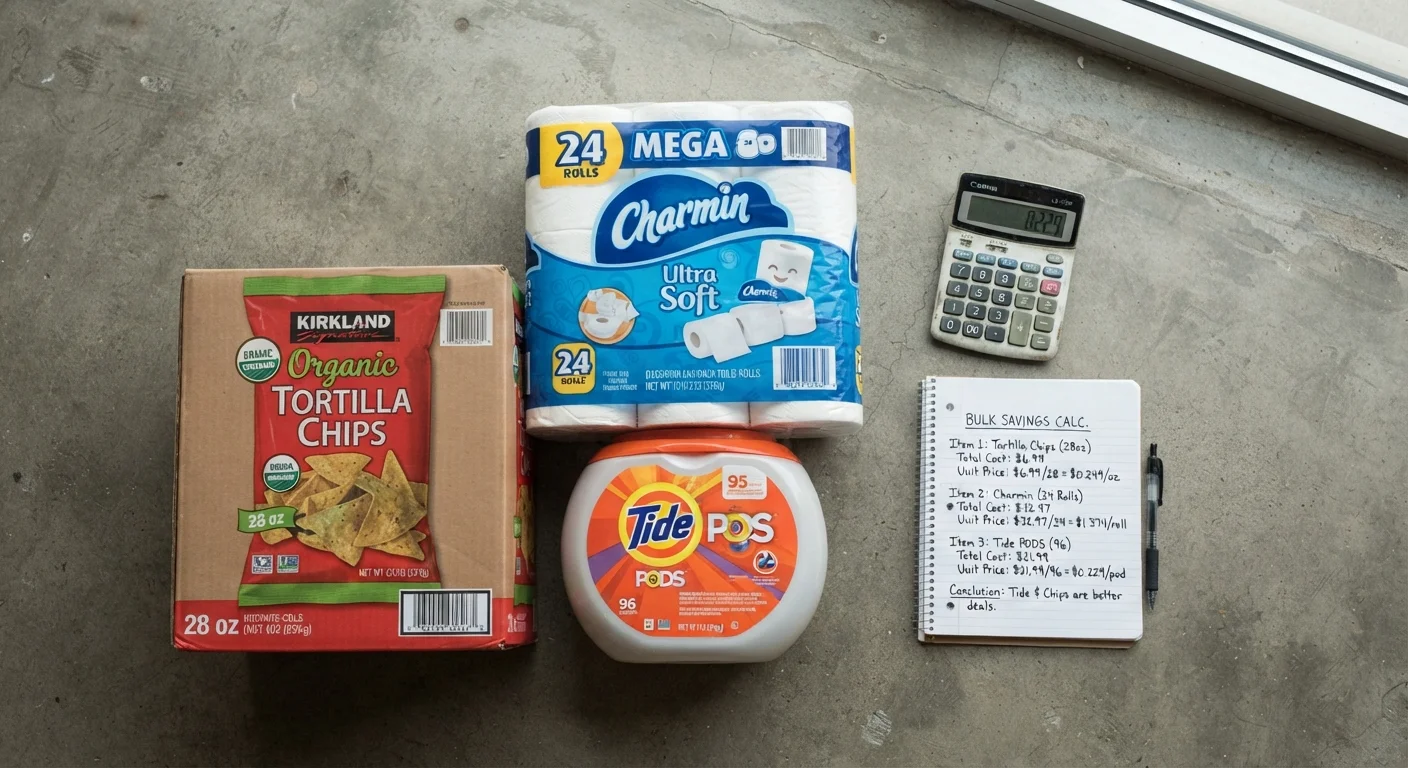
Bulk buying also makes financial sense when the per-unit price difference is meaningful. Always compare price-per-ounce or price-per-unit (most grocery store shelf labels include this), not just the sticker price on the package. A 64-oz bottle isn't a deal if it costs more per ounce than two 32-oz bottles on sale.
~30%
US household food waste estimate
The USDA estimates that roughly 30–40% of the US food supply is wasted, with household-level waste being a major contributor — a dynamic that bulk perishable purchases can worsen.
10–40%
Typical unit-price reduction from bulk
Consumer research generally finds that bulk or club-size packaging offers unit cost savings in the 10–40% range compared to standard sizes, though this varies widely by product category and retailer.
Households with higher consumption — families with children, for instance — capture bulk savings more reliably because turnover is fast enough to prevent waste. For single-person households, the calculus is often reversed.
When Bulk Buying Costs You More
The most common way bulk buying backfires is through food waste. Perishables bought in bulk — produce, dairy, bread, fresh meat — spoil faster than most people expect. Waste isn't just a sustainability issue; it's a direct financial loss. Our article on where grocery money goes to waste covers exactly how this pattern quietly drains budgets week after week.
Beyond spoilage, two other factors erode bulk savings:
1. Storage costs and constraints. Warehouse quantities require physical space. If you're renting a smaller apartment, buying a year's supply of paper towels may be genuinely impractical — or it may mean keeping items in ways that accelerate deterioration (humidity, heat).
2. Cash flow impact. A $120 bulk purchase instead of a $25 standard-size purchase locks up $95 in goods you won't use for months. If that cash was needed for something else — or could have been earning even modest interest — the real cost of bulk buying is higher than the receipt suggests.
Spoilage erases savings on perishable goods
Fresh produce, dairy, and bread bought in bulk frequently go bad before they're fully used. Throwing away a third of a bulk purchase can make it more expensive than buying smaller quantities that you'll actually finish.
Large upfront cost strains monthly cash flow
Bulk purchases require spending significantly more in a single transaction, which can create budget pressure in the short term even if they represent savings over a longer horizon.
Storage space is a real constraint
Warehouse-sized quantities require physical room to store properly. Inadequate storage conditions — humidity, heat, lack of shelving — can degrade product quality and negate the savings.
Overconsumption risk on discretionary items
Research in consumer behavior suggests that having more of a product on hand can increase the rate at which people use it, particularly for food and beverage items, reducing or eliminating anticipated savings.
Larger packages aren't always cheaper per unit
Unit pricing doesn't automatically favor the biggest package. Retailers sometimes price family or bulk sizes at a premium, particularly for branded goods or during promotional periods on standard sizes.
A Practical Framework for Deciding
Before adding a bulk item to your cart, run through three quick checks:
- Will I use all of it before it expires or degrades? Be honest about actual consumption, not aspirational. If you currently buy one bottle of hot sauce every eight months, a six-pack is a bad bet.
- Is the per-unit price actually lower? Check the shelf tag's unit price. Some bulk packaging carries a premium — particularly for products marketed as "value size" rather than truly warehouse-scale quantities. Our article on why bulk isn't always the deal it looks like walks through how to do this calculation properly.
- Do I have the cash and space? A good deal you can't comfortably afford upfront isn't a good deal — it's a cash flow problem wearing a discount's clothing.
Applying this filter consistently — rather than defaulting to bulk as always frugal — puts you in a much stronger position. For a broader look at when investing more upfront is genuinely the thriftier long-term choice, see our piece on buying once vs. buying twice.
The Membership Fee Factor
Warehouse clubs typically charge an annual membership fee. If your household's bulk purchases are modest, this fixed cost can offset or exceed the per-unit savings you'd otherwise capture. It's worth estimating your likely annual savings before committing to — or renewing — a membership. As a general rule, the value improves as household size and consistent consumption increase.