
The Mechanics Behind the Markdown
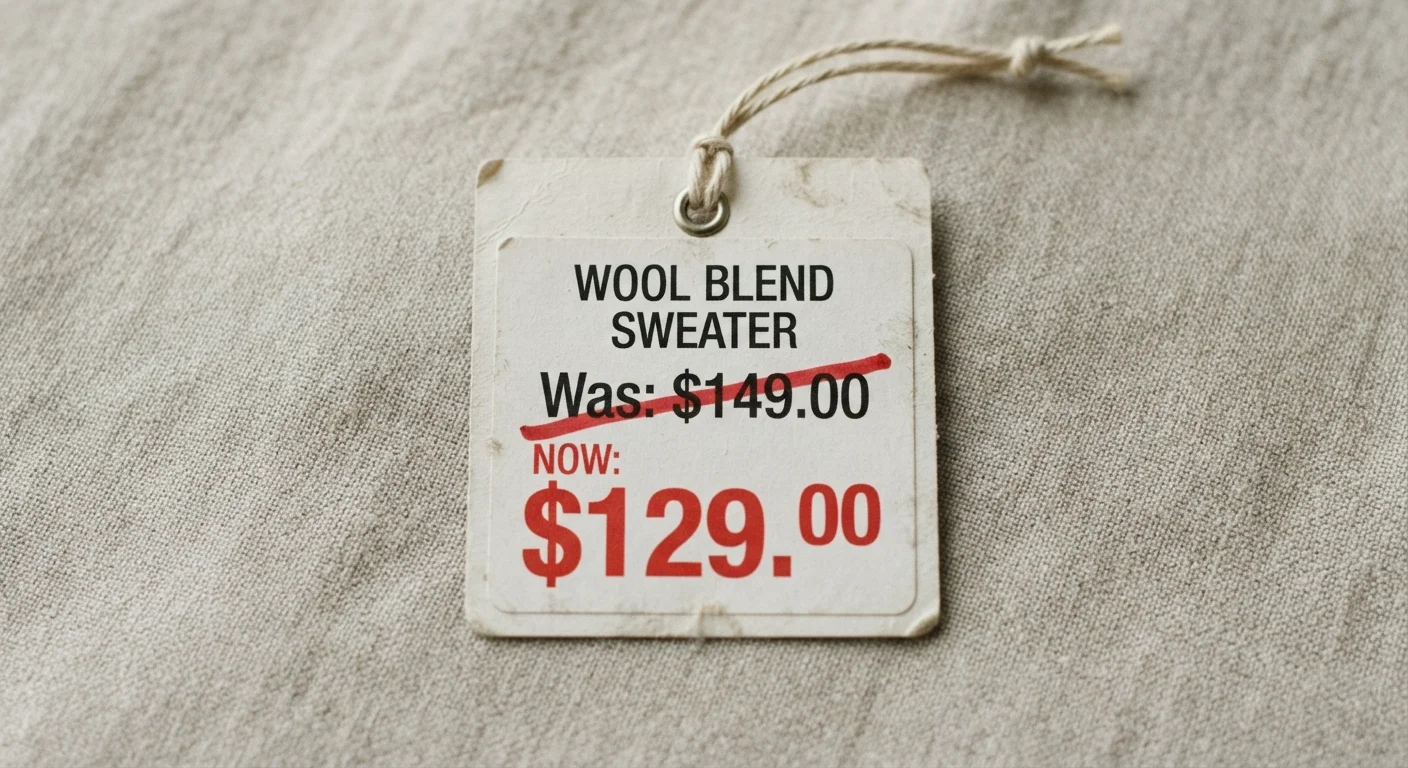
When you see 'Was $99, Now $49,' your brain does something automatic: it calculates a $50 saving and frames the purchase as smart. That mental shortcut is exactly what the pricing strategy is designed to trigger. The technical term is reference pricing - using a higher number to make a lower number look like a great deal.
The catch is that the 'was' price doesn't have to reflect reality. A retailer can set a suggested retail price of $99, sell the item at $49 from day one, and still display the markdown. In some cases, the higher price is offered briefly - or only at a small number of locations - to create a paper trail. The resulting 'discount' is legally defensible but practically meaningless to you as a shopper.
This connects directly to how anchor pricing distorts perceived value. Once your brain latches onto $99 as the reference point, $49 feels like a win even if the item was always worth $45 in the open market. For a deeper look at that cognitive mechanism, see how anchor pricing distorts your sense of value.
~90%
Of shoppers influenced by reference prices
Research in behavioral economics consistently finds that the majority of consumers use a displayed 'original' price as a primary anchor when judging whether a deal is good, even when that price was never widely charged.
64%
Of online 'sale' prices unchanged 3 months prior
A study by consumer advocacy researchers found that a substantial share of items marked 'on sale' on major e-commerce platforms had not been sold at the reference price at any point in the preceding 90 days.
How Retailers Manufacture a 'Was' Price
There are several common methods retailers use to establish a reference price that never reflected a real transaction at scale:
- Manufacturer's Suggested Retail Price (MSRP): MSRP is set by the manufacturer and rarely reflects what customers actually pay. Displaying it as the 'original' price makes any lower price look like a discount.
- Brief high-price windows: A product is listed at the inflated price for a short period - sometimes just a few days - then marked down. This creates a technical basis for the 'was' price without it ever being a real market price.
- Outlet-specific pricing: Many outlet and clearance products are manufactured exclusively for that channel and tagged with a 'compare at' price from a mainline store where the identical product was never actually sold. Our analysis of outlet store savings goes into this in more detail.
- Perpetual sales: Some retailers run items at the 'sale' price so consistently that the 'original' price is effectively fictional. The comparison between flash sales and everyday low pricing breaks down which model actually benefits shoppers.
U.S. Rules on Reference Pricing Are Inconsistent
The FTC's Guides Against Deceptive Pricing state that a 'former price' is only legitimate if the item was genuinely offered at that price for a reasonable period. However, what counts as 'reasonable' is not precisely defined, and enforcement varies significantly by state. Some states - including California - have stricter disclosure requirements, but shoppers should not assume any displayed 'was' price has been independently verified.
What to Check Instead of the Tag
The 'was' price on a tag tells you almost nothing useful on its own. Here's what actually helps you evaluate whether you're looking at a real deal:
- Price history: Tools that track historical pricing data can show you what a product sold for over the past 30, 60, or 90 days. If the 'sale' price has been the standard price for most of that window, the markdown is cosmetic. See what price history tools actually tell you for a practical guide to using them.
- Competitor pricing: Check what the same item - not a similar one, the exact item - sells for at other retailers. A price that's competitive across multiple sellers is a more credible signal of market value than any single 'original' price.
- Cost per use: For items you'll use repeatedly, the total price matters less than what you're paying per use or per unit. The complete guide to value vs. price decisions walks through this calculation in detail.
- Timing patterns: Many categories follow predictable discount cycles - appliances around holidays, clothing at end-of-season. Knowing the cycle helps you judge whether a price is genuinely seasonal or artificially created.
Why This Matters Beyond Retail
Reference pricing isn't limited to clothing racks and electronics. The same mechanic appears in auto dealership window stickers (MSRP versus dealer price), travel booking sites ('was $320/night, now $189'), and subscription services that display an annual plan as a discount off a monthly rate that few people actually pay. Recognizing the pattern across categories makes you a more skeptical - and more effective - consumer in all of them.
The shopping myths that cost you money at checkout covers other persistent retail beliefs that work against shoppers in similar ways. The core habit to build is simple: treat the 'was' price as marketing data, not financial fact, and verify market value independently before deciding a deal is real.