

Why meal planning fails - and how to fix that from the start
Most meal planning advice assumes you enjoy the process. You don't - and that's fine. The problem isn't your motivation; it's that most systems are designed for food enthusiasts with free weekends, not for people who just want to eat reasonably well without hemorrhaging money at the grocery store.
Traditional meal planning fails for three predictable reasons: it's too rigid, it takes too long, and it ignores what's already in the kitchen. The fix is a system that's loose enough to survive a busy week, fast enough to do in under 20 minutes, and grounded in what you already own before asking you to buy anything new.
If you're curious how planned shopping compares to winging it financially, meal planning vs. spontaneous grocery shopping lays out what the research suggests about waste and weekly spend.
What you will need
Your tools and the five-step system
You don't need an app, a subscription service, or a laminated color chart. A notes app or a scrap of paper does the job. Below are the tools that help, followed by the five steps that make up the full system.
Notepad or notes app
Record your weekly meal roster and grocery list in one place.
Whiteboard or fridge magnet pad
Display the week's meals somewhere visible so everyone in the household sees the plan.
Permanent marker and masking tape
Label leftovers and batch-cooked items in the fridge with dates to reduce waste.
Build your personal meal roster
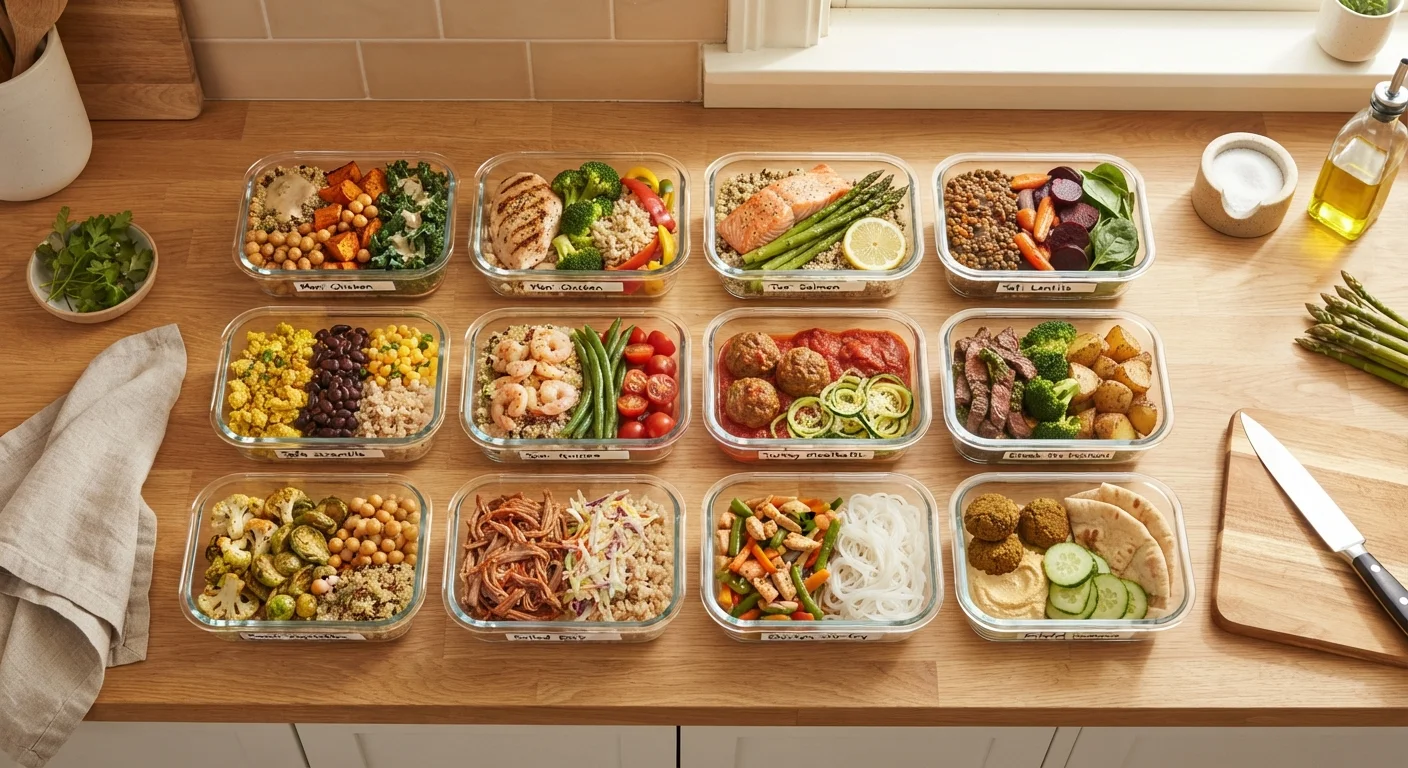
Write down every meal your household already likes and can realistically cook. Aim for 5-7 dinners and 3-4 lunches. These don't need to be exciting - reliable and cheap is the goal. Think rice and beans, pasta with jarred sauce, sheet-pan vegetables with eggs, or soup made from whatever's in the fridge.
This roster becomes your permanent menu. You'll rotate from it weekly rather than starting from scratch every Sunday, which is where most meal-planning attempts die.
Check what you already have before planning anything
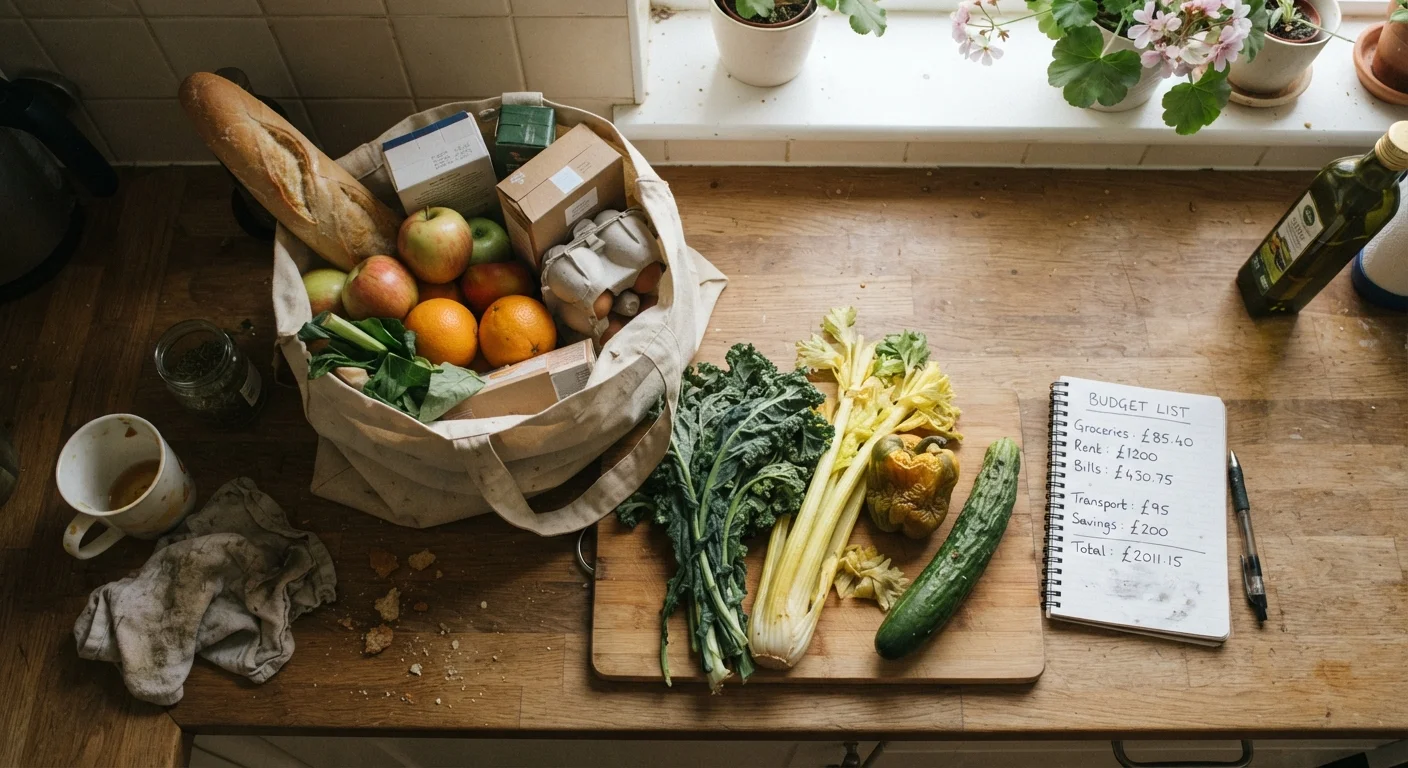
Before you write a single meal on the week's plan, spend three minutes scanning your fridge, freezer, and pantry. Note what needs to be used up soonest. Wilting spinach, a half-used can of chickpeas, or a bag of lentils near its use-by date should anchor the week's first few meals.
This single habit is the most direct way to cut food waste - and therefore grocery spending. Where grocery money most often goes to waste breaks down exactly how much unused food silently drains a typical household budget each week.
Plan 4-5 dinners, not 7
Planning every single night creates pressure and sets you up to fail. Instead, plan 4-5 dinners and leave 2-3 nights intentionally open for leftovers, batch-cooked meals, or a simple fallback like scrambled eggs and toast. This built-in flexibility is what separates a plan that lasts from one you abandon by Wednesday.
Write the meals down in a loose order - not a strict schedule. If Tuesday's chicken stir-fry sounds better on Thursday, swap it. The goal is a shortlist of decisions already made, not a rigid timetable.
Write your grocery list from the plan, not from habit
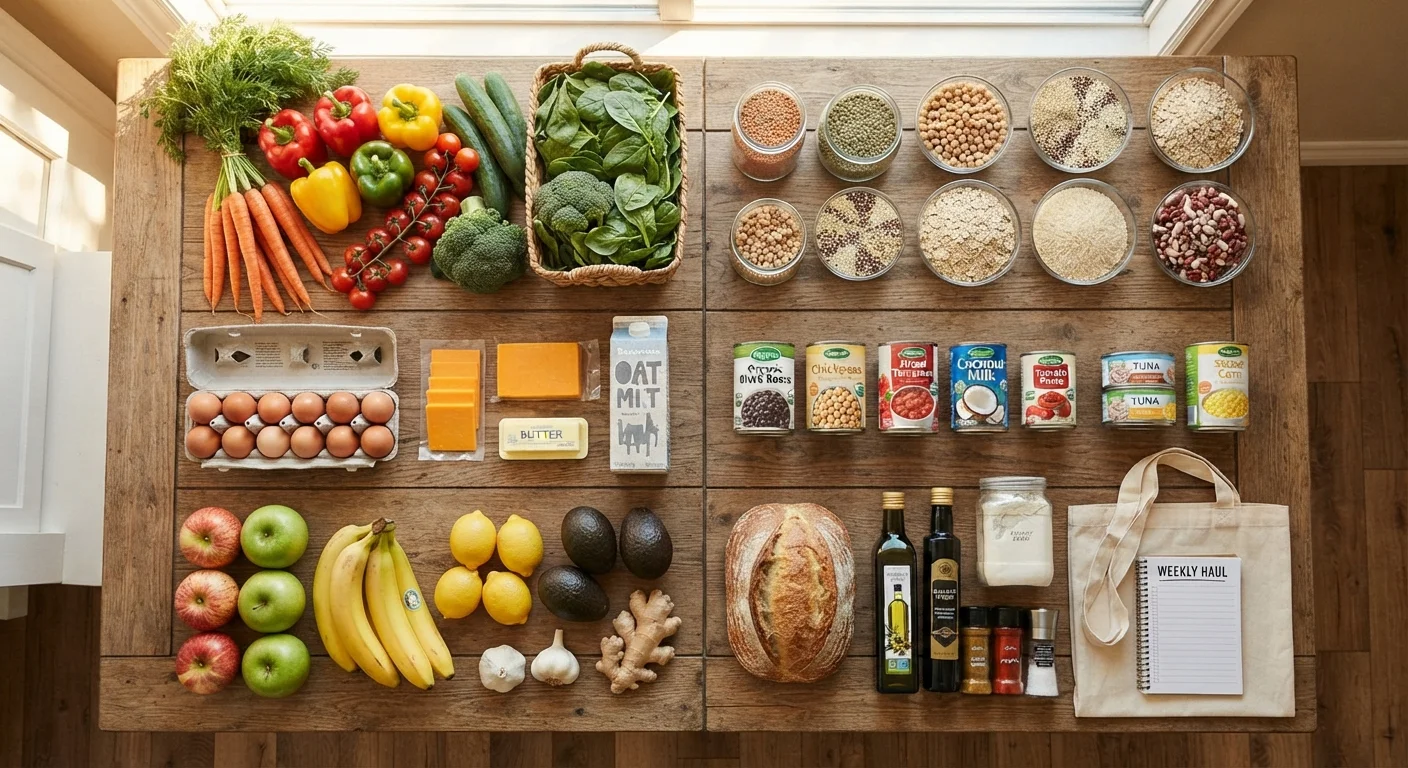
Once your 4-5 dinners are chosen, list every ingredient you need that you don't already have. Organize the list by category - produce, proteins, dry goods, dairy - to move through the store faster and avoid backtracking that leads to impulse buys.
Keep the list on your phone or a running notepad so household members can add items throughout the week. A shared, visible list prevents duplicate purchases and forgotten staples. For a broader structure on how to allocate your weekly grocery dollars across categories, see our weekly grocery budget framework.
Do a two-minute end-of-week check
On the last day of your meal week - usually Saturday or Sunday - spend two minutes noting what worked and what didn't. Did one meal get skipped every week? Pull it from the roster. Did a particular ingredient go to waste repeatedly? Stop buying it. Over four to six weeks, this micro-review turns a rough plan into a personalized system that practically runs itself.
This iterative habit is what reducing food waste at home is really built on - not willpower, but a feedback loop.
Keep It Boring on Purpose
Variety is overrated when you're on a tight budget. Eating the same 6-7 meals on rotation reduces decision fatigue, simplifies shopping, and makes it far easier to buy ingredients in quantities that minimize waste. Save culinary experimentation for when you have the time and headspace - the weekly plan is not the place for it.
Keeping the system going without burning out
The biggest threat to any meal plan isn't a bad week - it's quitting after a bad week. When the plan falls apart (and occasionally it will), the only thing that matters is returning to step 2 the following Sunday. Don't restart from scratch; just recheck what's in the fridge and repick from your roster.
Over time, the roster updates itself, the grocery list gets faster to write, and the weekly check-in shrinks to almost nothing. What starts as a deliberate effort becomes a default habit - one that quietly keeps your grocery bill predictable and your food waste low without demanding much of your attention.
This article is for general informational purposes only and does not constitute financial or nutritional advice tailored to your individual circumstances.