
Why Food Waste Hits the Grocery Budget Hard
Food waste isn't just an environmental concern - it's a direct money leak. Research from the USDA estimates that the average American household discards between 30 and 40 percent of its food supply. For a budget-conscious household, that's money spent on groceries that never makes it to a meal.
The good news: most food waste is preventable with a few consistent habits. You don't need expensive gadgets or elaborate meal prep systems. What you need is a clearer understanding of where food actually goes bad and why - then a handful of targeted practices to stop it. If you're already thinking about eating well on a tight budget, reducing waste is one of the highest-return steps you can take.
30-40%
Share of US food supply discarded
According to USDA estimates, American households discard nearly a third of their food - the majority of which is preventable.
$1,500+
Estimated annual household food waste cost
The Natural Resources Defense Council has estimated that the average family of four loses over $1,500 per year to discarded food.
Best Practices for Reducing Food Waste at Home
These habits are ranked by the scale of their impact. Start with the first two or three if you're new to this - they alone can meaningfully reduce what gets thrown out each week.
Do a fridge audit before every grocery trip.
Most overbuying happens when you don't know what's already at home. A quick check before shopping prevents duplicate purchases and keeps older items visible so they get used first.
Store foods correctly for their category.
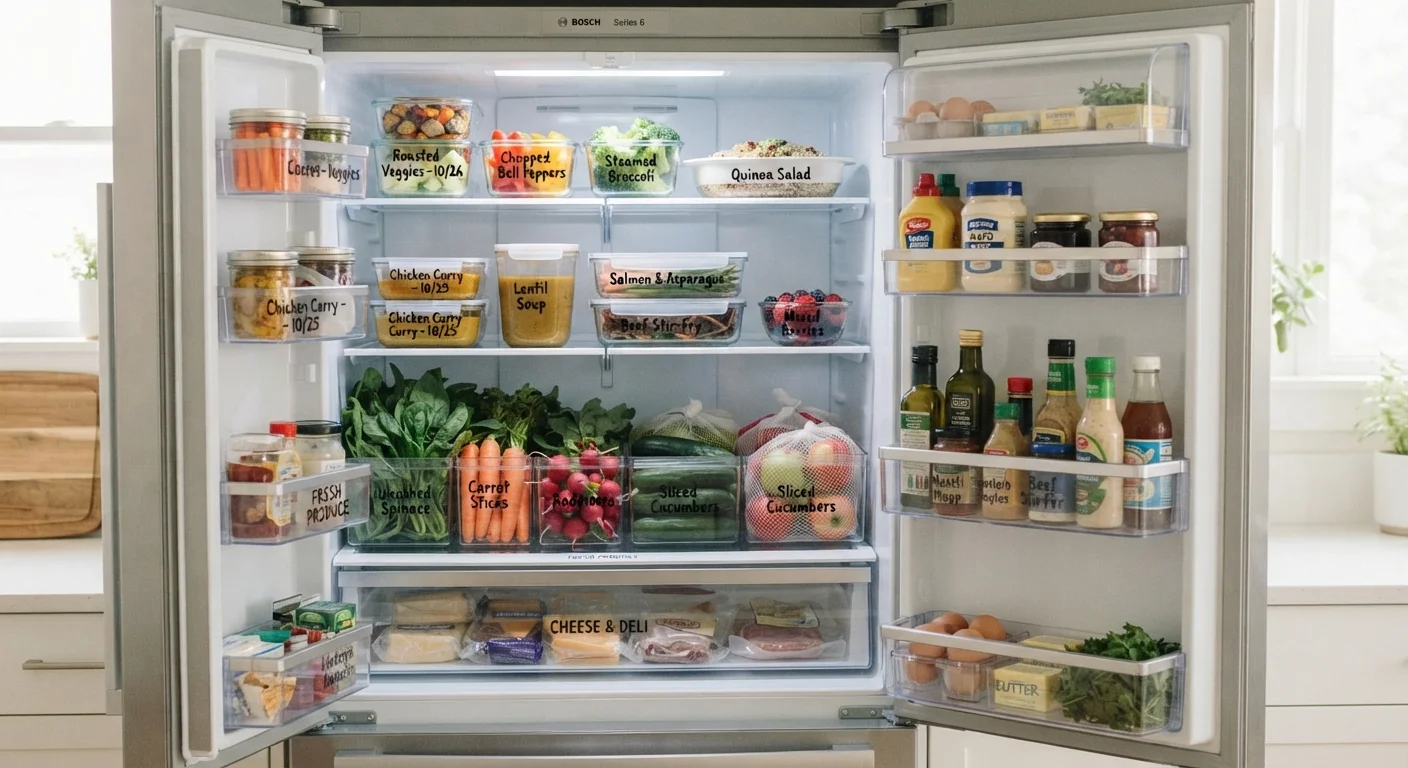
Improper storage is one of the leading causes of premature spoilage. Herbs, leafy greens, berries, and root vegetables all have different storage needs - ignoring them shortens their usable life significantly.
Use your freezer as a preservation tool, not a food graveyard.
The freezer extends the life of nearly every perishable - cooked grains, meat, bread, most vegetables, and even dairy like shredded cheese. Treating it as an active part of your weekly food system rather than long-term storage prevents waste before it happens.
Cook scraps and near-expired ingredients intentionally.
Vegetable peels, stems, broth-worthy bones, and wilting greens are still nutritious and usable. Treating them as ingredients rather than waste can add one or two meals per week at near-zero cost.
Plan meals loosely around ingredients, not recipes.
Buying specific ingredients for specific recipes often leaves partial items unused. Planning loosely - choosing proteins, grains, and vegetables that work across multiple dishes - gives you flexibility to use everything you buy.
Label and date leftovers immediately after cooking.
Unlabeled containers get ignored or forgotten. A simple label with the date removes guesswork and makes it much easier to prioritize what needs to be eaten first.
Quick Actions You Can Take Today
You don't have to overhaul your entire kitchen routine at once. These immediate steps can reduce waste starting with your very next grocery trip.
For a deeper look at the specific habits that drain grocery budgets without most people noticing, see where grocery money most often goes to waste. And if you're building out a fuller spending strategy, a weekly grocery budget framework can help you structure every dollar more intentionally.
This article provides general information about food storage and household habits. It is not medical or nutritional advice. Consult a qualified healthcare or nutrition professional for guidance specific to your health needs.