
Why the Price of Produce Swings So Much
If you've ever noticed that strawberries cost $2 a pint in June and $5 in January, you've already observed the core mechanic: price follows supply. When a crop is harvested in volume locally, more of it hits the market at once, competition rises, and prices fall. When the same crop must be shipped from another country or grown in an energy-intensive greenhouse, those added costs land on the price tag.
There's also the storage factor. Produce held in cold storage for months to extend its retail life requires infrastructure and energy - costs that accumulate and get passed to you. In-season produce skips most of that chain: harvested, shipped short distances, shelved, and sold quickly.
Understanding this helps you stop treating price spikes as random and start anticipating them. If you're finding your food spend keeps creeping upward, seasonal misalignment - buying the same items year-round regardless of season - is often a quiet contributor. See how this fits into broader patterns in our piece on grocery bill creep.
~50%
Potential price difference: in-season vs. out-of-season produce
USDA Economic Research Service data consistently shows that in-season domestic produce can cost half the price of the same item imported or stored out of season.
30%
Household food that is wasted on average
According to USDA estimates, roughly 30-40% of the US food supply is wasted, much of it produce bought without a plan - a problem seasonal meal planning directly addresses.
$1,500+
Annual grocery savings reported by seasonal shoppers
Consumer budget analyses suggest households that intentionally shop seasonally and batch-freeze can save over $1,500 per year compared to year-round fixed-menu grocery shopping, though individual results vary widely.
The Nutritional Case for In-Season Buying
Seasonal produce isn't just a money argument - there's a reasonable nutritional case too. Fruits and vegetables are generally at their highest nutrient density when allowed to ripen fully on the plant before harvest. Long-distance shipping requires early picking, and nutrient degradation continues during transit and storage.
This doesn't mean out-of-season produce is nutritionally worthless. But if you're choosing between a January tomato that traveled from overseas and a frozen tomato product processed at peak summer harvest, the frozen option may actually deliver more. Our explainer on frozen vegetables vs. fresh covers this evidence directly.
The practical takeaway: in season and local is generally better; frozen is a strong fallback; out-of-season fresh is usually the worst value on both cost and nutrition simultaneously.
“Eating with the seasons is not a trend - it's a return to how food systems actually work. When supply aligns with demand locally, prices drop, freshness improves, and less energy is wasted moving food across hemispheres.”
— Marion Nestle, Professor Emerita of Nutrition, Food Studies, and Public Health, New York University
How to Build Meals Around What's in Season
The habit shift required is simple but real: instead of deciding what you want to eat and then buying ingredients, look at what's cheap and abundant first, then plan meals around that. This is how budget-savvy cooks have always worked.
Practically, this means:
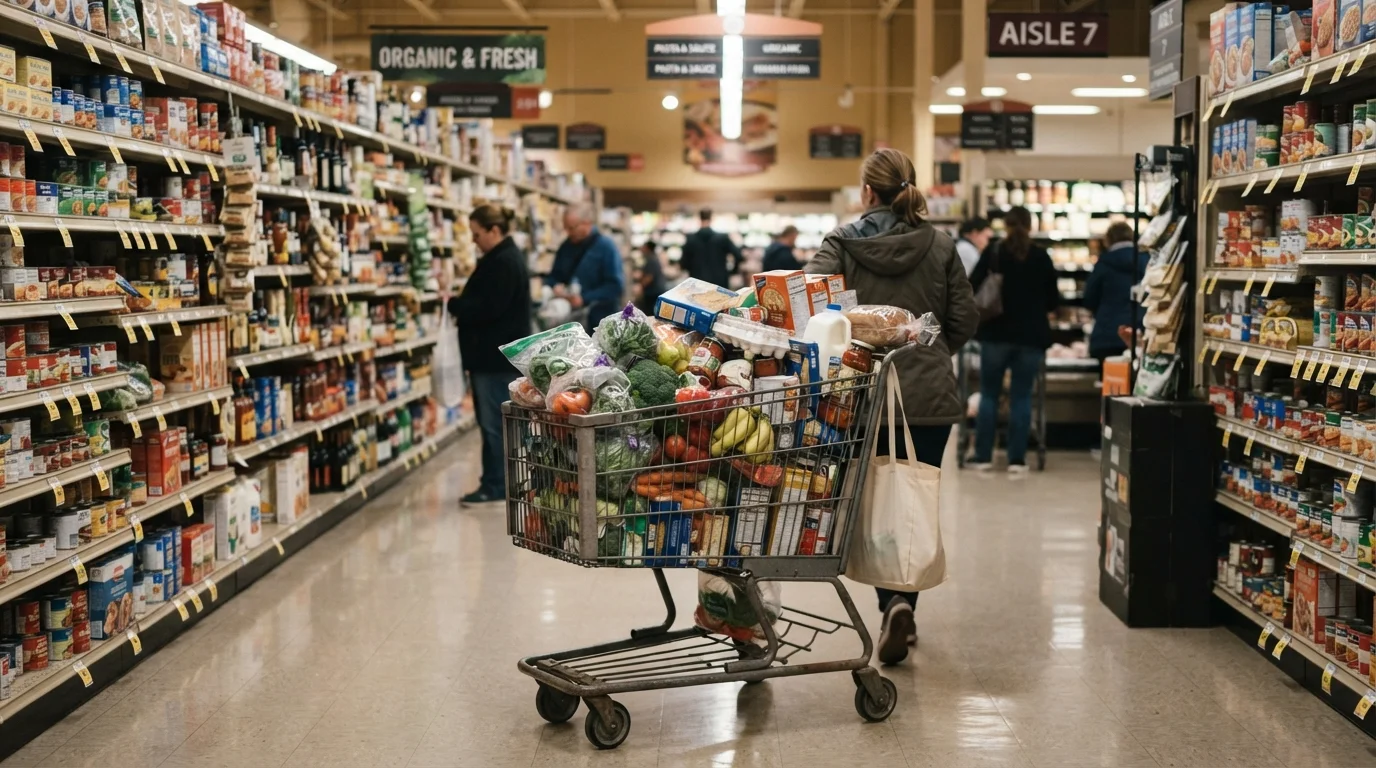
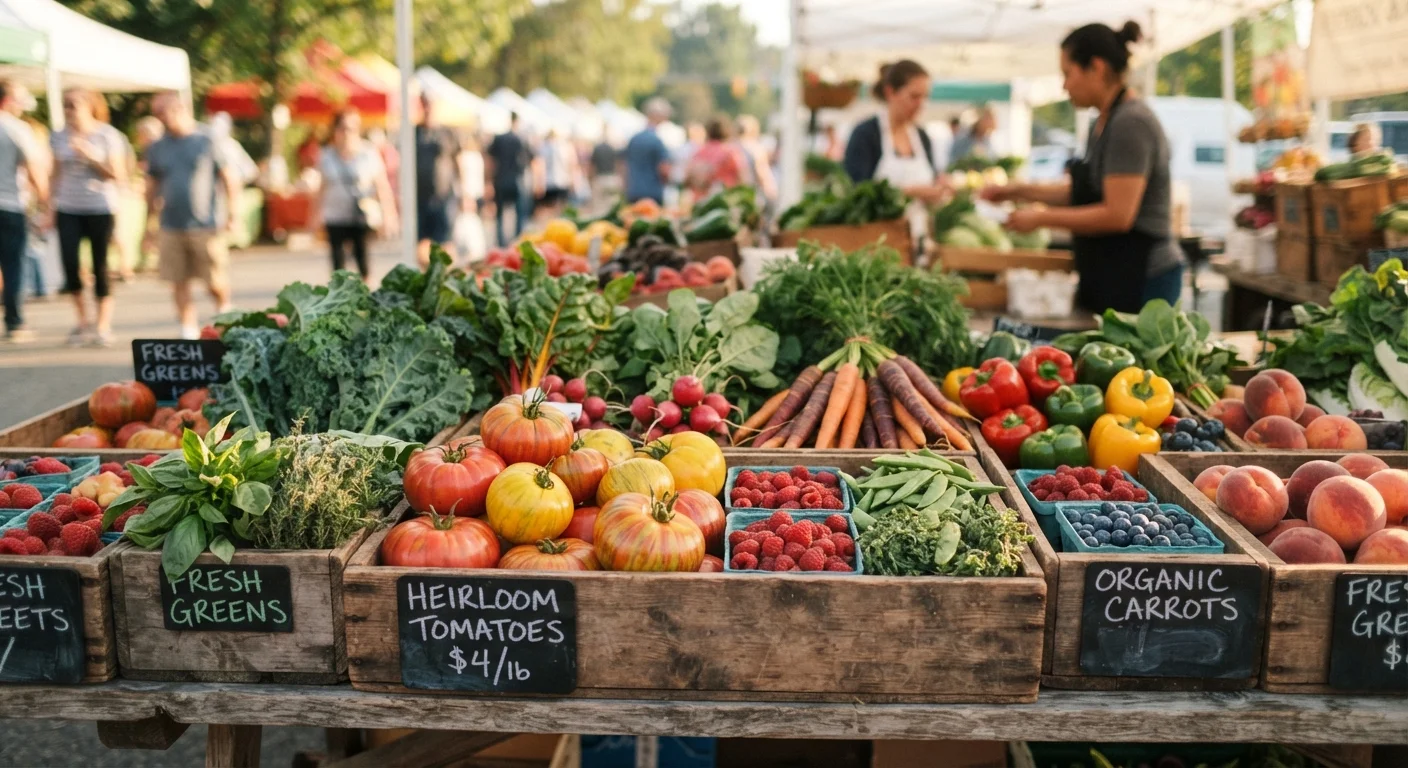
- Check prices before planning. Walk the produce section or scan a farmers market before committing to a weekly menu. What's piled high and priced low is in season.
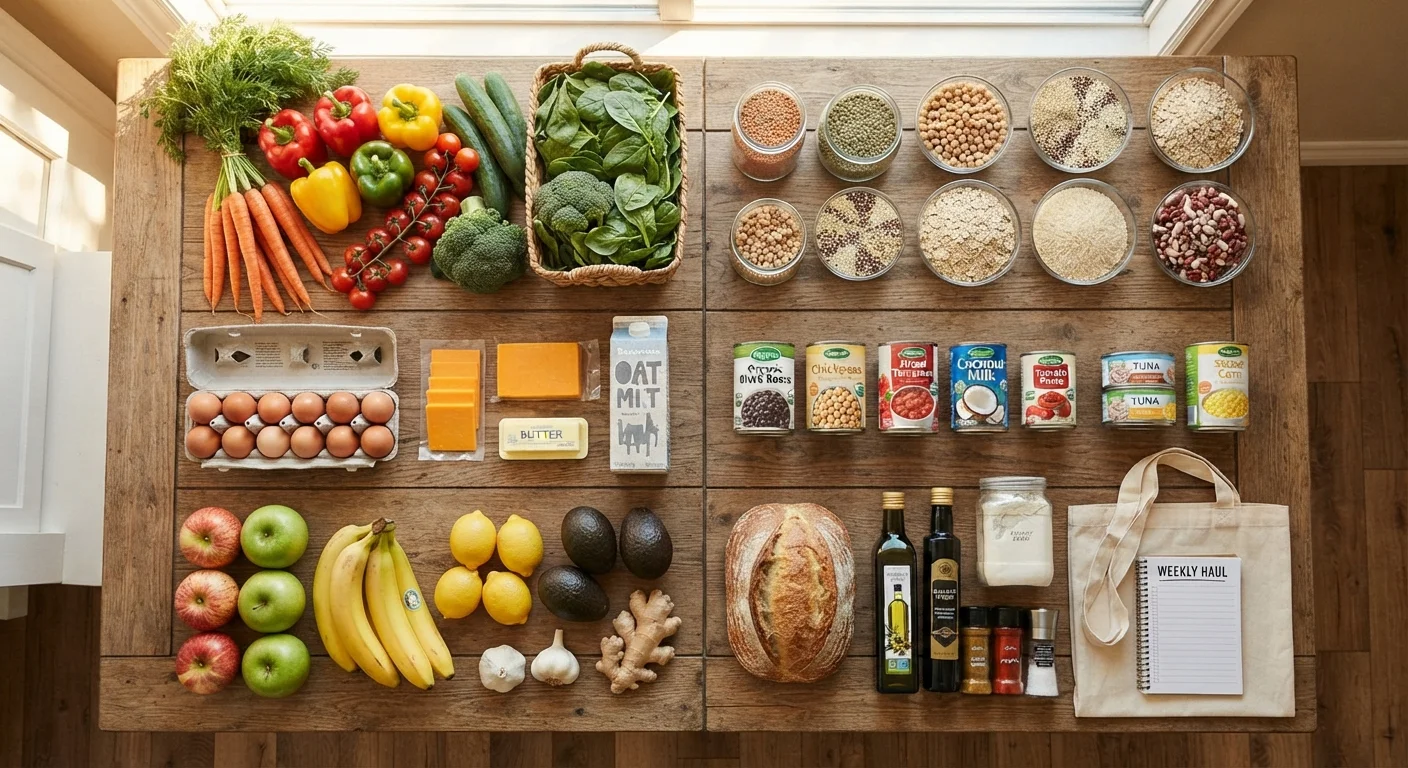
- Keep a flexible pantry. Staples like canned tomatoes, dried lentils, rice, and olive oil pair with almost any vegetable. Your seasonal produce becomes the variable ingredient; the pantry provides structure.
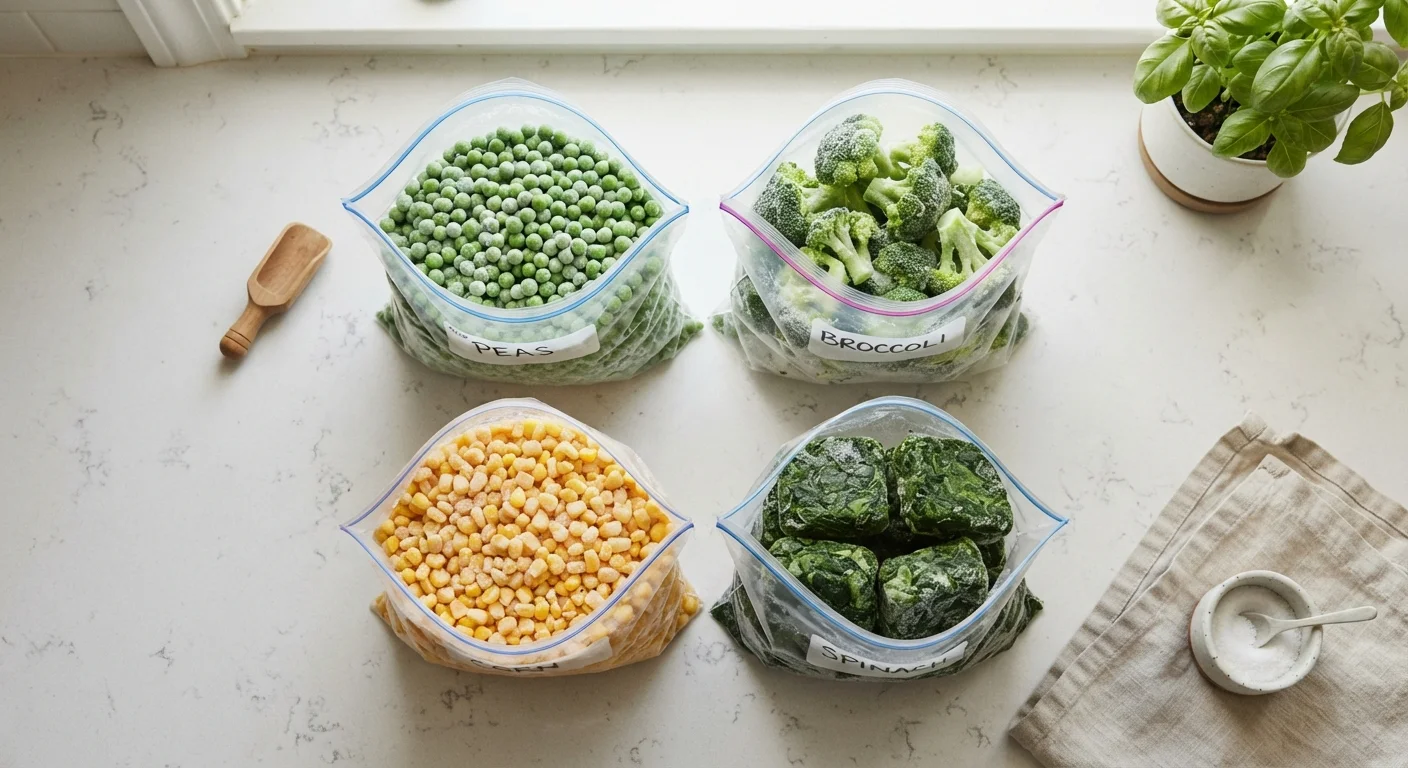
- Batch and freeze at peak season. When corn, zucchini, or berries hit their lowest price, buy more than you need for the week and freeze the rest. You're essentially buying future meals at today's low price.
- Learn three to four seasonal go-to recipes per season. A winter squash soup, a spring pea pasta, a summer tomato salad - rotating simple recipes reduces decision fatigue and shopping drift.
For a broader framework on structuring weekly grocery spending, see our weekly grocery budget guide.
Finding Seasonal Produce Without a Farmers Market
Farmers markets are convenient seasonal signals, but they're not the only option - and they're not always the cheapest. Large grocery chains and discount grocers also stock seasonal produce, and their volume buying can make prices competitive. The key is knowing what to look for.
Signs that produce is in season at any store: it's prominently displayed, priced noticeably lower than usual, and available in larger quantities. Store circulars - physical or digital - often lead with in-season items because high supply means better margins for them too.
Community-supported agriculture (CSA) programs offer another route: you pay upfront for a weekly share of a local farm's harvest. The produce is always in season by definition, and per-pound costs are frequently lower than retail, though you trade menu flexibility for variety surprises.
If you're interested in growing some of your own produce to push costs even lower, our seasonal planting calendar outlines which vegetables deliver the best yield for beginners on a budget. Growing even a small amount of what you use most - herbs, salad greens, cherry tomatoes - can meaningfully offset grocery spend over a season.
This article provides general nutrition and grocery information for educational purposes. It is not medical or dietary advice. For personal health concerns, consult a qualified healthcare professional.