
Why a Pantry Foundation Changes Everything
Most expensive food decisions happen reactively - when you're hungry, tired, and there's nothing ready at home. A stocked pantry eliminates that problem by making it faster and easier to cook from scratch than to order out. The upfront investment is real but modest, and it pays back quickly in reduced takeout spending and less grocery waste.
This isn't about buying in bulk at a warehouse club or spending a Saturday organizing Instagram-worthy jars. It's about having enough of the right staples that you can always pull together a nutritious meal with minimal additional shopping. If you're skeptical that budget eating can actually be nutritious, our article on why healthy eating on a tight budget is more achievable than you think addresses the most common myths head-on.
Don't Try to Stock Everything at Once
Attempting to fill an entire pantry in one shopping trip can cost hundreds of dollars and lead to buyer's remorse. A phased approach - adding a few staples per week - keeps spending manageable and avoids buying items you won't actually use. Prioritize the highest-utility staples first and build from there.
If you have space and interest, growing a few herbs or vegetables can complement your pantry at very low cost. Our budget gardening hub covers how to get started without expensive gear.
This article provides general nutrition and budgeting information only and is not a substitute for advice from a qualified healthcare or financial professional.
What You'll Need Before You Start
Building a functional pantry from scratch requires a little planning before the first shopping trip. Here's what to have in place:
What you will need
Airtight storage containers
Keep dry goods like oats, lentils, and rice fresh longer and protect against pests.
Permanent marker or label maker
Label containers with contents and the date opened so you use older stock first.
Kitchen scale
Helps portion out bulk-bin purchases accurately and track how much of a staple you use per week.
Shelf or cupboard space
Cool, dark, dry storage is essential for extending the shelf life of pantry staples.
With these basics sorted, you're ready to follow the steps below without wasted trips or duplicate purchases. The process is straightforward - the goal is simply to build deliberately rather than randomly.
Write a Running Pantry List
Keep a simple note on your phone tracking what you have and what's running low. Cross-referencing this list before each grocery trip prevents duplicate buying and helps you spot which staples are genuinely worth restocking. It takes two minutes and saves real money.
Step-by-Step: Building Your Pantry
Follow these steps in order. Each builds on the last, so resist the urge to skip to bulk buying before you've assessed what you already have.
Audit what you already have
Before spending a dollar, pull everything out of your cupboards and take stock. You likely have partial bags of pasta, forgotten canned goods, or spices you bought once and never used again. Group items by category - grains, proteins, canned goods, condiments - and note expiry dates. This baseline tells you exactly where the gaps are and prevents you from buying what you already own.
Prioritize the highest-utility staples first
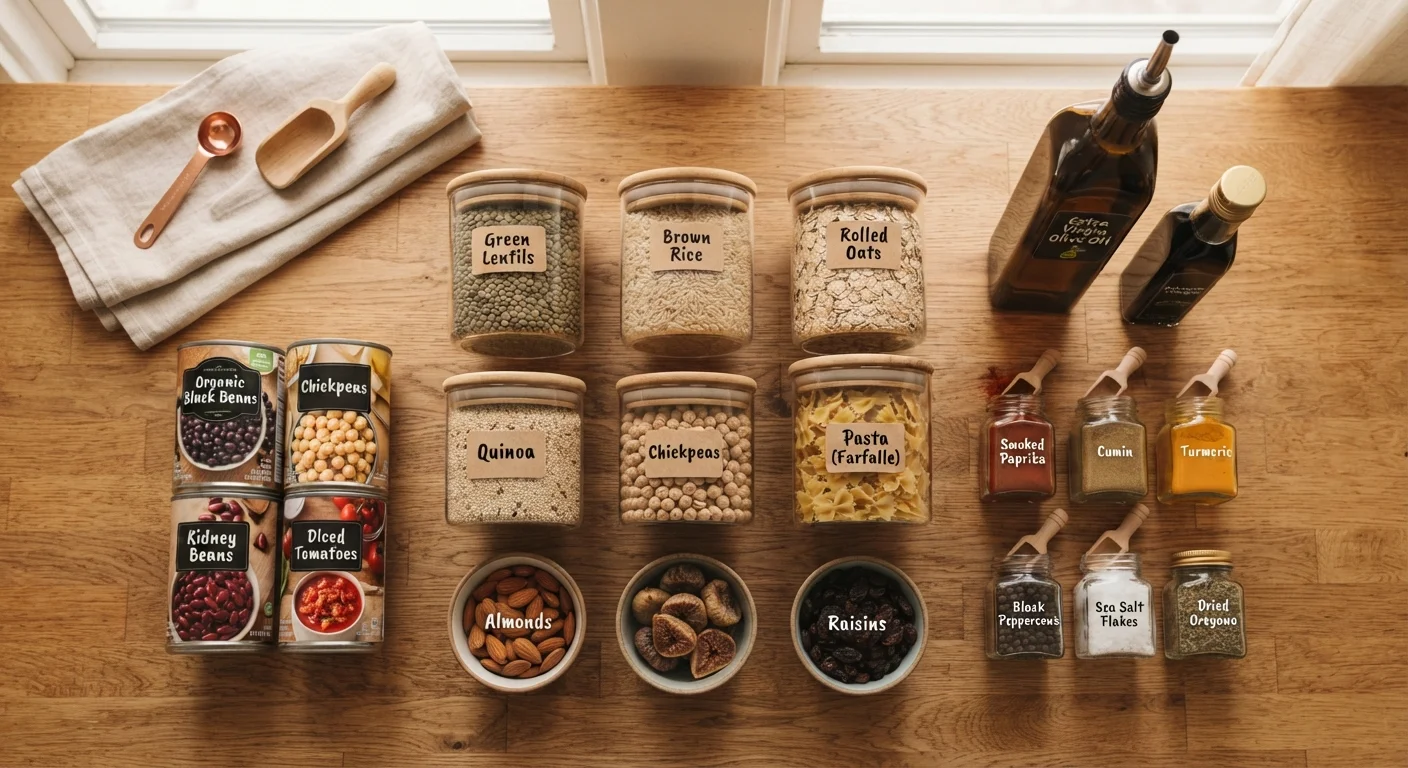
Not all pantry items are equal. Lead with ingredients that appear in dozens of recipes and cost very little per serving. The short list: dried lentils, rolled oats, white or brown rice, canned beans (black, chickpea, kidney), canned tomatoes, and pasta. These six alone can form the base of breakfasts, lunches, and dinners all week. See our guide to affordable healthy eating for more on why these staples punch above their weight nutritionally.
Add flavor foundations
Plain rice and beans get old fast. A small investment in core spices and condiments transforms cheap ingredients into meals you'll actually want to eat. Essentials include: garlic powder, cumin, smoked paprika, dried oregano, a neutral cooking oil, soy sauce or a low-sodium alternative, and canned or tube tomato paste. Buy spices in small quantities from bulk bins where available - you pay for what you need rather than a full jar you may not finish.
Build out protein options beyond meat
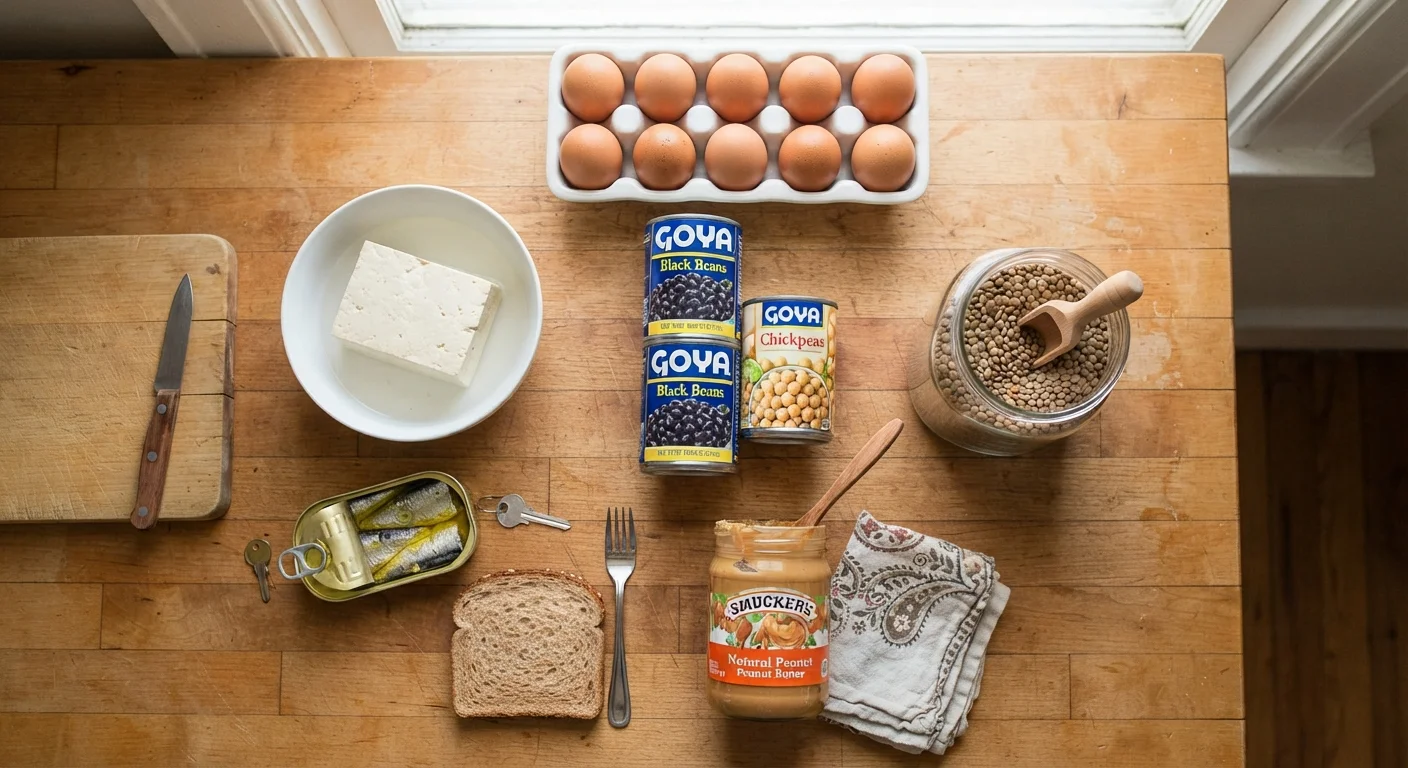
Meat is often the most expensive line on a grocery receipt. Canned fish (tuna, sardines, salmon), eggs, tofu, and dried or canned legumes are all significantly cheaper per gram of protein. Aim to stock at least two or three of these at any given time. For a deeper breakdown of affordable protein choices, see our article on getting enough protein without expensive meat.
Stock frozen vegetables to fill produce gaps
Fresh vegetables are nutritious but expensive and perishable. Frozen alternatives - spinach, peas, corn, broccoli, mixed stir-fry blends - are picked and frozen at peak ripeness, which preserves most of their nutritional value. They keep for months, cost less per serving than fresh equivalents, and eliminate the guilt of wilted produce you didn't get to in time. Treat frozen veg as a pantry staple, not a compromise.
Add staples gradually week by week
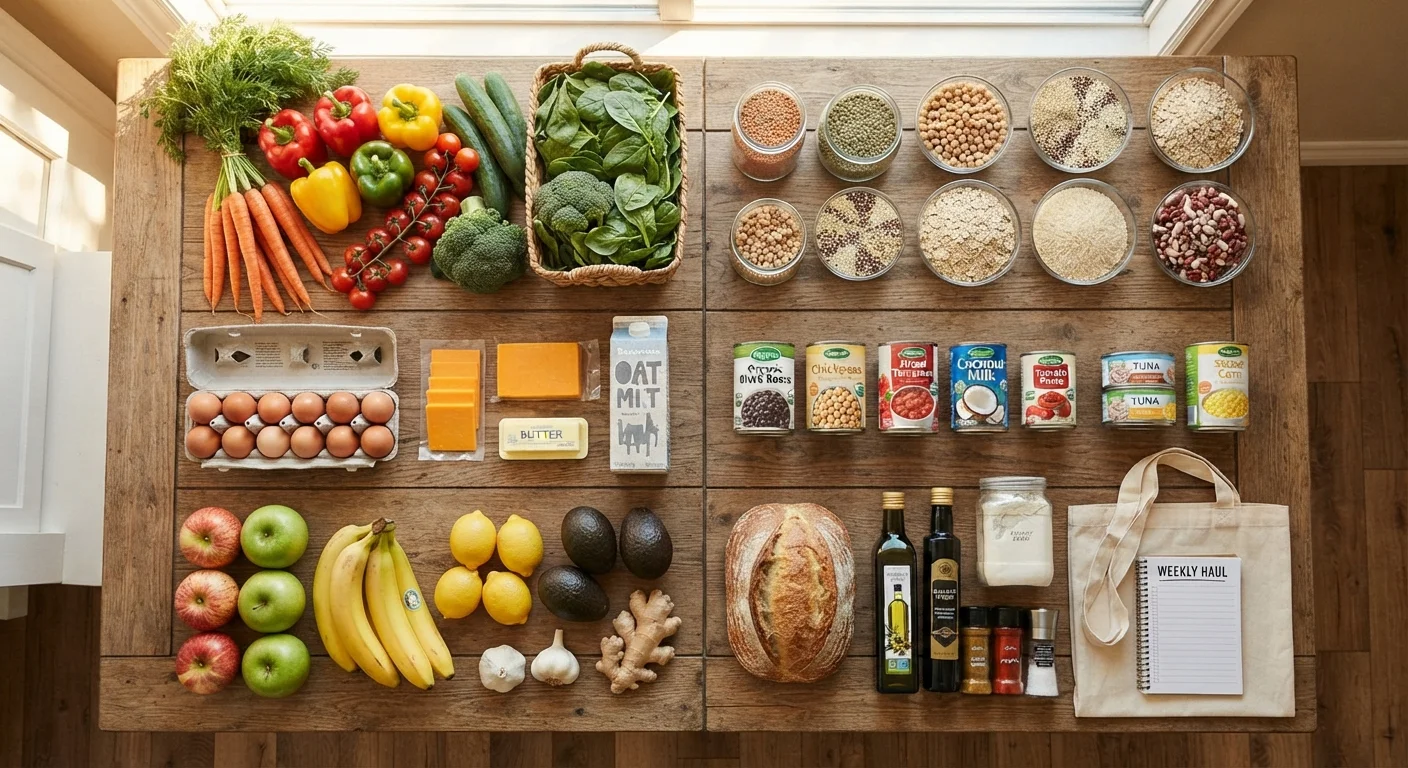
Once your core pantry is in place, expand steadily. Each grocery shop, add one or two items that fill genuine gaps: flour for baking, oat flour, nut butters, dried pasta varieties, vinegar, or dried fruit for oatmeal. Use the weekly grocery budget framework to integrate pantry building into your regular spending without blowing your food budget in any given week.
Check Expiry Dates Before You Buy in Bulk
Buying large quantities of a staple only makes financial sense if you'll use it before it expires. Whole grains and some flours go rancid faster than white rice or pasta. Store dry goods in airtight containers and check 'best by' dates so nothing goes to waste.