
The Core Hand Tools (Non-Negotiable)
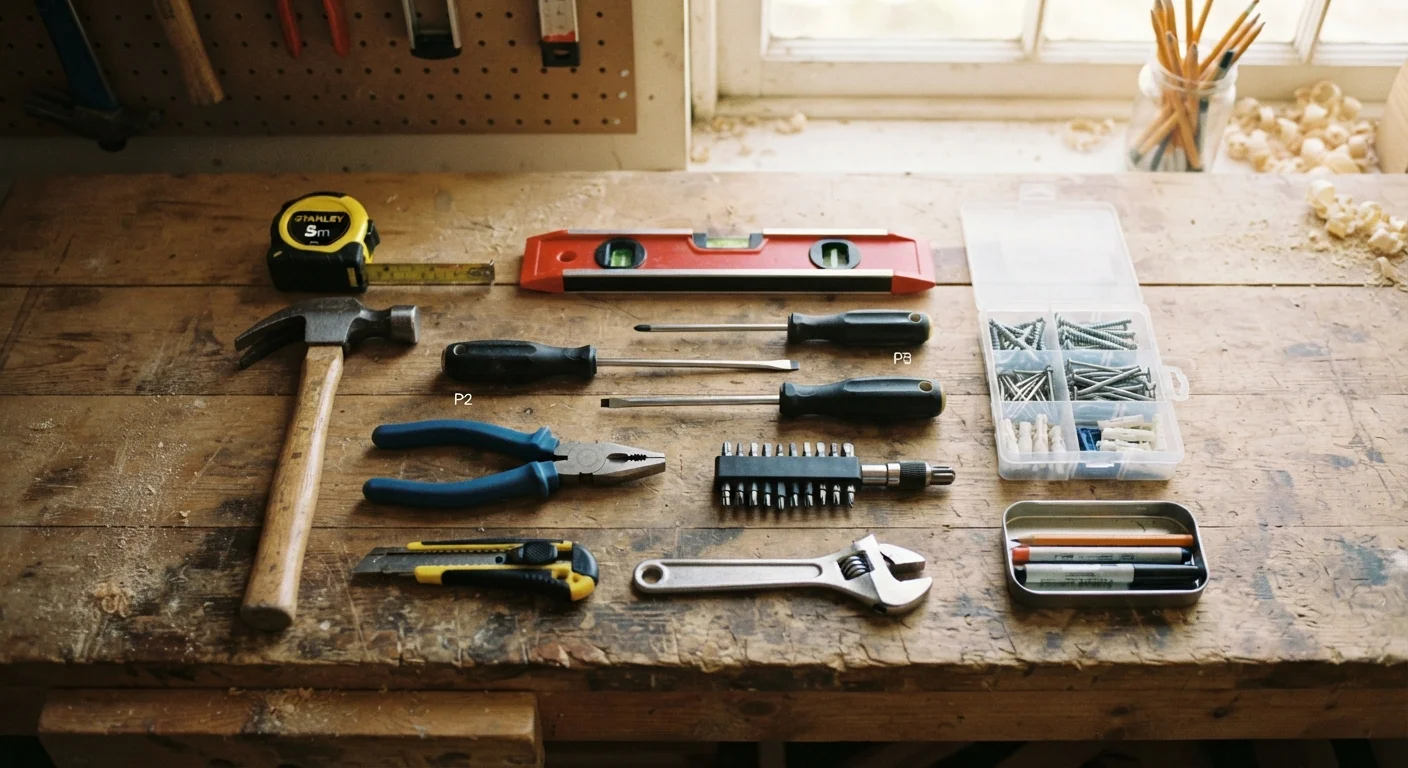
If you're starting from zero, focus on tools that solve the widest range of problems before adding anything specialized. Every household toolkit should include these essentials:
- Claw hammer (16 oz): Drives nails, removes them, and taps things into position. The 16-oz weight balances power and control for general use.
- Screwdriver set: You need both Phillips and flat-head in multiple sizes. A set with a magnetic tip makes working overhead far less frustrating.
- Tape measure (25 ft): Non-negotiable for furniture assembly, hanging artwork, and any measurement task. Lock-blade models hold their position hands-free.
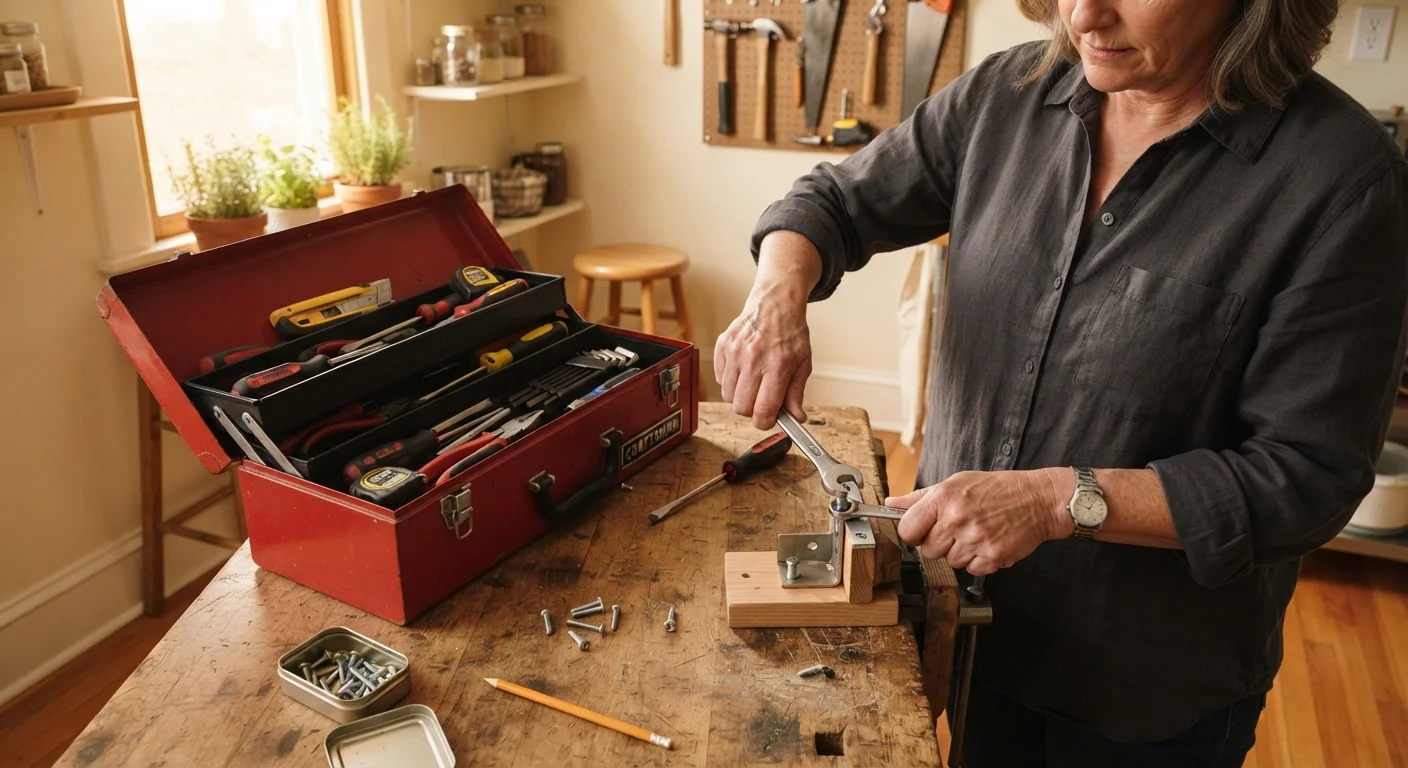
- Adjustable wrench: Tightens and loosens nuts and bolts across different sizes, replacing the need to own a full socket set upfront.
- Needle-nose pliers and standard pliers: Together they cover gripping, bending wire, removing stuck fasteners, and holding components in tight spaces.
- Utility knife: Scores drywall, trims caulk, cuts rope, and handles dozens of tasks a pair of scissors cannot.
- Stud finder: Essential before hanging anything heavy. Guessing where studs are leads to pulled anchors and damaged walls.
- Level (24-inch): Ensures shelves, frames, and fixtures are straight - worth using every time rather than eyeballing.
| Minimum starter toolkit size | 10-15 tools |
| Most common household repair | Fixing loose screws and hinges |
| Tape measure standard length | 25 feet (covers most interior rooms) |
| Driver bit types needed | Phillips, flat-head, and Torx |
| Hammer weight (general purpose) | 16 oz (most versatile for home use) |
| When to call a licensed professional | Electrical panels, gas lines, structural work |
These eight categories of tools cover the repairs most homeowners deal with repeatedly. For a broader picture of how tools fit into a repair strategy, see the complete beginner's guide to DIY home repairs.
Useful Additions That Earn Their Place
Once the basics are covered, a second tier of tools starts paying off quickly - especially if you rent or own an older home:
- Cordless drill/driver: Replaces manual screwdrivers for most fastening work and handles pilot holes before driving screws into hardwood or tile surrounds. A mid-range voltage (12V-18V) handles most home tasks without excessive weight.
- Putty knife (flexible and stiff): Applies spackling compound, scrapes old caulk, and removes paint drips without scratching surfaces. Having both flexibilities matters for different substrates.
- Hacksaw: Cuts through metal pipe, plastic conduit, and bolts too large for tin snips. Inexpensive and nearly maintenance-free.
- Torpedo level: Smaller than a standard level, it fits in tight spaces like inside cabinets or along window sills where a 24-inch level won't reach.
- Drywall anchors and assorted hardware: Keeping a mixed supply on hand - toggle bolts, plastic anchors, picture hooks - means you're not making a hardware run for every minor hanging task.
Torque
The rotational force applied when tightening a fastener. Over-torquing can strip screws or crack materials; under-torquing leaves connections loose and insecure.
Stud finder
A handheld device that detects wooden or metal framing members (studs) hidden behind drywall. Hanging heavy objects requires anchoring into a stud rather than drywall alone.
Needle-nose pliers
Pliers with a long, tapered jaw used to grip small objects, bend wire, or reach into tight spaces that standard pliers cannot access.
Utility knife
A retractable-blade cutting tool used for scoring drywall, trimming caulk, opening packaging, and dozens of other precise cutting tasks around the home.
Caulk
A flexible sealant applied along joints and gaps - around windows, tubs, or baseboards - to block drafts, moisture, and pests from entering.
Drywall anchor
A fastener inserted into drywall to support screws where no stud exists. Choosing the correct anchor for the load is critical to prevent wall damage.
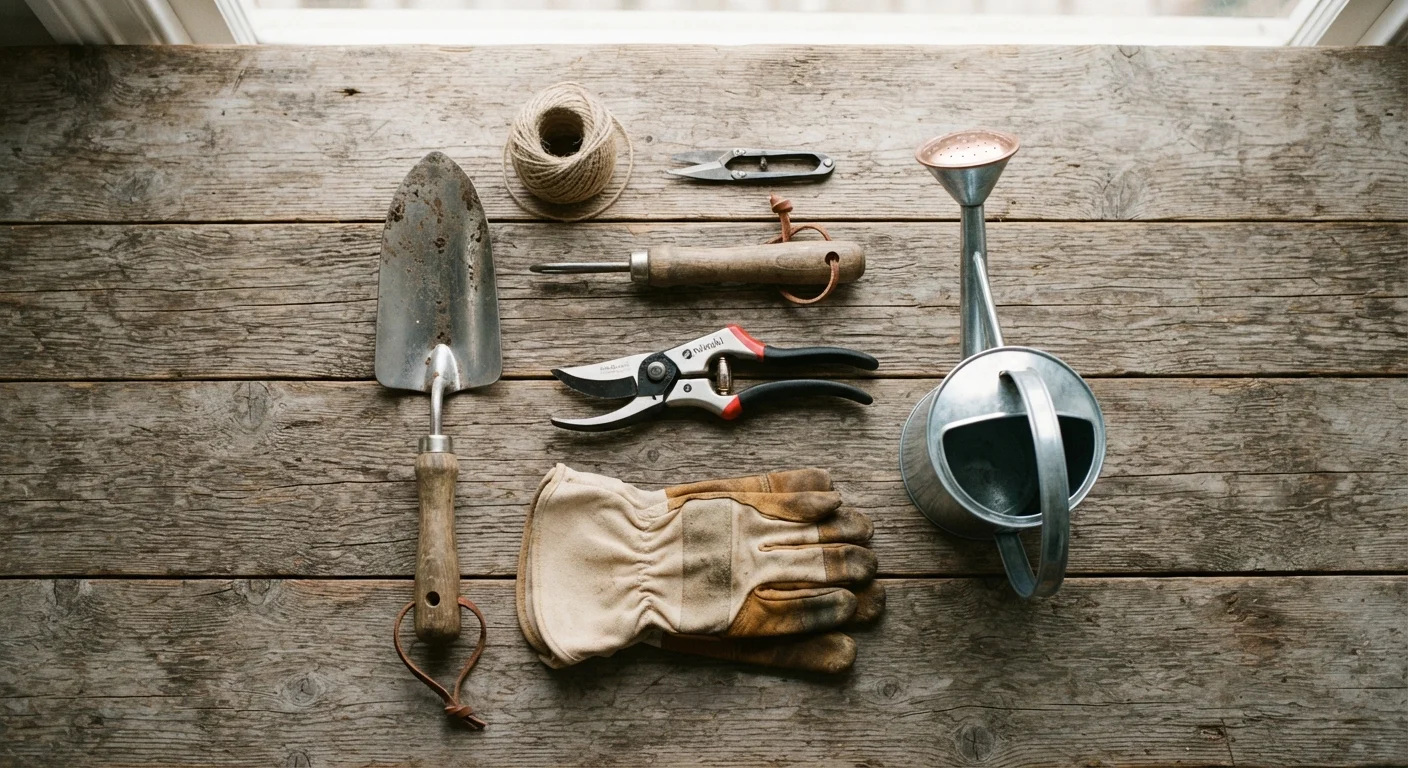
Before spending on specialty tools, it's worth applying the same discipline used in other areas of home spending. The garden tools prioritization checklist uses a practical framework that translates well to any toolkit purchase decision.
Know When to Stop and Call a Pro
A well-stocked toolkit doesn't make every repair a DIY job. Work involving your electrical panel, gas supply lines, load-bearing structures, or roofing typically requires a licensed contractor - and often a permit. Attempting these without proper training can create serious safety hazards and code violations. See our guide on when DIY saves money for a clearer breakdown of where to draw the line.
It's also easy to fall into common traps with toolkit use. Our piece on DIY repair myths that make problems worse addresses assumptions that lead to bigger bills - worth reading before starting any unfamiliar fix. If you're a renter, know your rights before picking up a tool.
70%
Common repairs solvable with basic hand tools
Industry estimates suggest the majority of routine household fixes - loose hinges, leaky faucet washers, squeaky doors - require only hand tools already found in a basic kit.
$150-$250
Typical cost to assemble a solid starter toolkit
Building a functional set of quality hand tools is generally achievable within this range, avoiding duplicates and specialty items.