
What You're Actually Paying for When You Buy a Bulb
The price tag on a bulb is only a fraction of what it will ultimately cost you. The real expense is the electricity it consumes over its lifetime. This is why comparing LED and incandescent lighting purely on purchase price misses the point - and often leads households to the more expensive choice without realizing it.
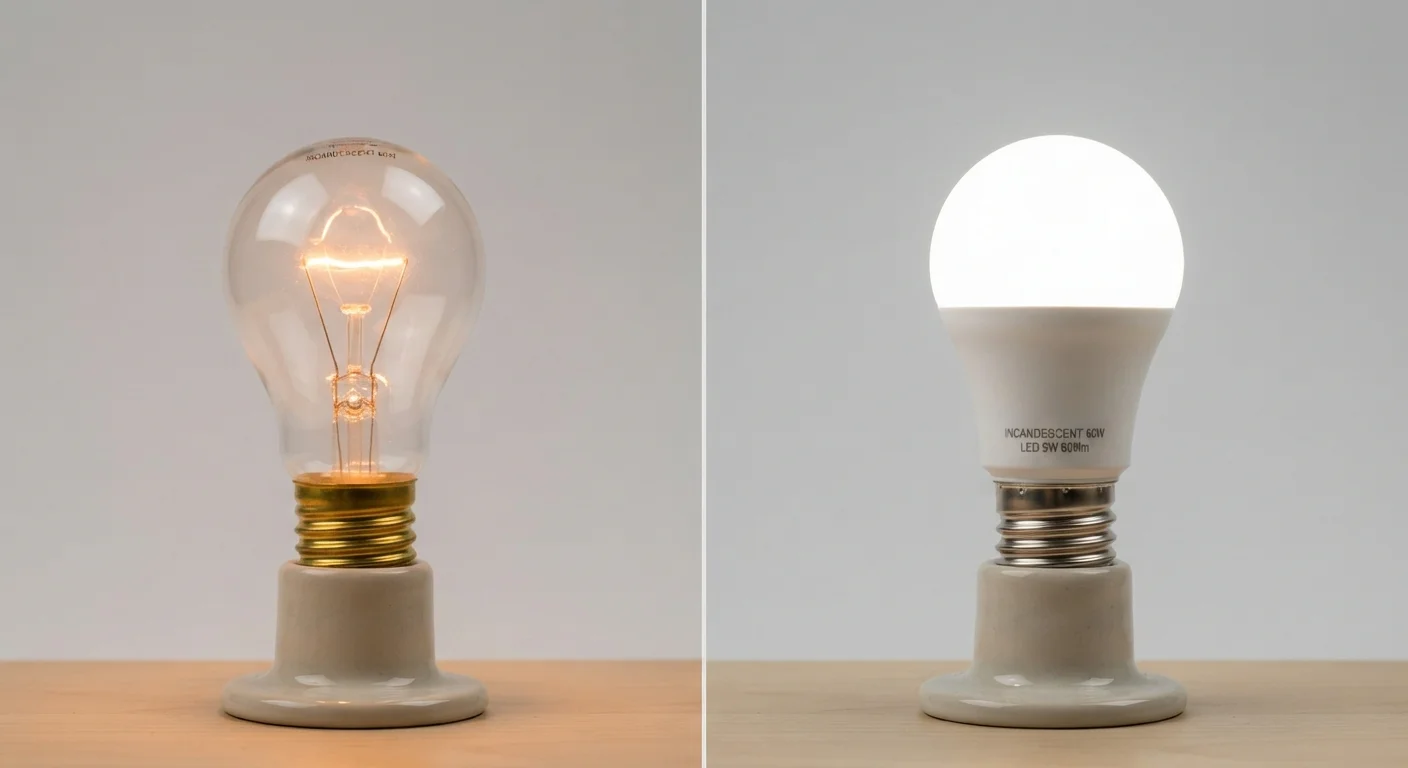
To understand the difference, it helps to know how brightness and energy use are measured. Brightness is expressed in lumens, while energy consumption is measured in watts. An incandescent bulb rated at 60 watts produces roughly 800 lumens. An LED producing the same 800 lumens typically uses only 8-10 watts. That gap - about 50 watts per bulb - is electricity you're either spending or saving every single hour a light is on. If energy efficiency terminology is new to you, the plain-language glossary of energy terms is a good place to start.
Multiply that wattage difference across multiple bulbs and multiple hours of daily use, and the numbers become meaningful quickly. This is the long-term energy picture that matters most for budget-conscious households.
Head-to-Head: Comparing the Two Bulb Types
The table below lays out the key differences between LED and incandescent bulbs across the dimensions that affect your wallet most directly.
| Criterion | LED Bulbs | Incandescent Bulbs |
|---|---|---|
| Typical wattage (800 lumens) | 8-10 watts | 60 watts |
| Rated lifespan | 15,000-25,000 hours | ~1,000 hours |
| Upfront purchase cost | Higher per bulb | Lower per bulb |
| Annual running cost (3 hrs/day) | ~$1.58 | ~$10.50 |
| Heat output | Low | High |
| Color temperature options | Wide range available | Warm white only |
| Dimmable options available | Yes (labeled models) | Yes (most) |
The lifespan gap is especially significant. An incandescent bulb rated for approximately 1,000 hours needs replacing far more often than an LED rated for 15,000 hours or more. Over the life of a single LED bulb, you might buy 15 or more incandescent replacements - which adds up in purchase cost alone, before factoring in electricity.
Running the Numbers: What Switching Actually Saves
Let's make this concrete. Assume a single 60-watt incandescent is on for three hours a day. At an average US residential electricity rate of around $0.16 per kilowatt-hour (rates vary by state and utility - check your own bill for accuracy), that bulb costs roughly $10.50 per year to run. An equivalent LED at 9 watts costs about $1.58 per year to run. The difference: nearly $9 per bulb, per year.
75%
Less energy used by LED vs. incandescent
According to the U.S. Department of Energy, LED bulbs use at least 75% less energy than traditional incandescent bulbs for equivalent light output.
25x
Longer lifespan: LED vs. incandescent
The U.S. Department of Energy estimates LED bulbs can last up to 25 times longer than incandescent alternatives, reducing both replacement frequency and cost.
$225/yr
Estimated household savings from switching to LED
The U.S. Department of Energy has estimated that replacing a home's traditional bulbs with LEDs can save approximately $225 or more in annual energy costs, though actual savings vary by usage and local rates.
Scale that across 20 fixtures in a home and the annual difference can exceed $175. Over five years, that's potentially $875 - a sum that dwarfs any upfront price difference between bulb types. The practical primer on home energy savings covers how lighting fits into a broader household efficiency strategy.
The payback period - the point at which the LED's energy savings have covered its higher purchase price - is typically less than one year for frequently used fixtures. After that, every month is net savings.
Practical Considerations Before You Switch
Switching isn't complicated, but a few practical points are worth knowing before you start replacing bulbs throughout your home.
- Dimmer compatibility: Not all LED bulbs work with older dimmer switches. Look for bulbs labeled "dimmable" and check whether your dimmer switch is rated for LED loads. Incompatible combinations can cause flickering or reduced dimmer range.
- Color temperature: LED bulbs are available in a range of color temperatures measured in Kelvin (K). Lower numbers (around 2700K) produce warm, yellowish light similar to incandescent. Higher numbers (5000K+) produce a cooler, daylight-style white. Choose based on the room's purpose and your preference.
- Fixture heat: Incandescent bulbs produce significant heat, which can be a factor in enclosed fixtures. LEDs run much cooler, but enclosed-fixture-rated LEDs are needed in fully sealed housings - check the packaging.
- Start with high-use fixtures: Prioritizing the fixtures that are on the most - kitchen, living room, outdoor - delivers the fastest return. Low-use spaces like closets can wait.
Lighting is one of several straightforward changes that can reduce household energy costs. For a broader comparison of home energy upgrades, see how programmable and smart thermostats compare on real savings. The principle of paying more upfront to save significantly over time also applies in other spending decisions - the value vs. price framework explores this idea across everyday purchases.