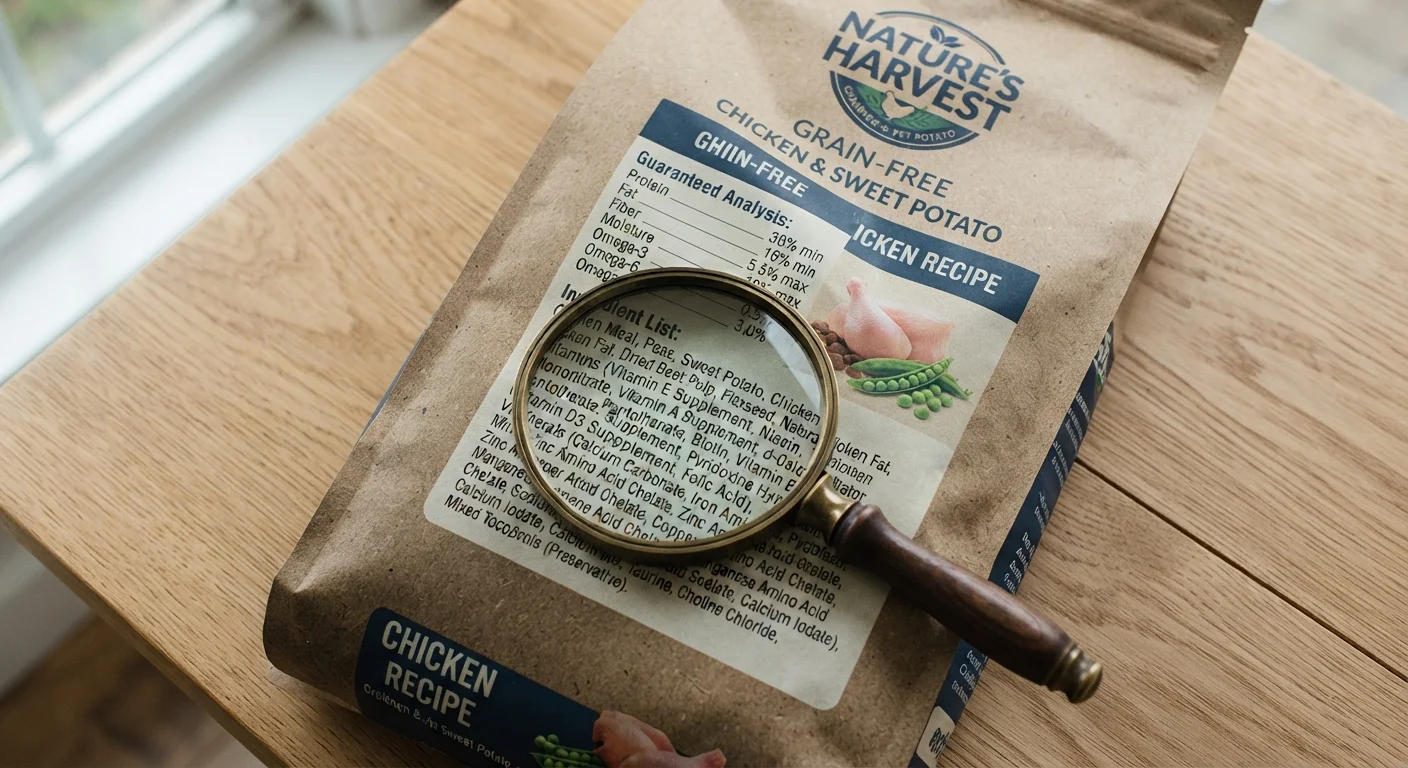


Protein: The Foundation of Every Pet's Diet
Protein is the single most important macronutrient in your pet's diet. It provides amino acids - the building blocks for muscle tissue, skin, coat, hormones, enzymes, and antibodies. Dogs require 10 essential amino acids; cats require 11, including taurine, which is critical for heart and eye health and must come from animal-based food sources.
Both species thrive on animal-derived proteins such as poultry, fish, beef, and eggs because these contain a complete amino acid profile. Dogs can also meet some amino acid needs from plant proteins, but cats cannot efficiently convert plant precursors into the forms they need - which is why cat food must prioritize animal protein.
When evaluating a pet food, look at whether a named animal protein (e.g., chicken, salmon) appears at or near the top of the ingredient list. For a deeper look at what those ingredient lists actually tell you, see our guide to reading pet food labels.
Check the Life Stage Statement First
Before examining ingredient lists or protein percentages, look for the AAFCO nutritional adequacy statement on the packaging. It tells you whether the food is formulated to meet minimum nutrient standards for your pet's specific life stage - puppy or kitten, adult, or senior. This single line provides more useful information than most marketing claims on the front of the bag.
Fats, Carbohydrates, and Fibre: Energy and Gut Support
Dietary fat is the most energy-dense nutrient and serves several essential functions beyond fuel. It enables absorption of fat-soluble vitamins (A, D, E, and K), supports skin and coat health, and contributes to cell membrane integrity. Omega-3 and omega-6 fatty acids are of particular importance - these polyunsaturated fats support inflammation regulation, brain development in young animals, and joint health.
Carbohydrates are not technically essential for dogs or cats, but they serve a practical role in commercial pet food as a digestible energy source and a structural component of kibble. Cats have a limited ability to digest large amounts of carbohydrate and rely more heavily on protein and fat for energy.
Fibre - the indigestible portion of plant material - supports healthy gut motility and stool quality. Soluble fibres like beet pulp can feed beneficial gut bacteria, while insoluble fibres help move food through the digestive tract. Neither dogs nor cats have a formal fibre requirement, but its inclusion in appropriate amounts supports overall digestive well-being.
Cats and Carbohydrates: A Key Difference
Unlike dogs, cats lack certain liver enzymes that allow efficient metabolism of large carbohydrate loads. In practice, this means high-carbohydrate diets are generally less biologically appropriate for cats than for dogs. This doesn't mean all carbs are harmful to cats, but it does help explain why higher-protein, lower-carbohydrate formulas are often recommended for felines. Consult your veterinarian if you have questions about your specific cat's dietary needs.
Vitamins and Minerals: Small Amounts, Big Impact
Vitamins and minerals are required in relatively small quantities but are involved in nearly every biological process. Fat-soluble vitamins (A, D, E, K) are stored in the body, which means both deficiency and excess can cause problems - making balance essential rather than simply 'more is better.' Water-soluble vitamins like B-complex vitamins are not stored as readily and need consistent dietary supply.
Key minerals include calcium and phosphorus (bone structure and cellular energy), potassium and sodium (fluid balance and nerve signaling), and trace minerals like zinc, iron, copper, and selenium, each of which supports specific metabolic functions. The ratio of calcium to phosphorus is particularly important; an imbalance - especially in homemade diets - can contribute to skeletal problems.
Most commercial foods formulated to AAFCO standards include vitamins and minerals at appropriate levels. If you're curious about what the numbers on the label actually mean, our explainer on nutrition label numbers breaks it down plainly. And before spending money on supplements, it's worth reviewing what pet supplements are actually necessary.
Why Balance Matters More Than Any One Ingredient
Marketing often highlights single ingredients - 'wild-caught salmon,' 'grass-fed beef,' 'ancient grains' - but no single ingredient can make or break a pet food on its own. What matters is whether the overall formulation provides the right nutrients in the right proportions for your pet's species, age, and life stage.
A food labeled 'complete and balanced' for a specific life stage (e.g., adult maintenance or growth) has been formulated to meet AAFCO's established nutrient profiles. This is a more meaningful indicator of nutritional adequacy than any individual ingredient claim. For a plain-language breakdown of terms like these, visit our pet nutrition glossary.
Understanding the role each nutrient plays is the first step to making smarter, more cost-effective choices at the pet food aisle - without falling for premium labeling that doesn't always translate to better nutrition. Once you understand what your pet actually needs, you can explore budget-friendly feeding strategies that don't sacrifice nutritional quality.
This article is for general informational and educational purposes only and is not a substitute for veterinary advice. Always consult a licensed veterinarian regarding your specific pet's dietary needs, health conditions, or before making significant changes to their diet.