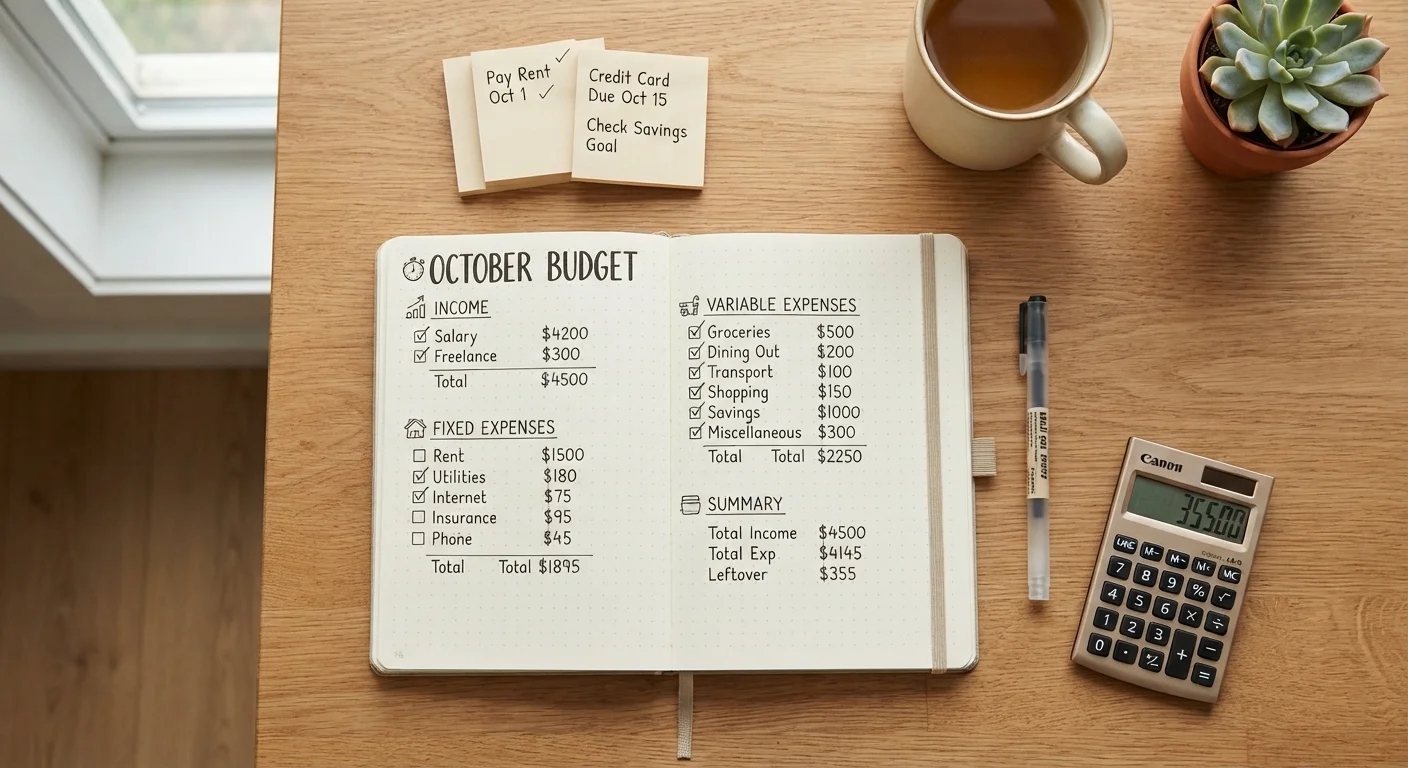


The Real Reason Week Two Breaks You
Week one of a new budget feels manageable because you're motivated, tracking closely, and the month's biggest fixed bills — rent, utilities, loan payments — have already been accounted for. Week two is where reality diverges from the plan. A forgotten subscription hits, a co-worker's birthday dinner pops up, or the gas tank needs filling three days sooner than expected.
These aren't failures of discipline. They're almost always failures of design. If you've ever started fresh on a budget only to abandon it around day 10 or 12, the mistakes below are likely where your plan quietly broke down. Understanding them is more useful than blaming yourself — and fixing them is more straightforward than most budgeting advice suggests.
If you're starting from scratch, our step-by-step guide to building your first monthly budget walks through the foundational setup before you tackle the refinements here.
The Five Mistakes Killing Your Budget Before the Month Ends
Each of the errors below is common, fixable, and rarely discussed with enough specificity to actually help. Work through them honestly against your own current plan.
Building the budget on gross (pre-tax) income instead of actual take-home pay.
Why it happens: Gross salary is the number on your offer letter and in your head — it feels like 'your money.' Taxes, insurance deductions, and retirement contributions quietly reduce it before you ever see a dollar.
Ignoring irregular but predictable expenses like car registration, annual subscriptions, or quarterly insurance premiums.
Why it happens: These costs don't appear on last month's bank statement, so they feel invisible during planning. When they land, they feel like emergencies — even though they were always coming.
Skipping a miscellaneous or buffer category and budgeting every dollar to a named line item.
Why it happens: Zero-based budgeting advice often encourages assigning every dollar a job, which is sound in principle but can leave no room for the genuinely unpredictable — a parking ticket, a work lunch, a last-minute gift.
Tracking spending only at month-end, when it's too late to course-correct.
Why it happens: Most budgeting apps and advice focus on the planning phase and the end-of-month review, leaving the middle of the month as a blind spot where overspending quietly compounds.
Setting spending limits so restrictive they require perfect behavior every single day.
Why it happens: Motivation is highest on day one. People often set aspirational targets — cutting dining out to zero, eliminating all entertainment — that are sustainable for a few days before social and practical reality intervenes.
One pattern worth noting: most of these mistakes share a common root. They treat a budget like a one-time document rather than a living system. The myths that keep people stuck in broken budgets often reinforce this static thinking — worth reading alongside this piece.
Your Budget Is General Information, Not a Guarantee
The strategies in this article are general financial education, not personalized financial advice. Everyone's income, expenses, and obligations differ. For decisions specific to your financial situation, consider speaking with a qualified financial counselor or advisor.
Building a Budget That Survives Contact With Real Life
The goal isn't a perfect budget. It's a budget that bends without breaking. A few structural upgrades make the difference:
- Anchor to net income. Pull your last three bank deposits and average them. That number — not your salary — is your planning ceiling.
- Run an annual expense audit. Go back 12 months in your bank and credit card statements and flag every non-monthly charge. Divide the total by 12 and add that line to your monthly budget as a sinking fund.
- Build in a buffer. Even $50–$75 labeled as 'buffer' gives small surprises somewhere to land without blowing a category.
- Schedule a mid-month check-in. Five minutes around the 14th is enough to catch a drift before it becomes a deficit.
After each month closes, the monthly budget reset checklist is a practical tool for reviewing what held and adjusting what didn't before the next month starts.
Don't Budget From Last Month's Best Week
Using your highest-income or lowest-expense week as your baseline sets an optimistic ceiling you'll rarely clear. Always anchor your budget to your average or lowest expected take-home pay, especially if your income varies by gig work, tips, or hourly shifts. Overestimating income at the start is one of the fastest ways to blow a budget by day ten.
~80%
People who abandon New Year's budgets by February
Behavioral finance researchers consistently find that most self-imposed financial resolutions collapse within four to six weeks, often due to unrealistic initial targets rather than a lack of willpower.
$300–$500
Typical monthly irregular expense gap
Consumer finance surveys suggest that households frequently underestimate non-monthly costs by several hundred dollars per month when building initial spending plans.
The same instinct to under-budget applies outside personal finance, too. If you're curious how these patterns show up in travel planning, the piece on what first-time budget travelers consistently get wrong maps familiar territory.
This article provides general financial education and is not personalized financial advice. Consult a qualified financial professional for guidance specific to your circumstances.