
The Depreciation Gap: Where New Cars Lose Ground Fast
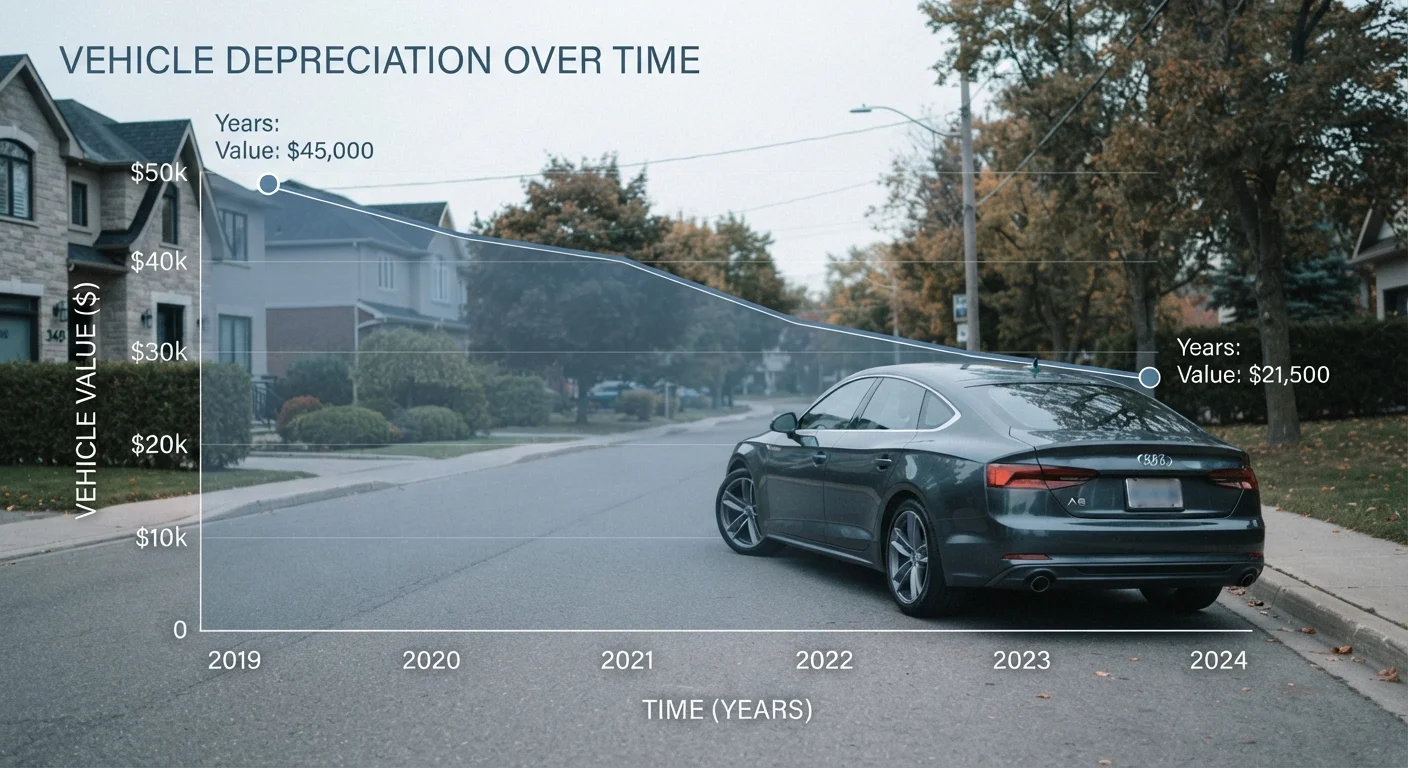
Depreciation is the single largest cost most car buyers never see itemized on a contract. A new vehicle typically loses 15-25% of its value within the first year - money that simply evaporates the moment you drive off the lot. Over five years, that same vehicle may retain only 35-50% of its original MSRP depending on make, model, and market conditions.
A used vehicle purchased two to four years into its life has already absorbed that steepest part of the curve. The prior owner effectively paid for that depreciation, which means your five-year ownership period begins at a point where value loss has already slowed considerably. For a deeper look at how depreciation curves work, see Car Depreciation Explained.
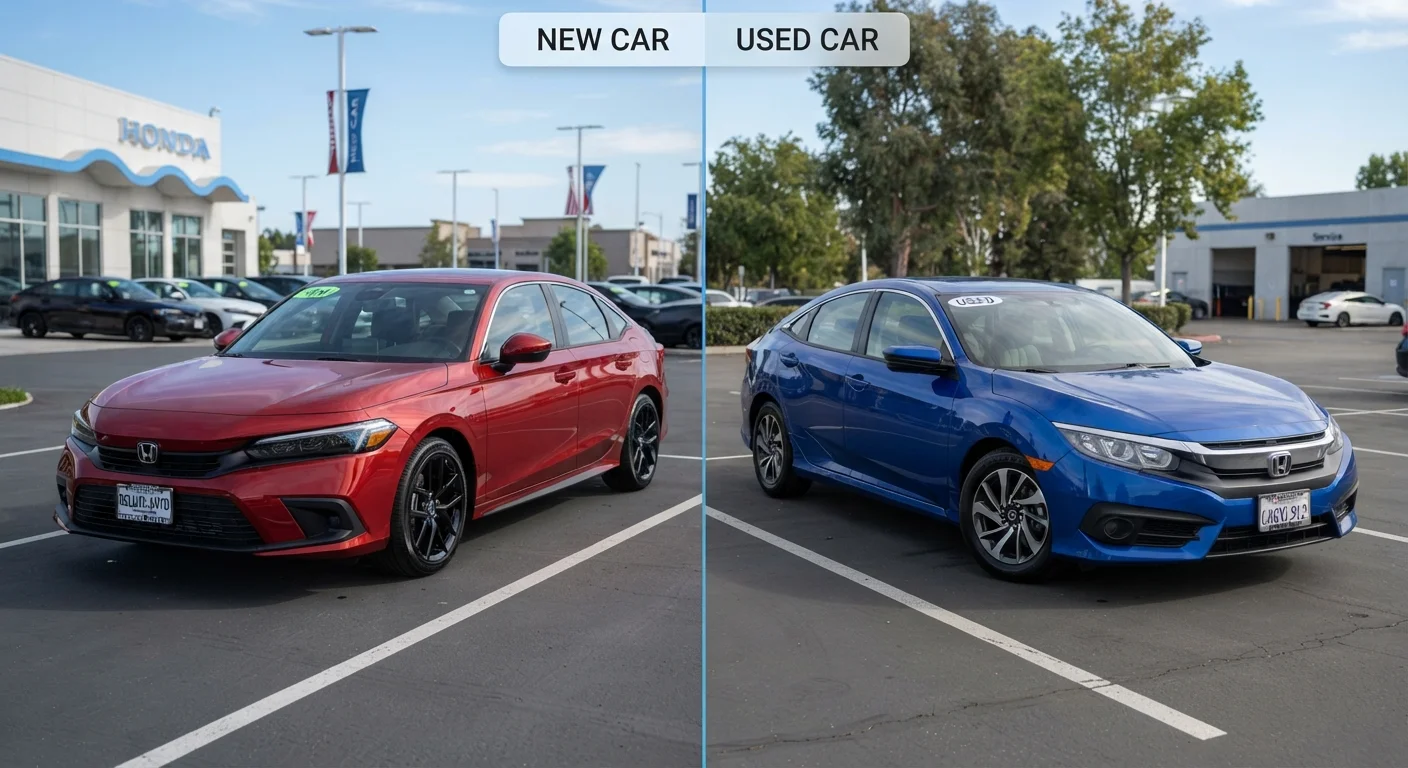
| Criterion | New Vehicle | Used Vehicle |
|---|---|---|
| Typical purchase price | Higher sticker (~$35,000-$48,000 avg.) | Lower entry (~$18,000-$28,000 avg.) |
| Year-one depreciation | 15-25% of value lost | Slower curve; prior owner absorbed peak drop |
| Loan interest rate (typical) | Lower (new-car rate) | Higher (used-car rate, +1-3 pts) |
| Warranty coverage | Full factory (3-5 yr bumper-to-bumper) | None to limited; CPO extends coverage |
| Insurance premium | Generally higher | Generally lower |
| Near-term maintenance cost | Low (under warranty, newer parts) | Variable; depends on age and mileage |
| Registration fees (most states) | Higher (based on MSRP/vehicle value) | Lower (depreciated value basis) |
| 5-year resale value retention | Moderate (35-50% of MSRP typical) | Better percentage retention if bought right |
Financing, Insurance, and Registration: The Hidden Cost Stack
Used vehicles almost always carry higher interest rates on auto loans than new ones - lenders view older vehicles as greater collateral risk. The spread is typically 1-3 percentage points, which can add $1,000-$3,000 in interest charges over a five-year loan depending on the principal. That partially offsets the savings from the lower purchase price, though rarely eliminates it entirely.
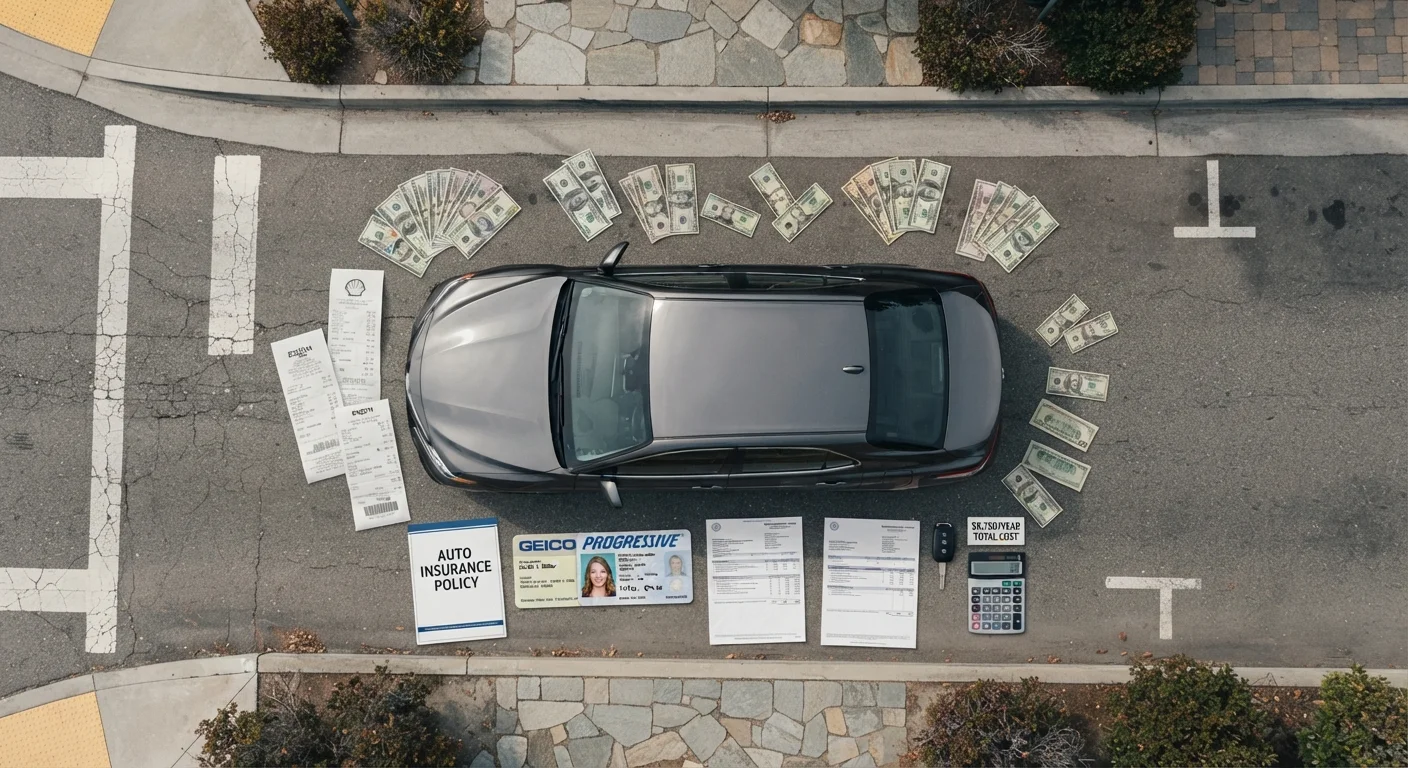
Insurance follows the same logic in reverse: comprehensive and collision coverage on a new car costs more because the vehicle is worth more. Registration fees in most states are also calculated as a percentage of vehicle value, making new-car registration consistently more expensive year over year. Taken together, these secondary costs add up to thousands of dollars across a five-year ownership window - costs that don't appear in any comparison of sticker prices.
~20%
Average new-car value lost in year one
Industry data consistently shows new vehicles lose between 15% and 25% of purchase price within the first 12 months of ownership.
$700-$1,200
Estimated annual insurance cost difference
Comprehensive and collision coverage on new vehicles typically costs several hundred dollars more per year than equivalent coverage on a comparable used model.
2-4 years
Optimal used-car purchase age for value
Vehicles in this age window have absorbed the steepest depreciation but typically retain reasonable reliability and may still carry some remaining powertrain coverage.
Warranty and Maintenance: Where New Cars Earn Some of That Cost Back
This is where new-car buyers recoup a genuine advantage. A factory bumper-to-bumper warranty - typically three years or 36,000 miles - covers most mechanical failures at no out-of-pocket cost beyond routine maintenance. Powertrain warranties often extend to five years or 60,000 miles. For buyers who keep a vehicle through that coverage window, the financial protection against unexpected repair bills is real and meaningful.
Used vehicles offer no such guarantee unless purchased through a CPO program. Older vehicles also face higher odds of needing repairs: brake work, suspension components, belts, and cooling system parts all have finite lifespans. That said, a well-researched used car purchase - with a pre-purchase inspection from an independent mechanic - can significantly reduce that risk. Our Car Maintenance Basics hub outlines the upkeep tasks that matter most for minimizing long-term repair costs regardless of which path you choose.
CPO Vehicles: A Third Option Worth Knowing
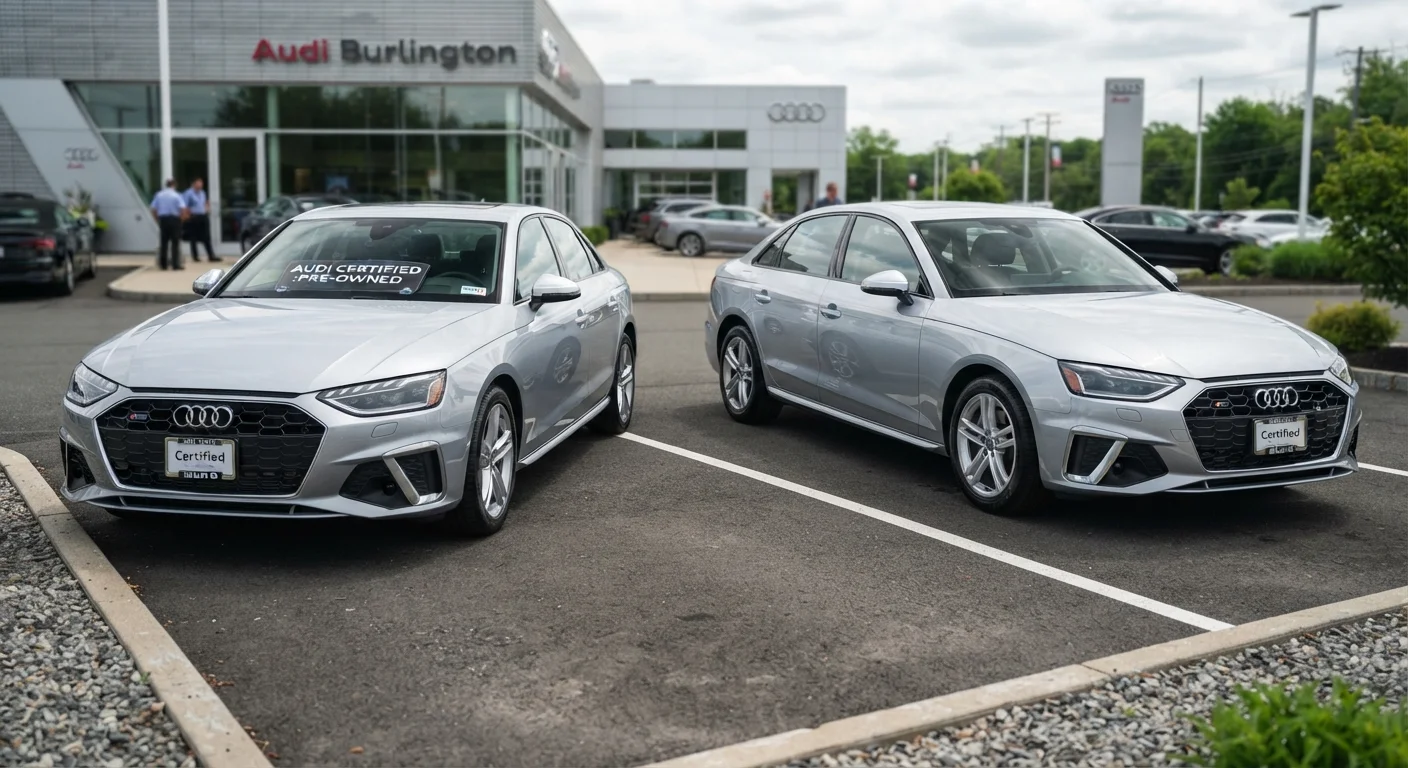
Certified pre-owned (CPO) programs sit between standard used and new. They include manufacturer-inspected vehicles with extended warranty coverage, often at prices 5-15% below comparable new models. See our breakdown in Certified Pre-Owned vs. Standard Used to weigh whether the premium makes sense for your situation.
Running the Five-Year Math: What the Numbers Actually Show
There's no universal winner. The financially smarter choice depends on your financing rate, how long you hold the vehicle, how many miles you drive annually, and your tolerance for repair variability. A buyer who finances a new car at a favorable rate, keeps it for eight-plus years, and takes advantage of the full warranty window can come out ahead compared to someone cycling through multiple used cars with higher maintenance demands.
Conversely, a buyer who pays cash - or finances a modest amount - for a two-year-old used vehicle with low mileage and a clean service history will typically spend significantly less across a five-year window than a buyer carrying a large new-car loan. The True Cost of Car Ownership Beyond the Sticker Price walks through the full cost picture including fuel and insurance, which together with depreciation form the bulk of what you'll actually spend. If long-term holding strategy factors into your decision, Keeping a Car Long-Term vs. Upgrading Every Few Years offers a useful framework for thinking through that trade-off.
Bottom line: bring a five-year total-cost lens to the decision - not just the monthly payment or the sticker price - and the right choice for your situation becomes much clearer. For general financial decisions of this scale, consulting a licensed financial adviser is worth considering alongside your own research.