
Why Water Heating Is Worth Targeting
Water heating typically accounts for roughly 14-18% of a home's total energy use, making it one of the larger line items on your utility bill - second only to heating and cooling in many households. Unlike heating systems that cycle with the weather, water heaters run year-round, so savings from efficiency improvements compound over time.
If you're new to managing household energy use, our practical energy savings primer provides helpful context for prioritizing projects like this one. For a broader look at how these adjustments fit into seasonal patterns, see our year-round energy saving guide.
The steps below require no special skills and minimal upfront cost. Most can be completed in under an hour and will start paying off immediately.
What you will need
What You'll Need
Gather these materials before you start. Having everything on hand avoids mid-project trips to the hardware store.
Pipe insulation foam sleeves
Wrap around hot water pipes to reduce heat loss between the tank and your fixtures.
Water heater insulation blanket
Wraps around older tank-style heaters to reduce standby heat loss.
Low-flow showerhead
Reduces hot water consumption per shower without noticeably reducing pressure.
Faucet aerators
Screw onto sink faucets to reduce flow rate and cut hot water use at the tap.
Flathead and Phillips screwdrivers
Needed to access the water heater thermostat panel and install fixtures.
Appliance timer
Plugs into electric water heater outlets to schedule on/off cycles and cut idle energy use.
Bundle These Steps for Maximum Impact
Each of these adjustments provides modest savings on its own, but combining several - such as lowering the thermostat, adding insulation, and installing low-flow fixtures - compounds the effect. Think of it as a package rather than a single fix.
Step-by-Step: Reducing Hot Water Energy Use
Safety First: Know Your Limits
Tasks involving gas lines, electrical connections to your water heater, or structural plumbing should be handled by a licensed plumber or electrician. Do not attempt to modify gas or high-voltage components yourself. Always turn off the power or gas supply before touching any part of the water heater.
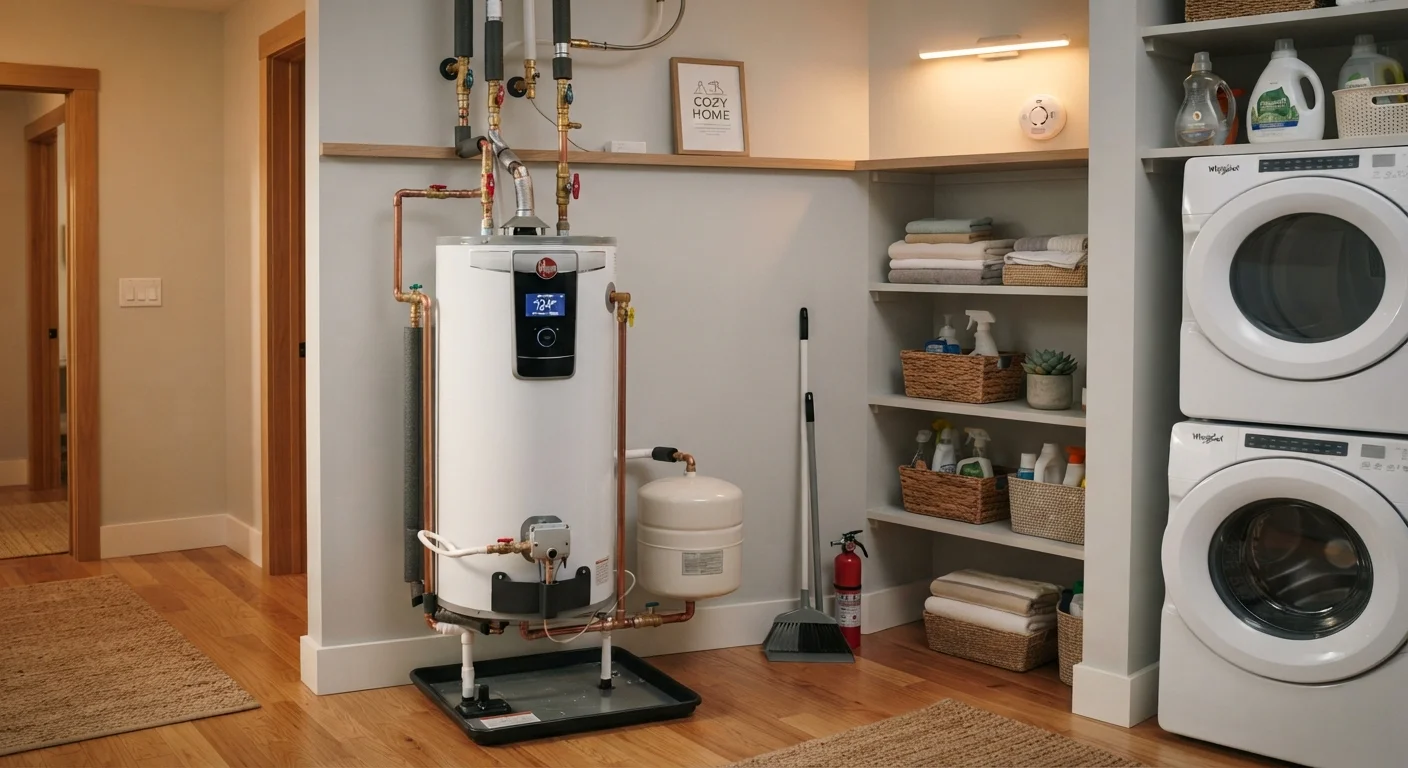
Lower the water heater thermostat to 120°F
Most water heaters ship from the factory set to 140°F, which is higher than necessary for typical household use and costs more to maintain. Reducing it to 120°F can cut water heating energy use by a meaningful percentage while still providing hot water that's safe and comfortable for showers, dishes, and laundry.
For electric heaters: turn off the circuit breaker, remove the thermostat access panel, and use a flathead screwdriver to adjust the dial. For gas heaters: the dial is usually on the front of the unit and can be turned directly. If your thermostat uses markings like "Hot," "A," or "B" rather than numeric temperatures, consult the unit's manual for guidance.
Insulate exposed hot water pipes
Heat escapes from the pipes carrying hot water to your faucets and showers, meaning your heater has to work harder to maintain temperature. Foam pipe sleeves - available at most hardware stores - slip over standard pipe diameters and significantly reduce this heat loss. Focus on the first few feet of pipe leaving the heater, and any pipes running through unheated spaces like basements or crawl spaces.
Measure pipe diameter before buying sleeves, and use tape or cable ties to secure them at joints. This is a one-time fix that pays dividends for years.
Add an insulation blanket to an older tank heater
If your water heater tank is warm to the touch on the outside, it's losing heat - a process called standby heat loss. An insulating blanket wraps around the tank and reduces this waste. This is most beneficial for older units (typically 10+ years old) that lack modern insulation built into the tank walls.
Check your heater's manual or the manufacturer label first - some newer units explicitly advise against adding a blanket, and doing so could interfere with ventilation or void the warranty.
Install low-flow showerheads and faucet aerators
Standard showerheads can use 2.5 gallons per minute or more. Low-flow models - often rated at 1.5 to 2.0 gallons per minute - reduce hot water use significantly per shower. Similarly, faucet aerators mix air into the water stream, cutting flow rate at the tap without reducing perceived pressure.
Both upgrades are simple to install: aerators screw onto faucet tips by hand, and showerheads typically require only an adjustable wrench and some plumber's tape for a leak-free connection.
Fix dripping hot water faucets
A faucet dripping at even a slow rate can waste dozens of gallons of heated water per week. Replacing a worn washer or cartridge in a leaky faucet is usually a straightforward DIY repair. Turn off the water supply to the fixture, disassemble the handle, and replace the faulty component. Repair kits for common faucet types are widely available.
If the leak is from a showerhead or involves plumbing behind a wall, a plumber's assessment is the safer path.
Schedule your water heater with a timer
Electric tank water heaters maintain water temperature continuously - including overnight and during work hours when no one is home. A plug-in appliance timer or a compatible inline timer can schedule the heater to switch off during predictable idle periods, reducing the energy spent on standby heating.
Program the heater to begin reheating about 30 minutes before your household typically starts using hot water. This approach is not suitable for gas water heaters without a qualified technician making the necessary adjustments.
Keeping the Savings Going
These changes work best when paired with mindful habits. Shortening showers by even two minutes per day, running dishwashers and washing machines on cold cycles where possible, and fixing new drips as soon as they appear all reinforce the mechanical improvements you've made.
Hot water efficiency also ties into broader utility savings. For practical steps across electricity, water, and gas, see our guide on cutting utility bills without major disruption. If your thermostat settings are also due for a review, small thermostat adjustments can complement what you've done here.
Revisit your water heater settings and pipe insulation annually - particularly before winter, when standby heat loss from pipes in cold spaces increases. Small maintenance habits prevent the incremental creep that erodes earlier savings.