
Why Small Temperature Changes Add Up
Your heating and cooling system is typically responsible for nearly half of your home's total energy bill. That means even modest, consistent adjustments to thermostat settings can have a noticeable impact on what you pay each month - without requiring expensive upgrades or uncomfortable sacrifices.
The U.S. Department of Energy estimates that dialing back your thermostat by 7-10°F for about 8 hours per day can trim your annual heating and cooling costs by roughly 10%. The key word is consistent. Sporadic adjustments don't deliver the same savings as a reliable daily schedule your system can count on.
For a deeper look at how thermostat strategy fits into broader household savings, see our guide to cutting utility bills without sacrificing comfort.
Set a consistent daily schedule instead of adjusting the thermostat on a whim
Your HVAC system is most efficient when it operates on a predictable pattern. Constant manual changes disrupt this rhythm and often lead to overshooting, which wastes energy and money.
Lower heating setpoints by 7-10°F during sleep and away-from-home hours
These are the longest daily periods when comfort demands are lowest. Capturing both windows consistently is where the ~10% annual savings figure actually comes from.
Keep your summer cooling setpoint at 78°F or higher when you're home and active
Each degree lower on your AC setpoint increases energy use by roughly 3%. Staying at or above 78°F while home - and using fans to supplement - keeps bills in check without sacrificing comfort for most people.
Avoid setting extreme temperatures expecting faster results
Most residential HVAC systems deliver conditioned air at the same rate regardless of how extreme the target temperature is. Setting the thermostat to 60°F to cool quickly just means the system runs longer and overshoots.
Use the 'hold' or 'vacation' feature during extended absences
Maintaining a wide temperature setback - not a complete shutoff - protects your home from moisture and structural issues while minimizing energy use during trips or holidays.
When to Adjust - and by How Much
Timing matters more than the temperature number itself. There are two natural windows each day where lowering the thermostat costs you nothing in comfort:
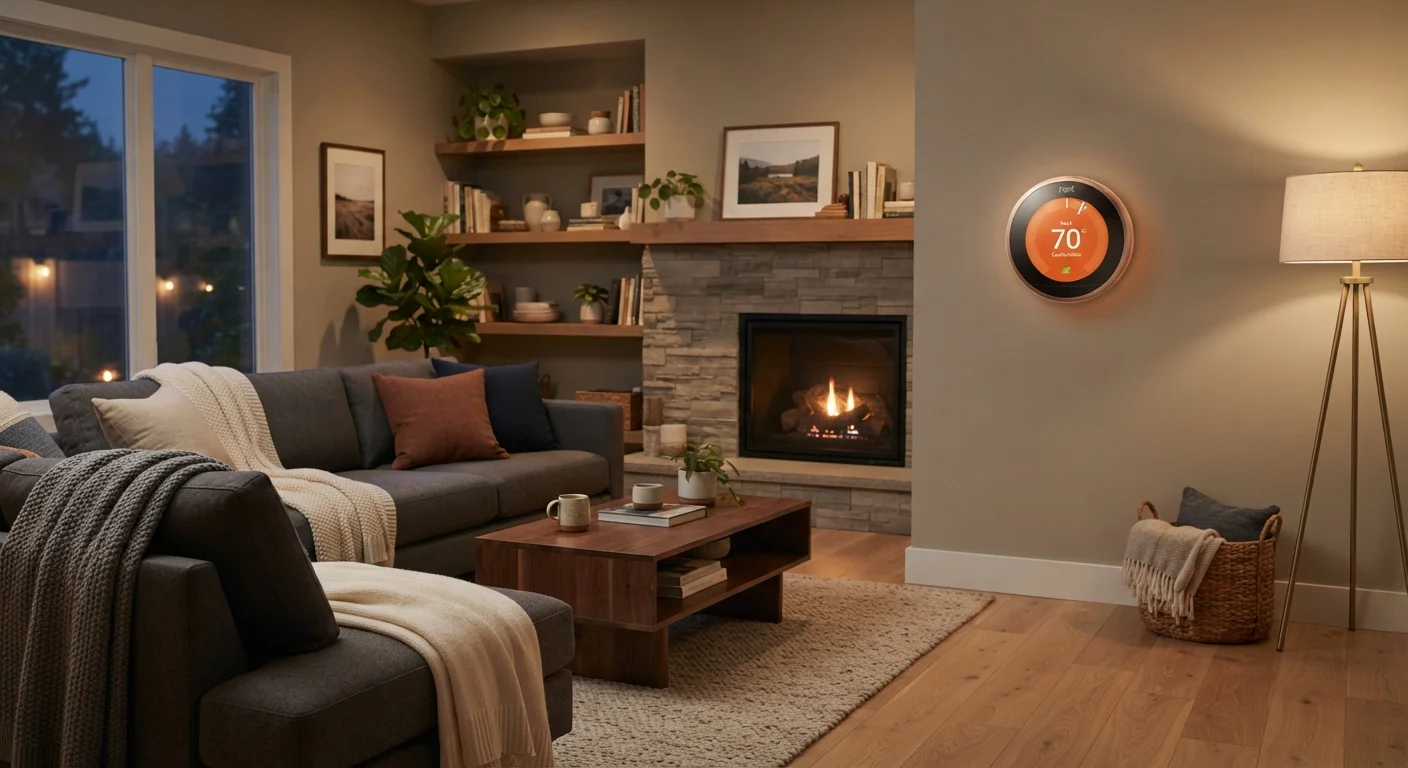
- While you sleep: Most people sleep better in a cooler room. In winter, try setting heat to around 68°F while you're awake and active, then drop it to 60-65°F overnight. In summer, raise the AC setpoint by a few degrees once you're in bed.
- While no one is home: There's little reason to heat or cool an empty house to full comfort levels. Shift the temperature 7-10°F away from your occupied setpoint during regular away hours.
Avoid the common mistake of cranking the thermostat to an extreme setting thinking it will heat or cool faster - most systems work at the same rate regardless of how high or low you set the target. You'll just overshoot and waste energy.
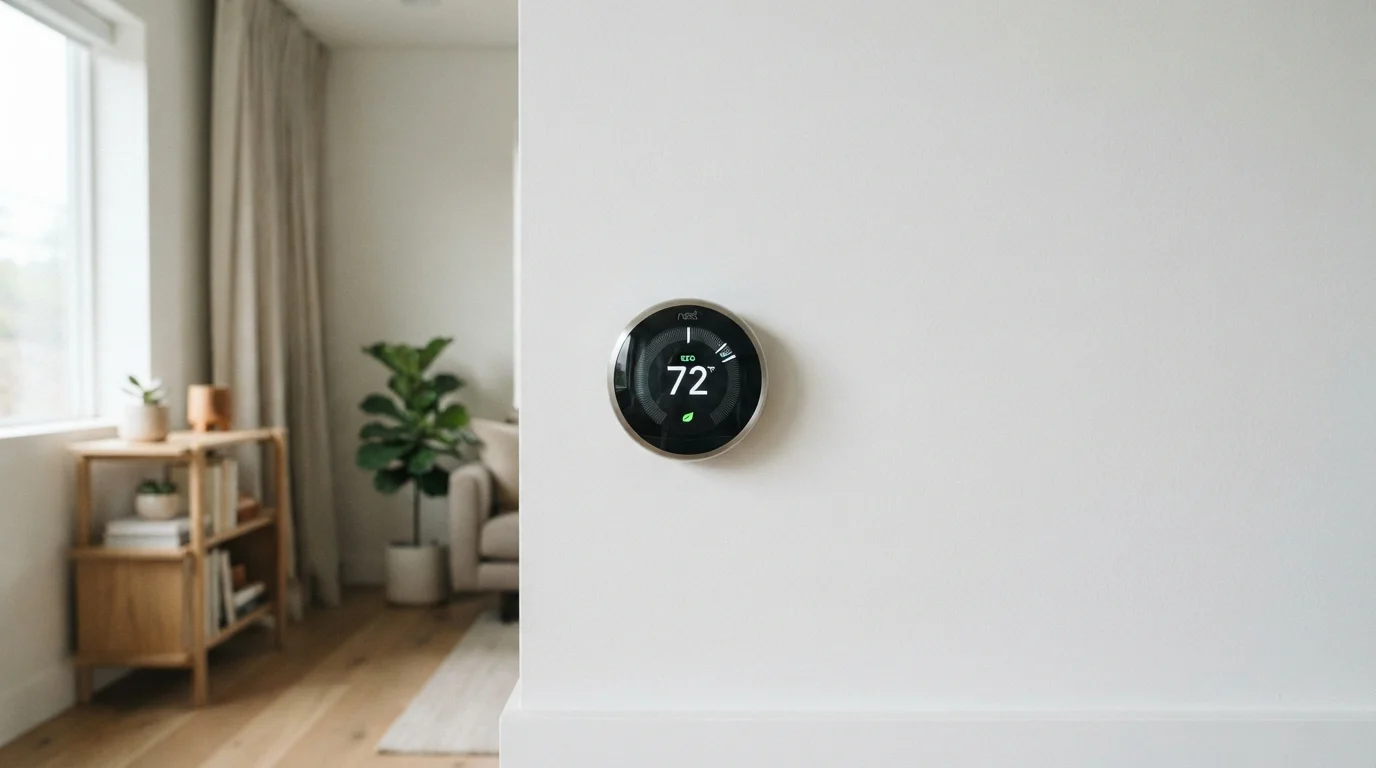
Curious whether a programmable or smart thermostat could handle this automatically? Compare programmable and smart thermostat options to see which approach fits your household.
Supporting Habits That Multiply the Savings
Thermostat settings work best when paired with a few simple habits around your home.
Use ceiling fans strategically. In summer, set fans to run counterclockwise to push cool air down. In winter, switch to clockwise at low speed to recirculate warm air that pools near the ceiling. Fans let you feel comfortable at a slightly less aggressive thermostat setting - but remember to turn them off when you leave the room since fans cool people, not spaces.
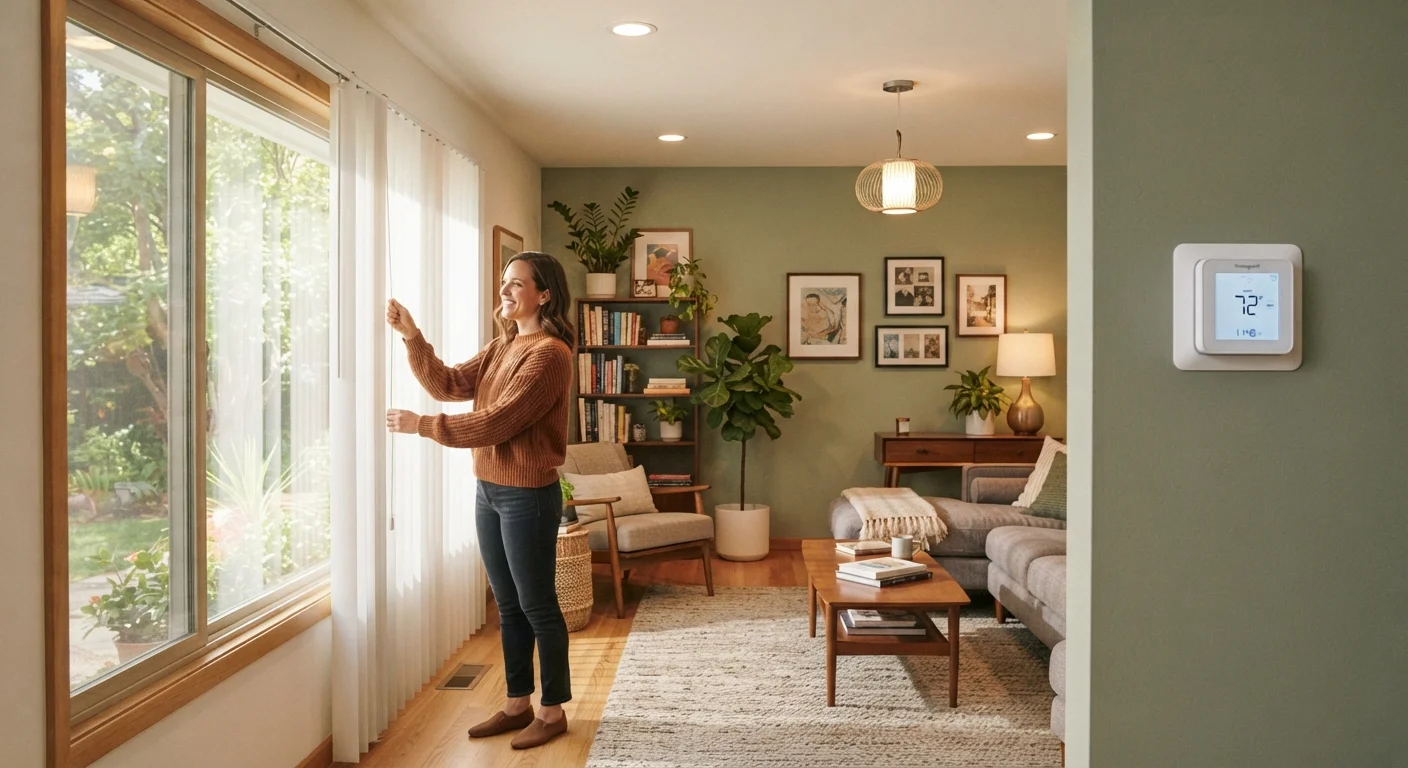
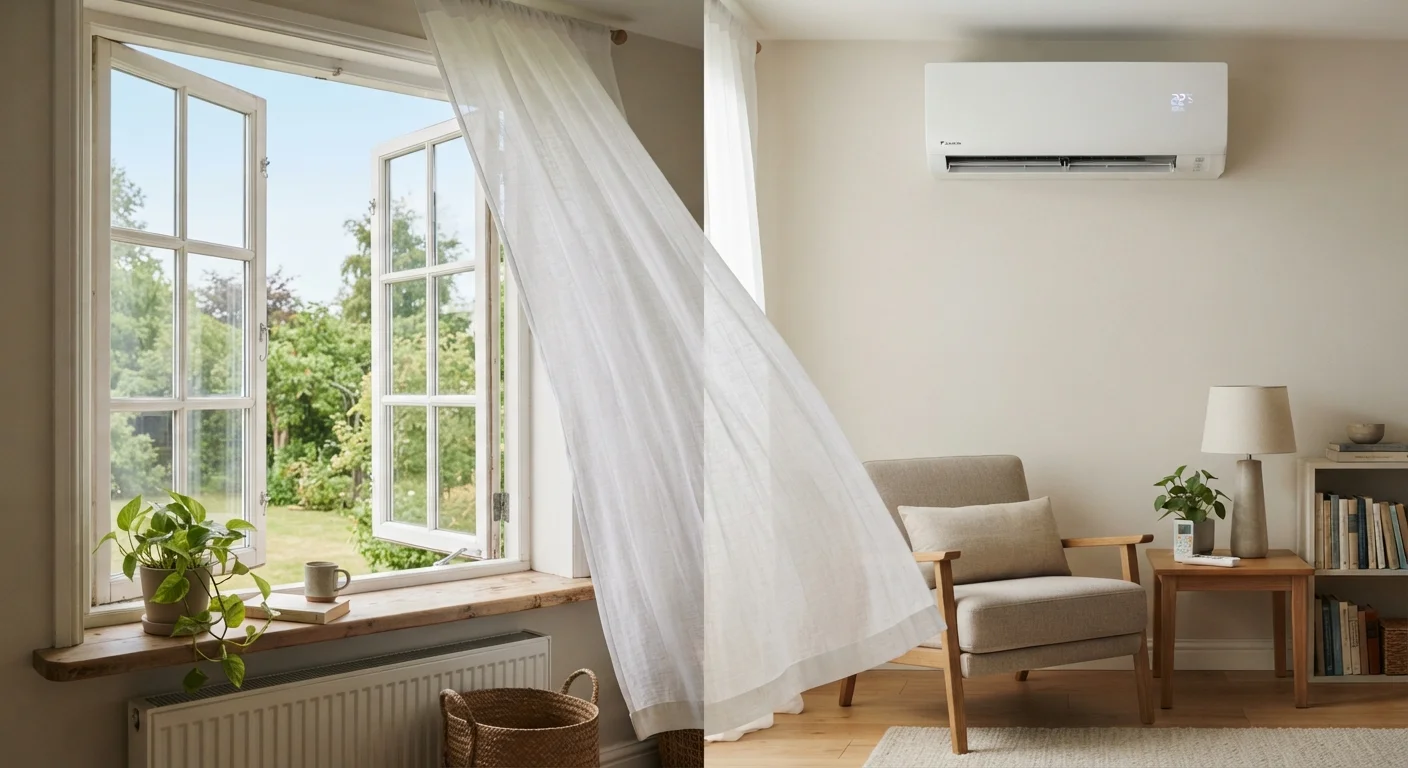
Manage sunlight and airflow. On hot days, closing blinds on south- and west-facing windows reduces heat gain significantly. On mild days, opening windows strategically can replace AC use entirely. Learn when natural ventilation beats running the AC for a practical breakdown.
Check for common myths. Closing vents in unused rooms, for example, is widely believed to save energy but can actually strain your system. Review the home energy myths that may be costing you before making any changes based on received wisdom.
For a full picture of how thermostat habits shift with the seasons, explore our year-round energy saving guide.
~10%
Annual HVAC savings from 8-hour setbacks
According to U.S. Department of Energy guidance, setting your thermostat 7-10°F back for 8 hours a day can yield roughly 10% in annual heating and cooling costs.
~50%
Share of home energy used by HVAC
Heating and cooling typically account for nearly half of a household's total energy consumption, making thermostat habits the highest-leverage energy decision most homeowners can make.
3% per °F
Extra energy per degree of AC cooling
Energy efficiency data suggests that each degree lower on a central air conditioning setpoint adds approximately 3% to cooling energy use.