
The Core Arithmetic: How Each Approach Affects Your Daily Food Spend
The instinct that groups automatically eat cheaper is understandable but not always accurate. When four people split a $40 sharing platter, each pays $10 — a genuine saving over four $14 individual mains. But that math only holds when the dishes are actually designed for sharing, the group agrees on what to order, and no hidden costs appear on the bill.
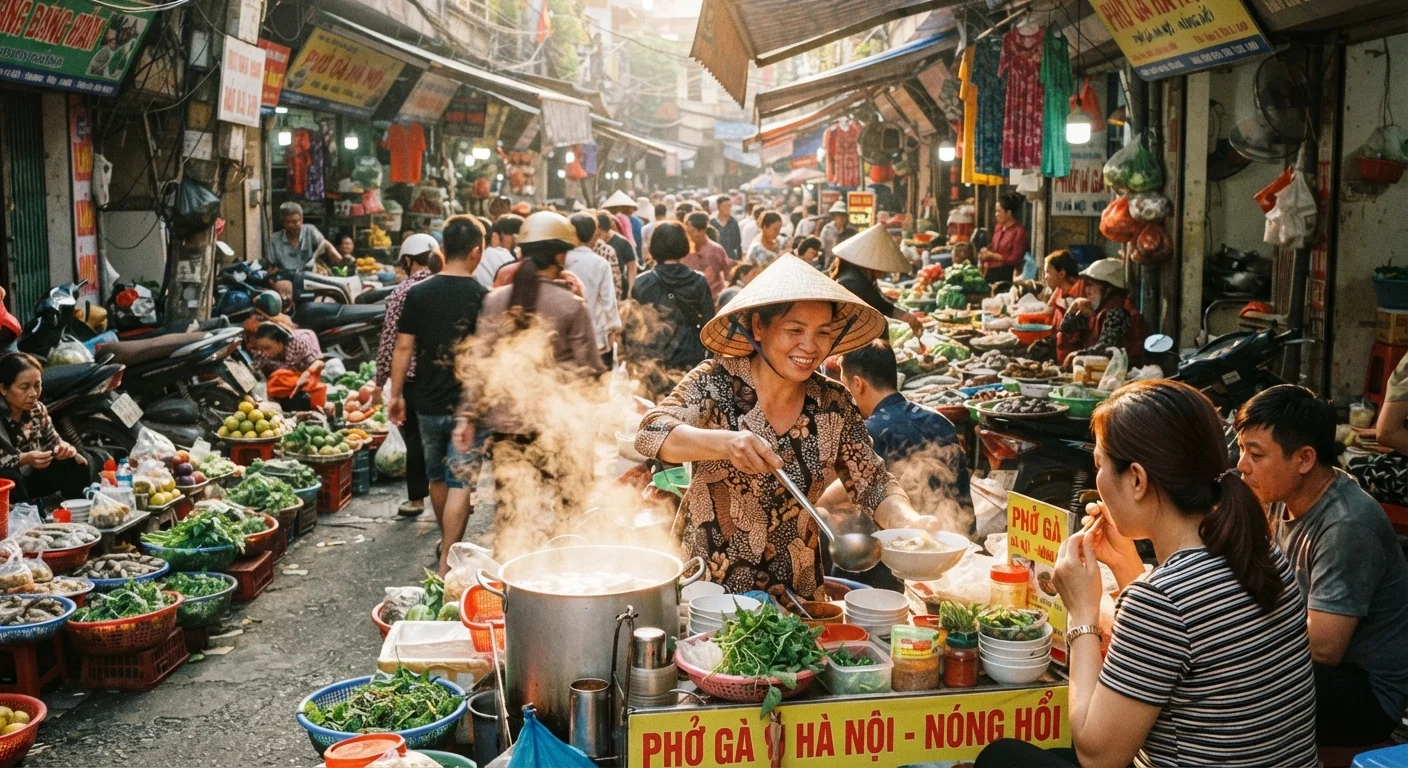
Solo travelers face a different equation. A single diner can order one $6 bowl of noodles from a street stall, skip the restaurant entirely, or time their main meal to hit a set lunch for $8–$12 — options that become logistically complicated when you're coordinating five people with conflicting preferences and hunger schedules. For a practical breakdown of where locals actually find meals at those prices, see where budget travelers find good food.
The honest answer is that daily food spend depends less on group size and more on venue choice, meal timing, and local cuisine structure.
Where Group Sharing Actually Wins
Group sharing has a genuine edge in specific, well-defined situations:
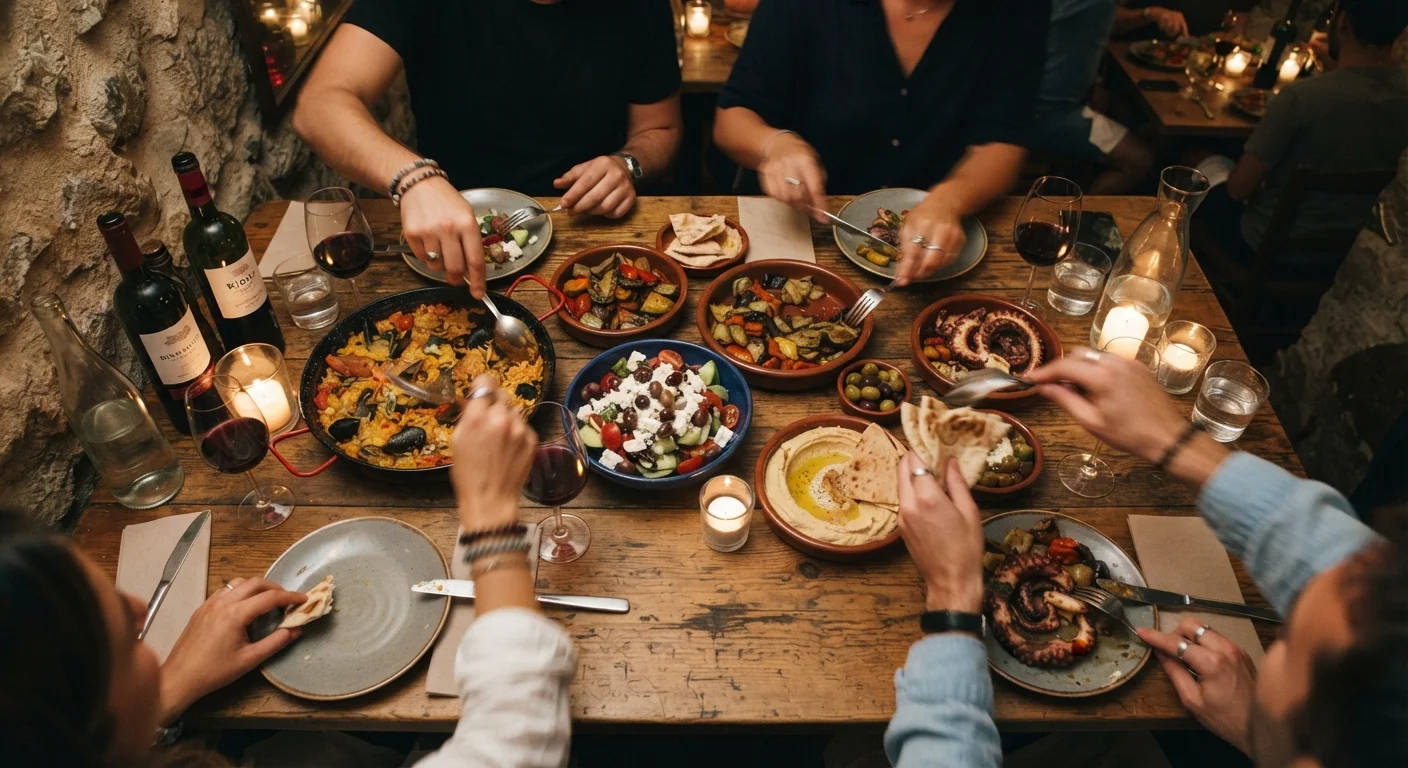
- Family-style cuisines: Thai, Chinese, Ethiopian, Lebanese, and many Latin American cuisines are built around communal dishes. A table of four ordering four shared mains pays per-dish rather than per-person, and portion sizes at these restaurants are deliberately scaled for splitting. The per-person cost can drop 20–35% compared to ordering individual plates.
- Large-format items: Whole roasted fish, mezze spreads, or whole roast chickens are priced for groups. Solo travelers simply can't access these efficiently.
- Drink and appetizer spreading: A single shared bottle of house wine or a round of appetizers divided across four people is measurably cheaper than each person ordering separately.
The catch: group savings evaporate when restaurants add mandatory service charges, per-person minimums, or when the group's ordering instinct runs toward volume over value. Groups also tend to linger longer, ordering additional rounds that a solo traveler would skip.
| Solo Dining | Group Sharing | |
|---|---|---|
| Best venue type | Street stalls, set-lunch spots, market counters | Sit-down restaurants with family-style service |
| Flexibility | High — eat anytime, anywhere | Low — requires group consensus |
| Cost at sharing-cuisine restaurants | Higher per-person (full dish cost alone) | Lower per-person (dish cost divided) |
| Risk of over-ordering | Low — only ordering what you need | Moderate to high — social pressure to add dishes |
| Access to large-format dishes | Limited — rarely worth it solo | Strong — whole fish, platters, spreads |
| Hidden fee exposure | Minimal at street/market level | Per-person covers, service charges common |
| Cuisine compatibility | Universal — works anywhere | Best in communal dining cultures |
Where Solo Dining Holds Its Own
Solo travelers carry one underrated structural advantage: total flexibility. You eat when and where you want, with no negotiation. That freedom translates into real savings when used deliberately.
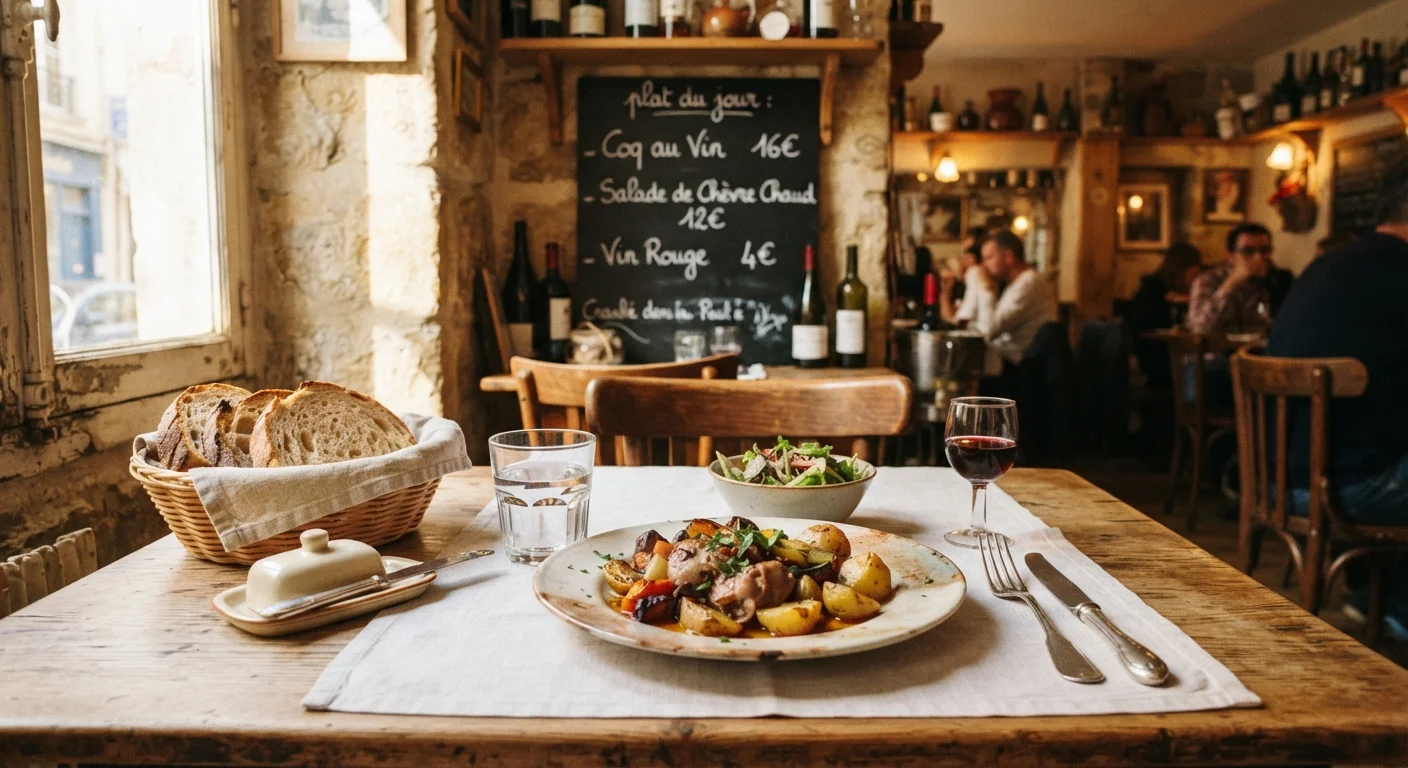
Set lunch menus are arguably the solo traveler's most powerful tool. In Spain, France, Portugal, Vietnam, Mexico, and across much of Asia, fixed-price lunch menus offer two or three courses at a fraction of dinner prices. A group of six rarely agrees to eat at noon sharp; a solo traveler has no such friction. Set lunch menus in many countries represent some of the best per-calorie value available to any traveler.
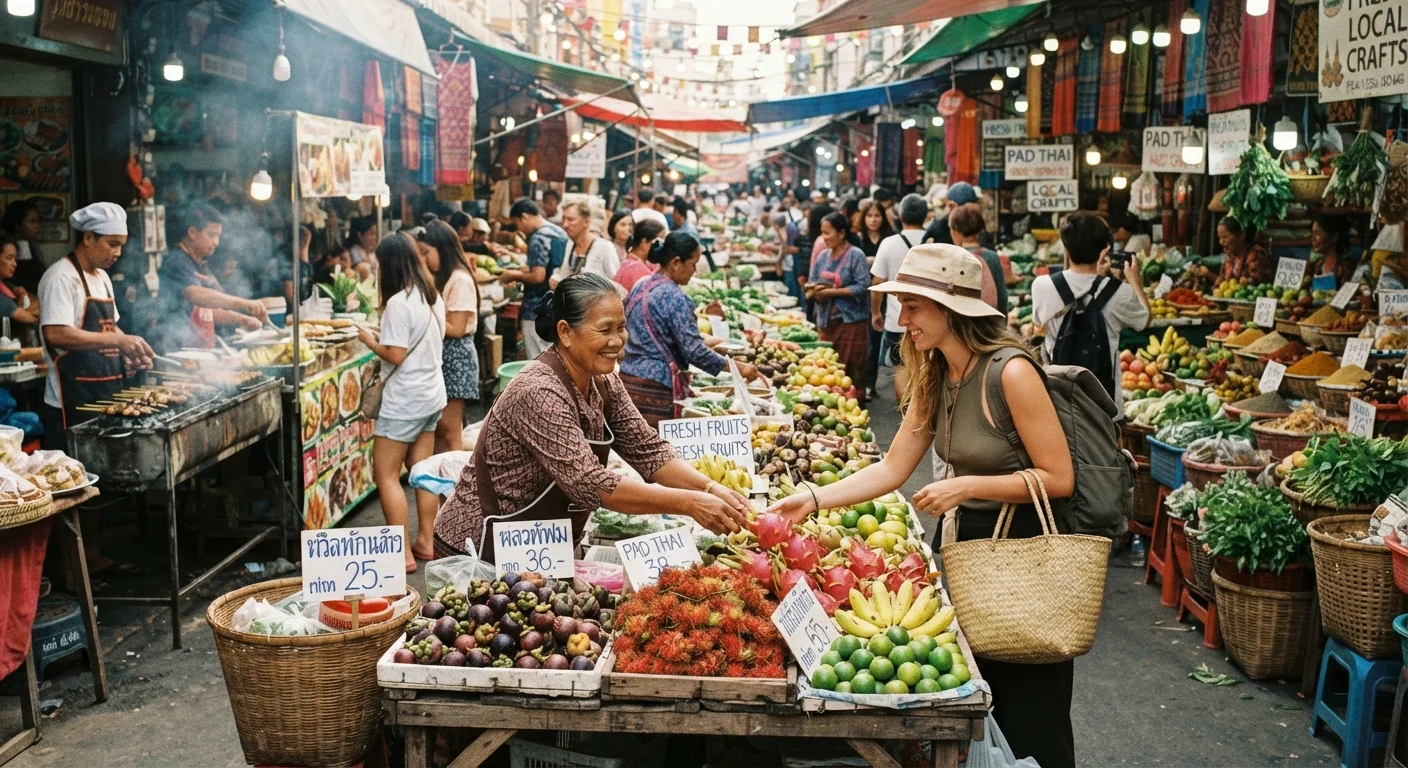
Street food and market stalls reward solo visitors too. A single taco, a bowl of pho, or a market plate is portioned for one — no sharing awkwardness, no minimum spend. Groups often skip these venues because the logistics of feeding six people from a four-stool counter are impractical.
Use the 'One Fewer Dish' Rule When Sharing
A reliable group-ordering strategy: order one fewer main dish than there are people at the table, then add another if needed. In practice, most groups find they've ordered enough — and this simple rule can shave 15–20% off a shared bill without anyone going hungry.
For broader strategies on keeping restaurant bills reasonable regardless of group size, the guide to eating well abroad without overspending covers meal timing, location choices, and habits that apply universally.
Hidden Costs That Distort the Comparison
Neither approach is as clean as it looks on paper. Several real-world factors routinely shift the math:
- Minimum charges and cover fees
- Some restaurants in tourist areas charge a per-person cover (bread, water, or simply existing at the table). A group of five each paying a $3 cover adds $15 before anyone orders — a cost a solo diner at a street stall avoids entirely.
- Bill-splitting friction
- Groups that don't split evenly, or where one person orders significantly more, often end up over-contributing to balance social pressure. This is a real but rarely acknowledged group-dining cost.
- Waste from over-ordering
- Sharing encourages trying more dishes, which can tip into over-ordering. Food left on the table is money lost equally across the group.
- Solo surcharges
- A minority of restaurants in some countries charge a small premium or give smaller portions to single diners, though this is uncommon in most budget-friendly venues.
If you're weighing the extreme end of food budgeting — cooking every meal, skipping restaurants entirely — it's worth reading the trade-offs of extreme food budgeting before committing to that path.
A Practical Framework for Deciding Which Approach to Use
Rather than defaulting to one mode for your entire trip, most budget-savvy travelers mix both approaches situationally:
- For street food and market meals: Go solo or in pairs. Speed, simplicity, and low minimum spend make this the cheapest per-meal option regardless of group size.
- For sit-down dinners in sharing-cuisine cultures: Lean into group dynamics. Order fewer dishes than people, add one as needed, and agree on a budget before the menu arrives.
- For lunch: Solo travelers should prioritize set menus. Groups can do the same, but confirm the set menu is available for the full party — some venues cap it at a certain time or table size.
- For unfamiliar destinations: Check whether local dining culture is individual or communal before assuming sharing saves money. In Germany or the US, individual portions are the norm; sharing a plate can actually feel unusual or draw a surcharge.
Food safety is a factor at any budget level, regardless of how you're dining. The food safety framework for budget travelers is worth reviewing before you commit to high-volume street food or unfamiliar vendors.