
Why Menus Are Harder Than Phrasebooks
Most language-learning resources teach greetings, directions, and basic transactions. Menus are a different challenge: they combine specialized culinary vocabulary, regional ingredient names, preparation terms, and abbreviations that even fluent speakers sometimes need to look up. A traveler who can confidently say "where is the train station?" in Italian may still stare blankly at trippa alla romana or pajata.
The practical consequences for budget travelers go beyond confusion. Ordering the wrong dish — or ordering what turns out to be a premium item because you misread the menu structure — directly hits your food budget. Overpaying for a misunderstood appetizer that arrives as your main course is a common and avoidable mistake. The strategies below are designed to eliminate most of that guesswork before it costs you money.
If you want broader context on how meal timing and restaurant selection affect costs, our guide to eating well abroad without tourist pricing covers the structural decisions that precede the menu itself.
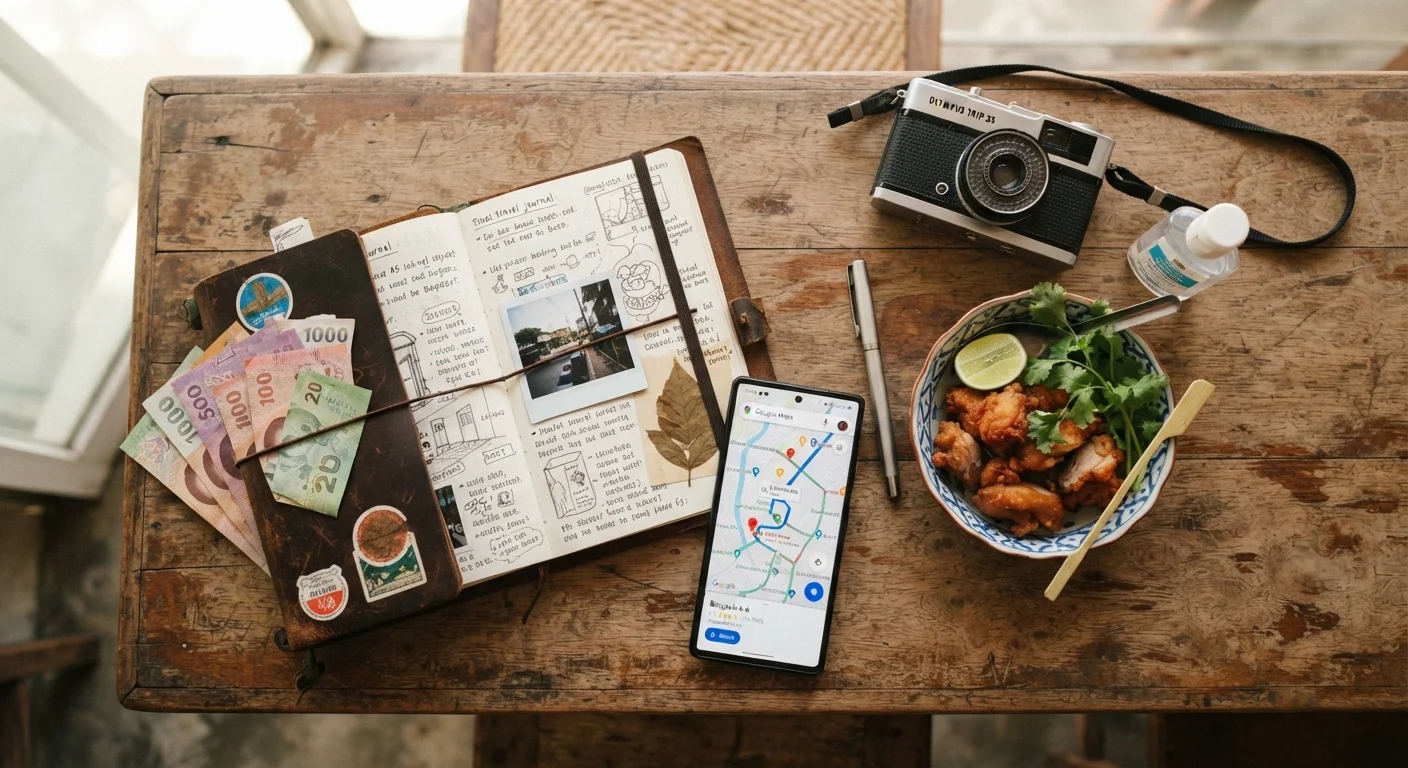
Offline translation app (e.g., Google Translate)
Translates menu text via camera in real time, even without a data connection when language packs are downloaded.
Printed or saved dietary restriction card
Communicates allergies or dietary needs to restaurant staff without relying on verbal explanation.
Local phrasebook or food glossary
Provides quick reference for common food-category words without needing a phone or data.
Step-by-Step: Decoding Any Menu
Prep Your Food Vocabulary Before You Land
Spending 15 minutes before your trip reviewing the most common food terms in the destination language pays off at every meal. Focus on proteins, common allergens, and cooking methods — these recur constantly. Our pre-travel food budget checklist includes a framework for this kind of preparation.
Download an offline language pack before you leave
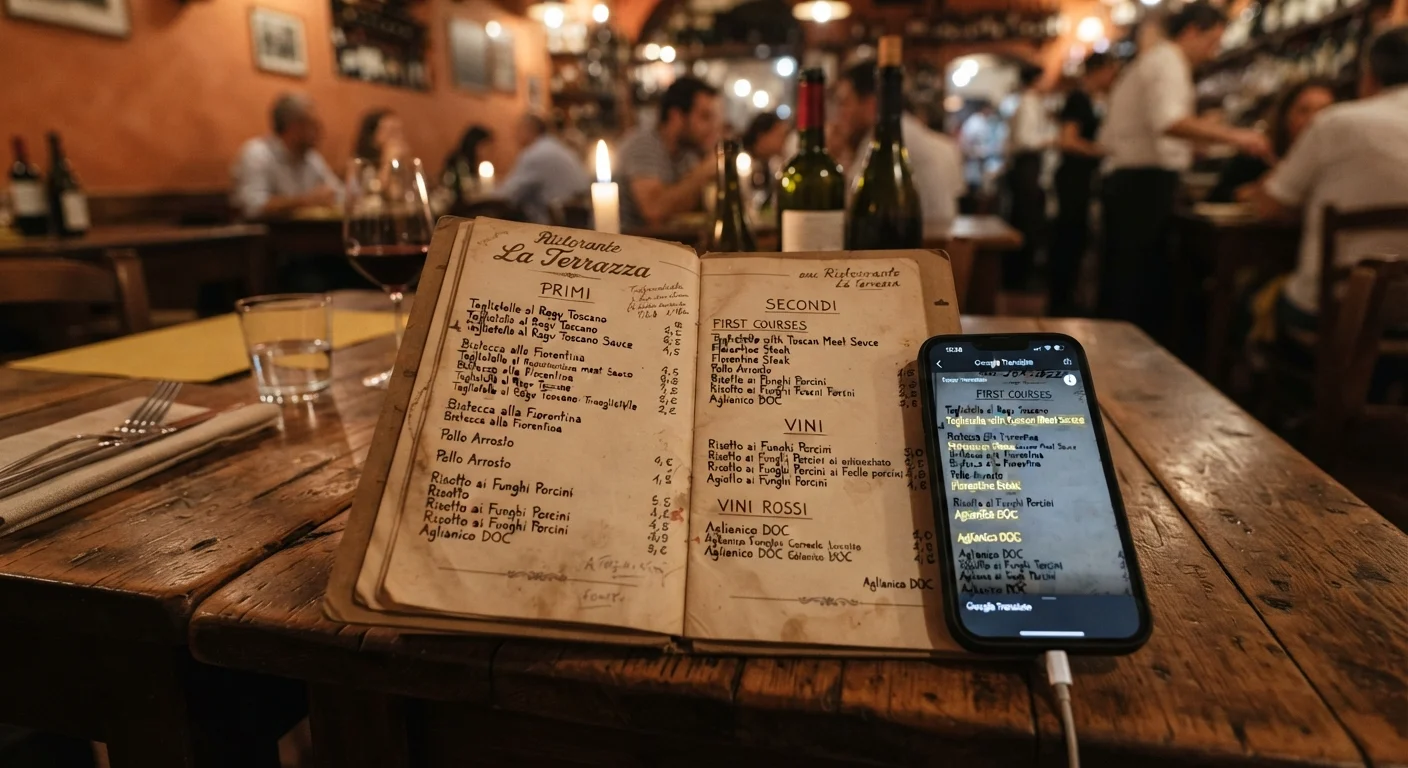
Open your translation app at home or in a place with reliable Wi-Fi and download the offline language pack for your destination. Most translation apps require a live connection by default — without the offline pack, you're dependent on local data or Wi-Fi at the restaurant, which is often slow or unavailable. Camera translation (pointing your phone at menu text to get an instant overlay) works best when the language pack is fully cached locally.
Learn the menu's structural logic
Most menus worldwide follow a similar skeleton: starters, mains, sides, desserts, and drinks. Before you arrive, look up the local words for these categories — usually five to eight words covers the whole structure. Once you can identify sections, you know where to look for a reasonably priced main dish rather than accidentally ordering a tasting-menu starter at full price.
Scan for price clusters too. Items priced noticeably above the median on a section often indicate premium ingredients or larger portions. Items at the lower end of a section are usually your budget-safe picks.
Use camera translation on the full menu page
Hold your phone steady over each menu section and let the camera translation render. Don't rush — blurry captures produce nonsense output. Translate one section at a time rather than the whole page at once, and screenshot useful translations so you can refer back without re-scanning. Pay attention to words that don't translate cleanly; these are often regional ingredient names or preparation styles worth asking about.
Identify your must-avoid ingredients before ordering
If you have allergies or dietary restrictions, this step is non-negotiable. A translated menu gives you a starting point, but ingredient lists in restaurants are rarely exhaustive — sauces, stocks, and garnishes go unmentioned. Use a pre-written dietary card in the local language (you can prepare one using translation tools at home and save it as a phone screenshot) and show it to your server before you order. Phrasing that conveys medical seriousness — rather than preference — tends to be taken more seriously across cultures.
Order using a combination of pointing and key phrases
When you're ready to order, point directly at the item on the menu while stating its name as best you can. Most servers worldwide are accustomed to this interaction and will confirm by repeating the item or nodding. Holding up fingers for quantities removes another layer of ambiguity. If you're unsure what a dish looks like, ask the server to show you a picture — many restaurants have photo menus on a tablet or will pull up an image on their phone without hesitation.
A few phrases worth memorizing phonetically: "Is this spicy?" "Does this contain [ingredient]?" and "The bill, please." These carry you through most of the interaction points where miscommunication is costly.
Verify the bill before you pay
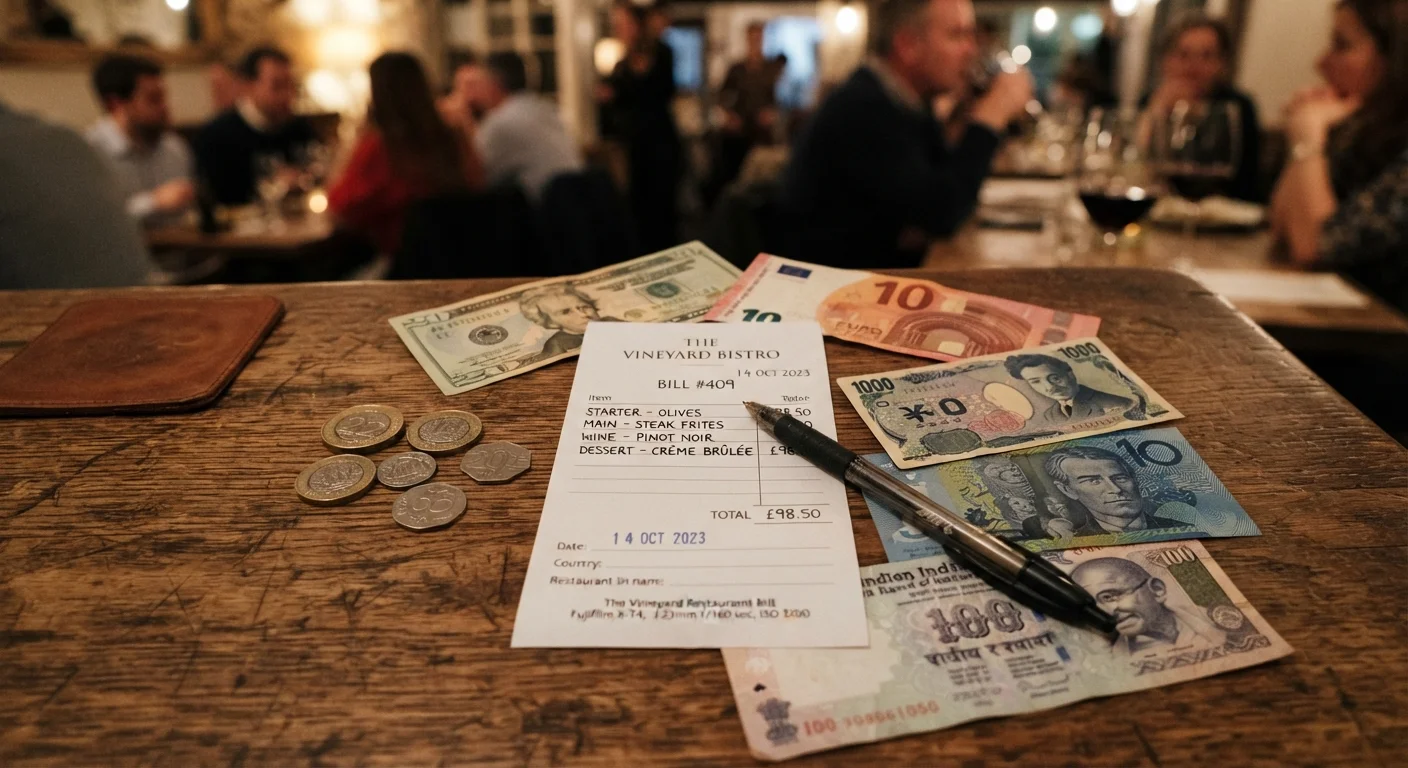
Once the check arrives, cross-reference each line against what you ordered. If prices are listed on the menu, verify they match. Watch for automatic additions — bread, cover charges, or service fees that appear as separate line items. These are legal and common in many countries but can inflate a bill significantly. Understanding how these charges work before you sit down saves friction at payment time. See our guide to restaurant fees and tipping norms worldwide for country-specific detail.
Once you've worked through an order successfully, the same process repeats faster at every subsequent restaurant. Within a day or two in a new country, most travelers develop a reliable rhythm: scan sections, identify price clusters, translate unfamiliar items, confirm anything allergy-relevant, and order with a point and a phrase.
If restaurants feel like too much pressure for a given day, shopping at local supermarkets sidesteps the language barrier entirely while cutting food costs further. And when you're eating on a tight budget, knowing how to assess food safety at unfamiliar spots is equally worth your attention.