
Why Food Costs Spike at Landmark Locations
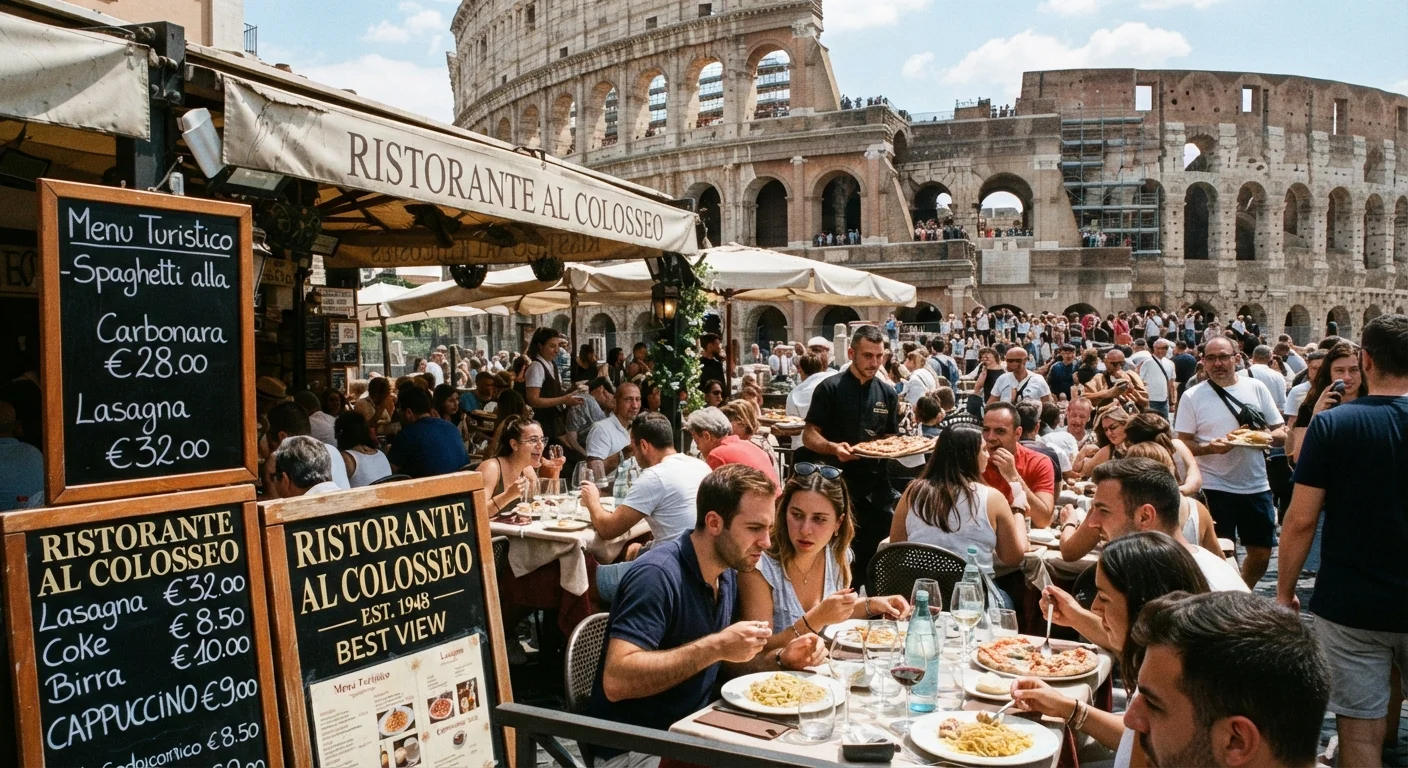
The economics are straightforward: restaurants near major tourist attractions operate in one of the highest-rent retail environments in any city. Those costs get passed directly to customers. Combine that with a near-endless supply of visitors who won't return anyway — so repeat business is not a concern — and operators have little incentive to compete on price or quality.
The result is a predictable pattern. A pasta dish that costs the equivalent of $8 USD six blocks away might run $18 at the café facing the main plaza. That's not an exaggeration. Food-cost researchers and travel journalists have documented these gaps consistently across major European, Asian, and Latin American destinations. The premium is structural, not coincidental.
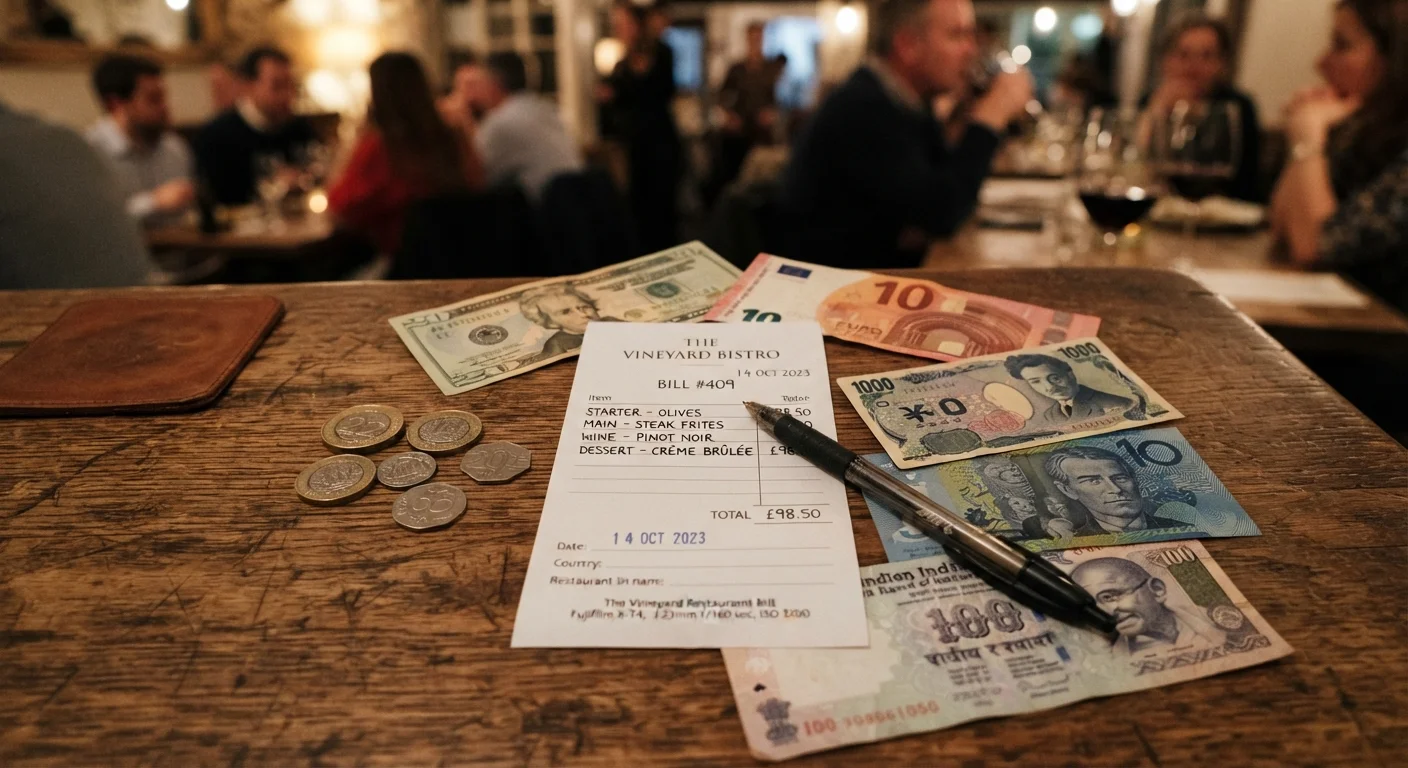
Understanding that the markup is baked into the location itself — not a temporary anomaly — is the first step to avoiding it. For a deeper look at how billing practices compound the problem, see our guide on tipping, service charges, and hidden fees on restaurant bills.
2×
Typical price gap near major landmarks
Travel food-cost comparisons across European cities consistently find that restaurants within 100 meters of top-ranked attractions charge roughly double compared to restaurants a few blocks away.
$15–25
Average tourist-zone lunch spend per person
Budget travel researchers estimate that travelers eating exclusively in tourist-zone restaurants spend an additional $15–25 per person per day compared to those who seek out local alternatives.
Common Mistakes Travelers Make — and How to Fix Them
Most overspending near landmarks isn't careless — it's the result of reasonable instincts applied in the wrong context. Here are the patterns that reliably drain food budgets, and what to do instead.
Sitting down at the first restaurant visible from the attraction entrance.
Why it happens: Hunger, unfamiliarity with the neighborhood, and the visible presence of other diners make the nearest option feel safe and logical.
Assuming a crowded tourist restaurant means the food is good.
Why it happens: Social proof is a powerful heuristic. A full terrace reads as popular, which travelers interpret as a quality signal.
Not checking prices before sitting down.
Why it happens: In many cultures, reviewing a menu before being seated can feel awkward or presumptuous, so travelers skip it.
Eating all three meals in the tourist zone on days spent sightseeing.
Why it happens: When an itinerary is packed with landmark visits in a concentrated area, it feels inefficient to leave for meals.
Ignoring local lunch specials in favor of à la carte ordering.
Why it happens: Travelers often don't know fixed-price lunch menus exist, or assume they're lower quality than ordering off the main menu.
For a broader framework on eating well without defaulting to tourist pricing, our guide on eating well abroad without spending like a tourist covers location strategy, meal timing, and local market habits in detail.
Where to Eat Instead
The alternative to a tourist-zone restaurant isn't a lesser experience — it's usually a better one. A few practical options that consistently deliver value:
- Side streets two to four blocks off the main drag. Rent drops sharply, and menus follow. Look for places with handwritten daily specials boards and tables full of people who aren't carrying guidebooks.
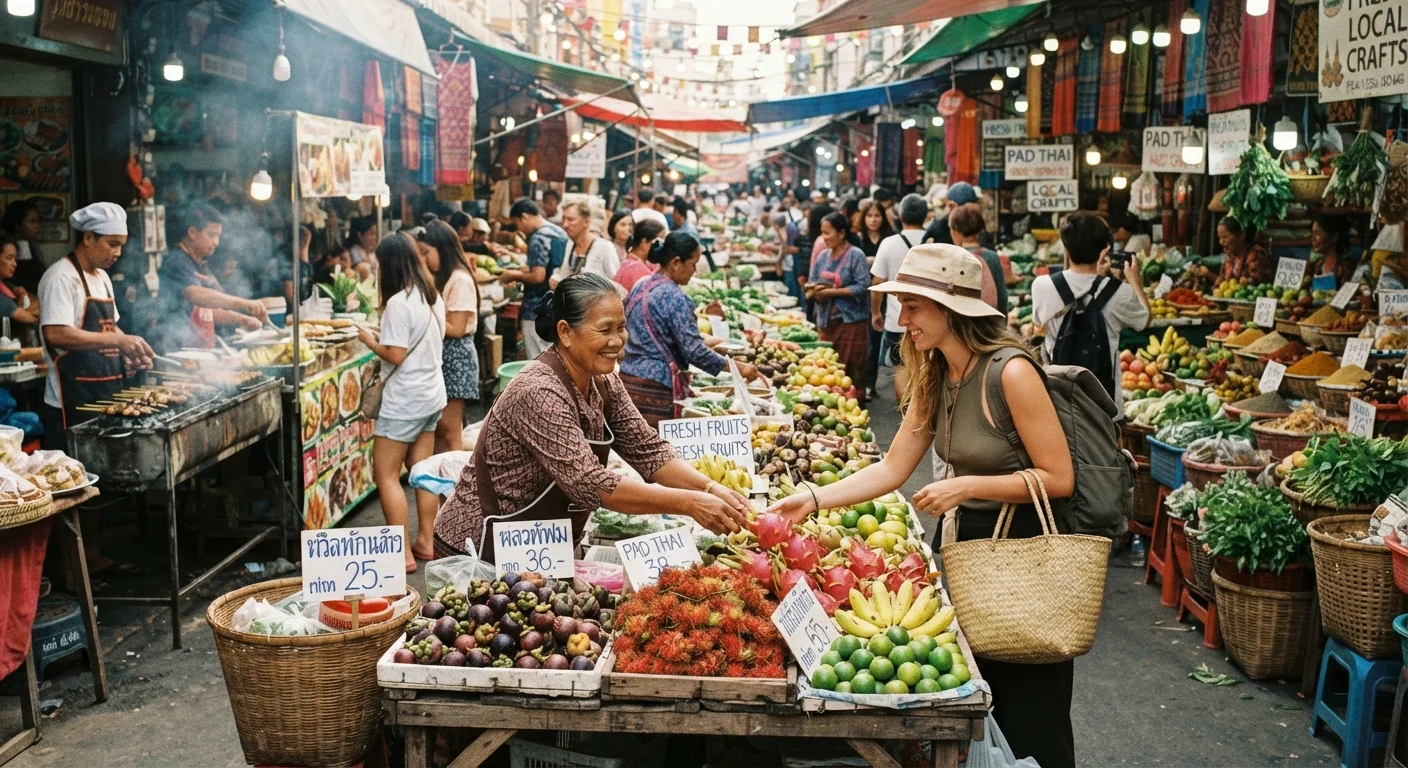
- Municipal markets and covered food halls. These are often among the best-value eating in any city, with vendors selling hot prepared food to workers and residents on actual local budgets. See where budget travelers actually find good food for a breakdown of venue types worth targeting.
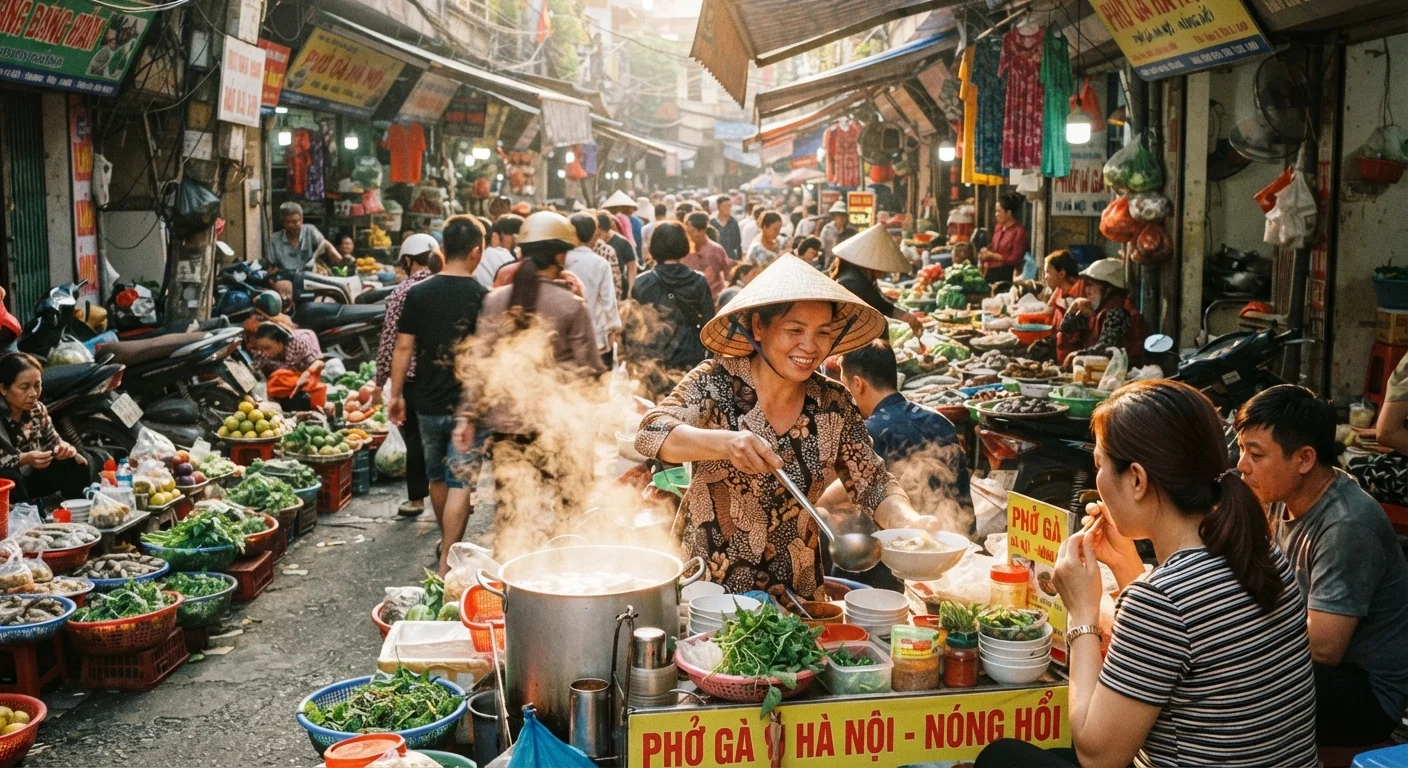
- Street food stalls. Beyond the savings, street food often represents the most authentic cooking a destination offers. Why eating like a local is always the better deal explains why this is the approach many experienced budget travelers default to first.
- Lunch instead of dinner. Many restaurants — even those in moderate tourist zones — offer fixed-price lunch menus that are substantially cheaper than the same items ordered at dinner. How meal timing affects what you spend covers this in detail.
Verify conditions before you travel
Market locations, vendor availability, and restaurant pricing change. What's reliable information today may not hold by the time you visit. Cross-check any specific venue with recent traveler reviews and local tourism resources before making it part of your plan.
None of this requires sacrificing the experience of visiting a landmark. Visit the attraction, take the photos, enjoy the view — then walk a few minutes before you eat. The food will almost certainly be better, and you'll spend noticeably less doing it.