
Why Renter-Friendly Gardening Is More Viable Than You Think
The assumption that gardening requires a backyard keeps a lot of renters from ever starting. In reality, container-based growing has advanced considerably - both in technique and in how gardeners share knowledge - making it possible to grow meaningful amounts of food and plenty of flowers from a single sunny balcony or even a bright windowsill.
For budget-conscious renters, a small home garden can offset grocery spending on fresh herbs and salad greens, which tend to be disproportionately expensive per serving when bought packaged. It also provides a low-cost, ongoing hobby with measurable outcomes. The startup costs are real, but they're one-time - once you have containers and basic tools, ongoing costs shrink to seeds and soil amendments.
Before diving into specifics, it's worth knowing that common budget gardening pitfalls often catch new gardeners off guard - buying gear before understanding what actually drives plant success. This guide focuses on what genuinely matters for renters specifically.
6+ hours
Daily sunlight most vegetables require
The USDA and most extension services consistently cite 6-8 hours of direct sun as the threshold for productive edible gardening.
5 gallons
Minimum container size for tomatoes
Horticultural guidelines recommend at least a 5-gallon container for full-sized tomato plants to allow adequate root development.
~$30
Estimated first-year startup cost for a basic herb garden
A modest window box or two small pots of herbs - soil, seeds, and containers included - can be started for roughly $25-$40 depending on sourcing.
Assessing Your Space: Balconies, Windowsills, and Shared Areas
Before buying a single pot, spend a week observing how light moves through your available space. Light is the factor most renters underestimate. Most vegetables and many flowering plants need at least six hours of direct sunlight daily. A south- or west-facing balcony or window in the Northern Hemisphere typically delivers this; north-facing spaces are better suited to shade-tolerant herbs like mint, parsley, or ferns.
Assess your space for three things: light duration, wind exposure, and load-bearing capacity. Upper-floor balconies can be surprisingly windy, which dries soil fast and can damage taller plants. If your balcony feels breezy, plan for lower-growing varieties and wind-breaking arrangements of denser pots.
Weight is a serious consideration. A large planter filled with wet potting mix can weigh 50-100 lbs or more. Check your lease and, if needed, ask your building manager about load limits - particularly for balconies. Distribute weight near load-bearing walls or railings rather than concentrating it in the center.
If you have access to a shared courtyard or community garden plot, those spaces significantly expand your options. Some cities and housing cooperatives maintain community plots specifically for residents - worth investigating before assuming none exist near you.
Containers and Vessels: What to Use Without Overspending
Dedicated garden containers from retail stores aren't your only - or even your best - option when starting out. Many household items make functional planters: five-gallon food-grade buckets, wooden crates lined with burlap, colanders, deep storage totes, and even old colanders work well for different plant types. Drainage holes are non-negotiable; drill or punch them into any container that doesn't already have them.
For a fuller picture of trade-offs, our container gardening guide covers what works at different price points and what ongoing costs to anticipate.
Always drill at least four drainage holes in repurposed containers, and elevate them slightly on pot feet or wooden blocks so water can escape freely. Sitting in standing water kills roots faster than almost any other mistake.
Root rot from poor drainage is the most common cause of container plant failure, particularly in heavier pots where excess moisture has nowhere to go.
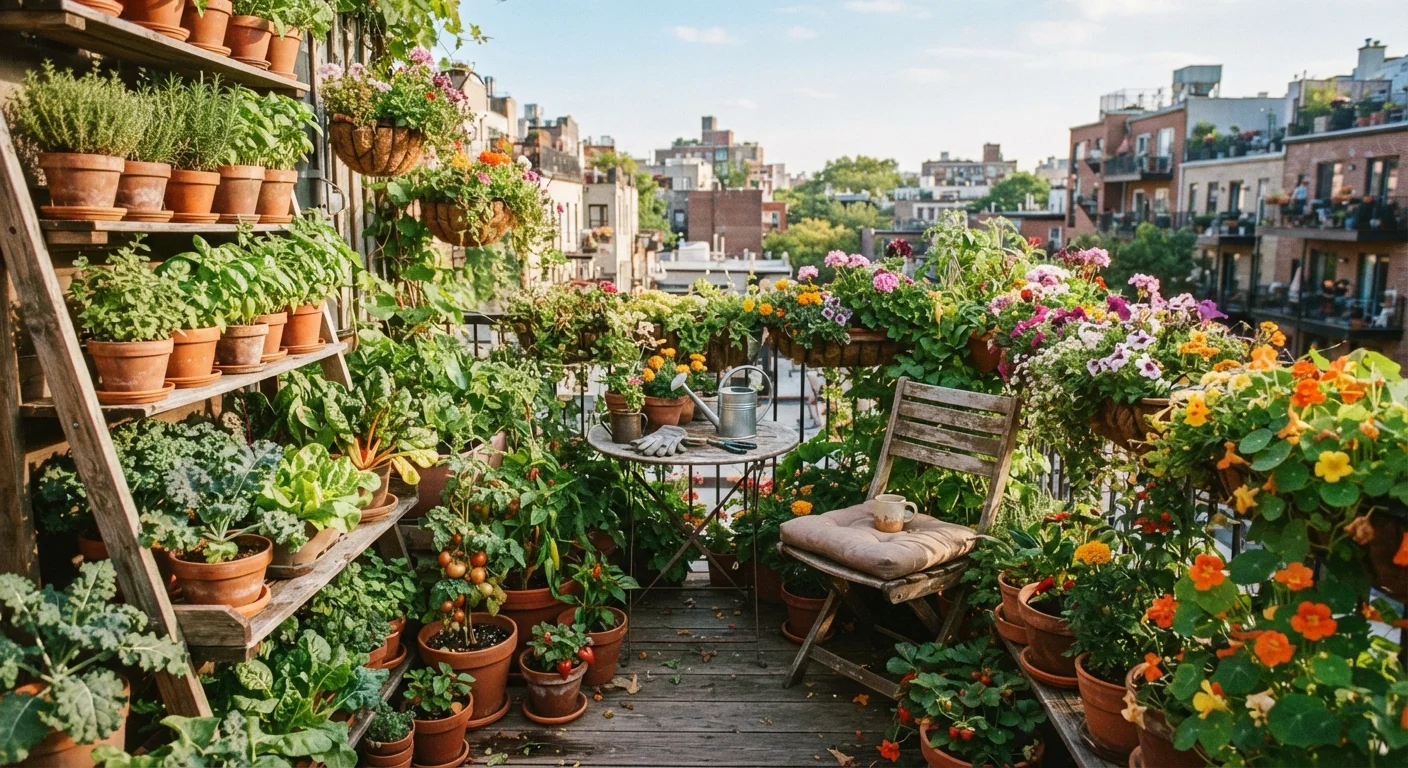
Group your containers together rather than spacing them out - plants create a microclimate that retains humidity and moderates temperature swings, which benefits all of them.
Clustered containers lose moisture more slowly and protect each other from wind damage, reducing how often you need to water and how stressed plants get during hot or dry spells.
Match container size to plant type: herbs and lettuce do fine in 6-8 inch pots, while tomatoes, peppers, and zucchini need at least 5-gallon capacity to develop properly. Undersized containers are one of the most common reasons compact vegetable gardens underperform - roots get cramped, water runs out fast, and yields drop sharply.
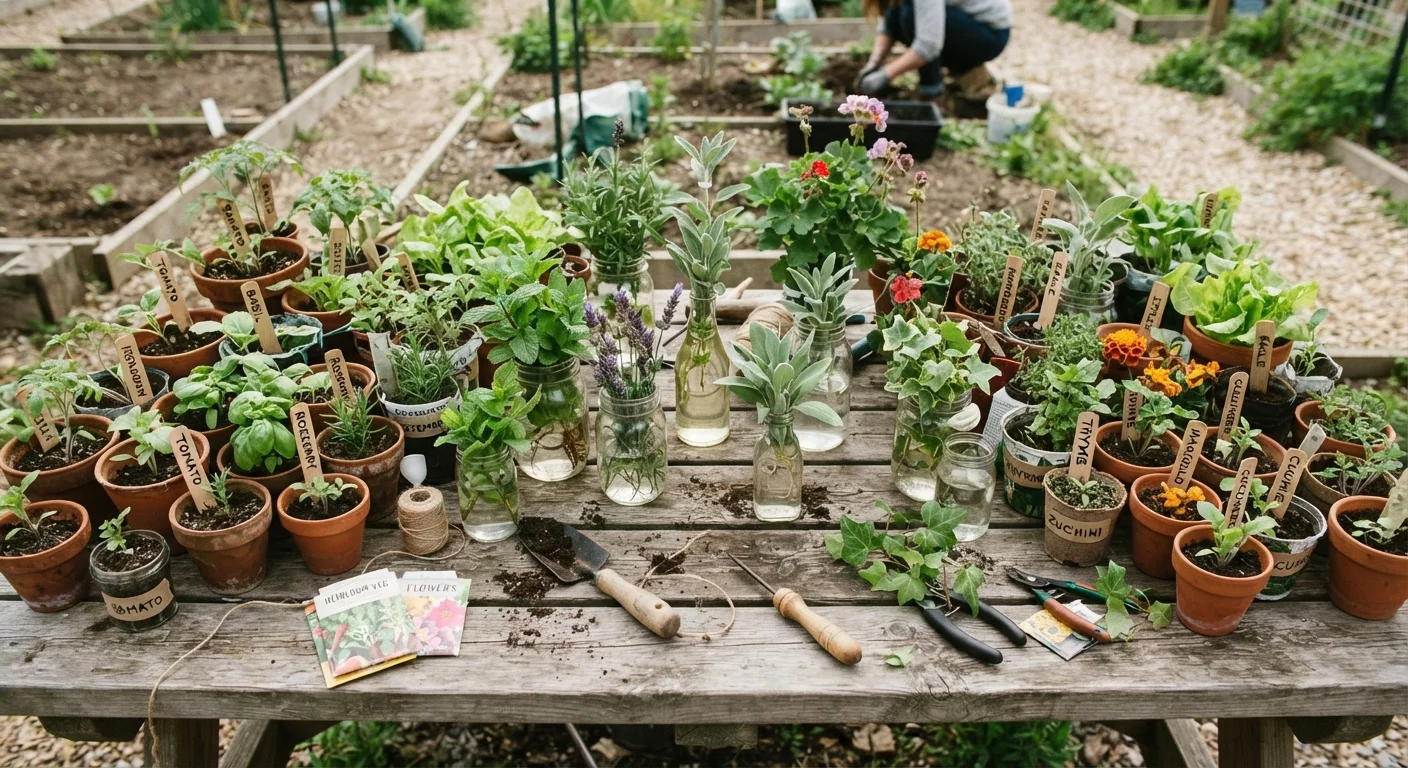
To stock your containers without spending much, check plant swaps and free plant networks - many gardeners give away surplus seedlings that are already sized for pots.
What to Grow: Food and Flowers That Thrive in Small Spaces
The most satisfying renter gardens focus on high-use, high-value crops rather than trying to grow everything. Prioritize plants you actually cook with or enjoy looking at daily.
Best edibles for limited space:
- Herbs: Basil, chives, cilantro, thyme, and mint are prolific in small pots and cost several times more to buy packaged than to grow.
- Salad greens: Lettuce, arugula, and spinach grow quickly, tolerate partial shade, and can be cut-and-come-again for weeks.
- Cherry tomatoes: Compact varieties like 'Tumbler' or 'Tiny Tim' produce heavily in containers with enough sun.
- Radishes and green onions: Extremely fast-growing, shallow-rooted, and ideal for small containers or window boxes.
- Chili peppers: Compact, highly productive, and heat-tolerant - ideal for a sunny balcony.
Best flowers for containers: Marigolds, nasturtiums (also edible), petunias, and zinnias all thrive in pots. Nasturtiums are particularly useful - they repel some pest insects, their flowers and leaves are edible, and they grow from seed in weeks. For timing your plantings to reduce wasted seed money, refer to a seasonal planting calendar to know exactly when to sow each crop.
Soil, Watering, and Feeding on a Budget
In container gardening, potting mix does more work than any tool you could buy. Garden soil from outside is too dense for containers - it compacts, reduces drainage, and typically performs poorly. A quality all-purpose potting mix with perlite or bark for aeration is worth the investment. Buying larger bags rather than small ones reduces cost-per-volume significantly.
To cut ongoing soil costs, composting kitchen scraps is highly effective. Even a small indoor worm bin (vermicompost) can produce a steady supply of rich compost to top-dress containers and reduce how often you need to buy amendments. See our guide on making compost at home for a practical starting point.
Watering containers is more demanding than ground gardening - pots dry out faster, especially in wind or heat. Water when the top inch of soil is dry, not on a fixed schedule. To avoid overwatering and conserve water simultaneously, smart watering habits like self-watering inserts or saucers under pots that catch and recycle runoff can reduce both water waste and plant stress.
For feeding, a balanced liquid fertilizer applied every two weeks during the growing season is sufficient for most container crops. Avoid over-fertilizing - it encourages leafy growth at the expense of fruit and flowers.
Navigating Lease Rules and Building Permissions
Renter gardening succeeds or fails partly on how well you manage your lease obligations. Before installing anything permanent - hooks, brackets, overhead structures, or trellises attached to walls - review your rental agreement for clauses about alterations, balcony use, or structural modifications.
For anything beyond freestanding containers, get written permission from your landlord. Email is fine - it creates a record. Be specific about what you're asking to do: 'I'd like to add three freestanding container planters on the balcony and a fabric grow bag for tomatoes' is a clearer request than a vague 'can I garden?'
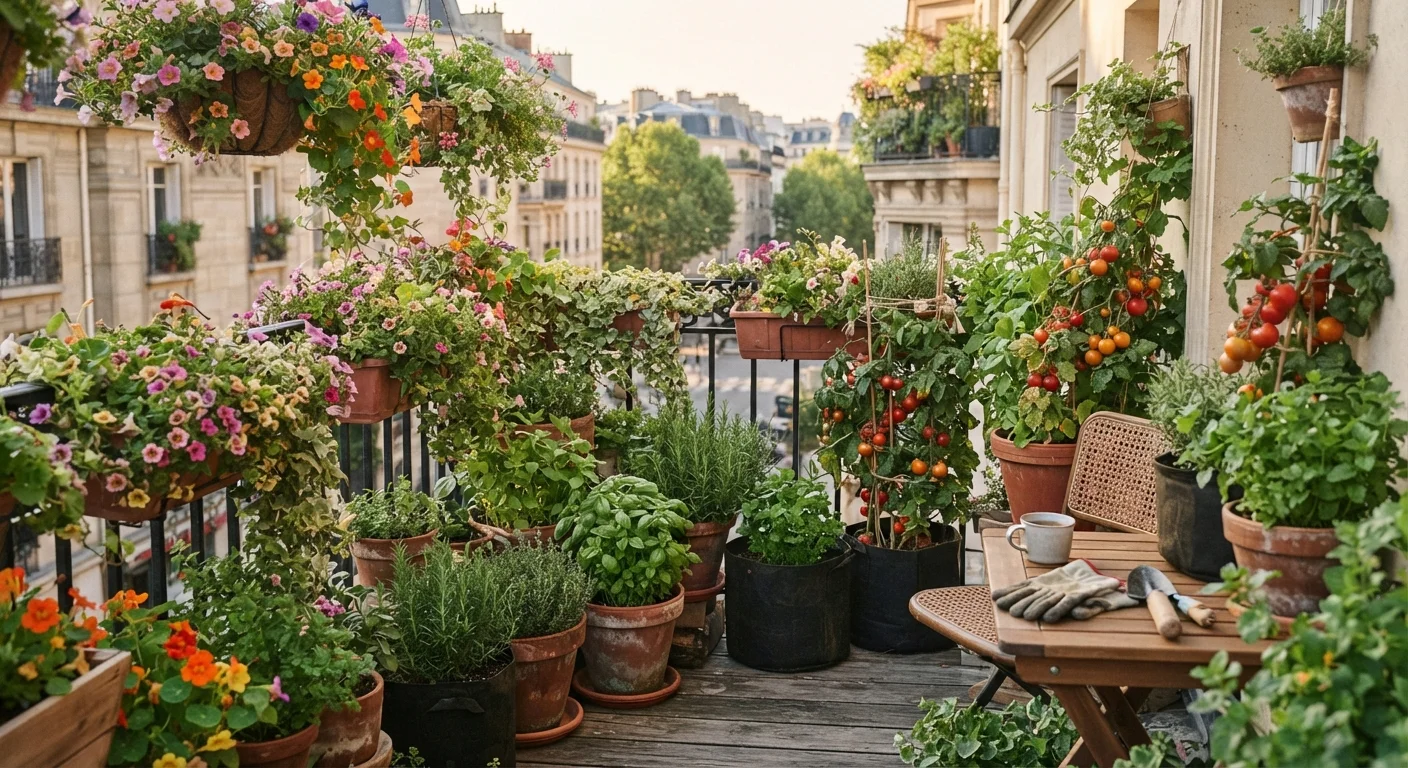
Freestanding and moveable setups are almost always permissible and avoid the issue entirely. Fabric grow bags, self-watering planters on casters, tiered plant stands, and hanging baskets from pre-existing hooks require no drilling and leave no trace when you move out - which matters for getting your security deposit back.
If you're interested in expanding beyond your unit, ask your building manager or housing association about shared green spaces. Some buildings allow tenant-organized garden plots in underused courtyard areas, particularly if you propose a low-maintenance, communal setup. It's an ask worth making.
And when you do move, your containers and plants move with you - a renter-friendly garden is genuinely portable in a way a ground garden never is.