
What Actually Matters vs. What Gets Marketed to You
Walk into any garden center or browse online, and you'll encounter an overwhelming range of products - kneeling pads, specialty trowels, pH meters, raised-bed kits, drip irrigation systems, grow lights, and specialized fertilizers for every conceivable plant type. Almost none of it is necessary to get started.
What genuinely determines whether a first garden succeeds comes down to three things: light, water, and soil quality. Get those right, and most beginner-friendly plants will do the work themselves. Get them wrong, and no amount of gear will compensate.
Before buying anything, assess what you're actually working with. How much direct sunlight does your space receive? Do you have reliable access to water? Is the soil in your yard workable, or are you dealing with heavy clay or compacted ground? These answers shape every decision that follows - and most of them are free to gather.
Direct sowing
Planting seeds directly into the soil or container where the plant will grow, rather than starting them indoors first and transplanting later.
Potting mix
A specially formulated growing medium sold in bags, designed for use in containers. It's lighter and better-draining than regular garden soil, which tends to compact in pots.
Cut-and-come-again
A harvesting method where you cut only the outer leaves of a plant, leaving the center to keep producing. Lettuce and many herbs work this way, extending your harvest significantly.
Amended soil
Garden soil that has been improved by mixing in compost, aged manure, or other organic matter to boost nutrients and improve drainage and texture.
Perennial
A plant that lives for more than two years, dying back in winter and re-sprouting each spring. Perennials are often divided and shared between gardeners because they spread over time.
Companion planting
Growing two or more plant species near each other because they benefit one another - for example, by repelling pests, attracting pollinators, or improving soil conditions.
If you're worried about buying the wrong things first, our companion piece on common budget gardening pitfalls is worth reading alongside this one.
The True Bare Minimum: Tools, Containers, and Soil
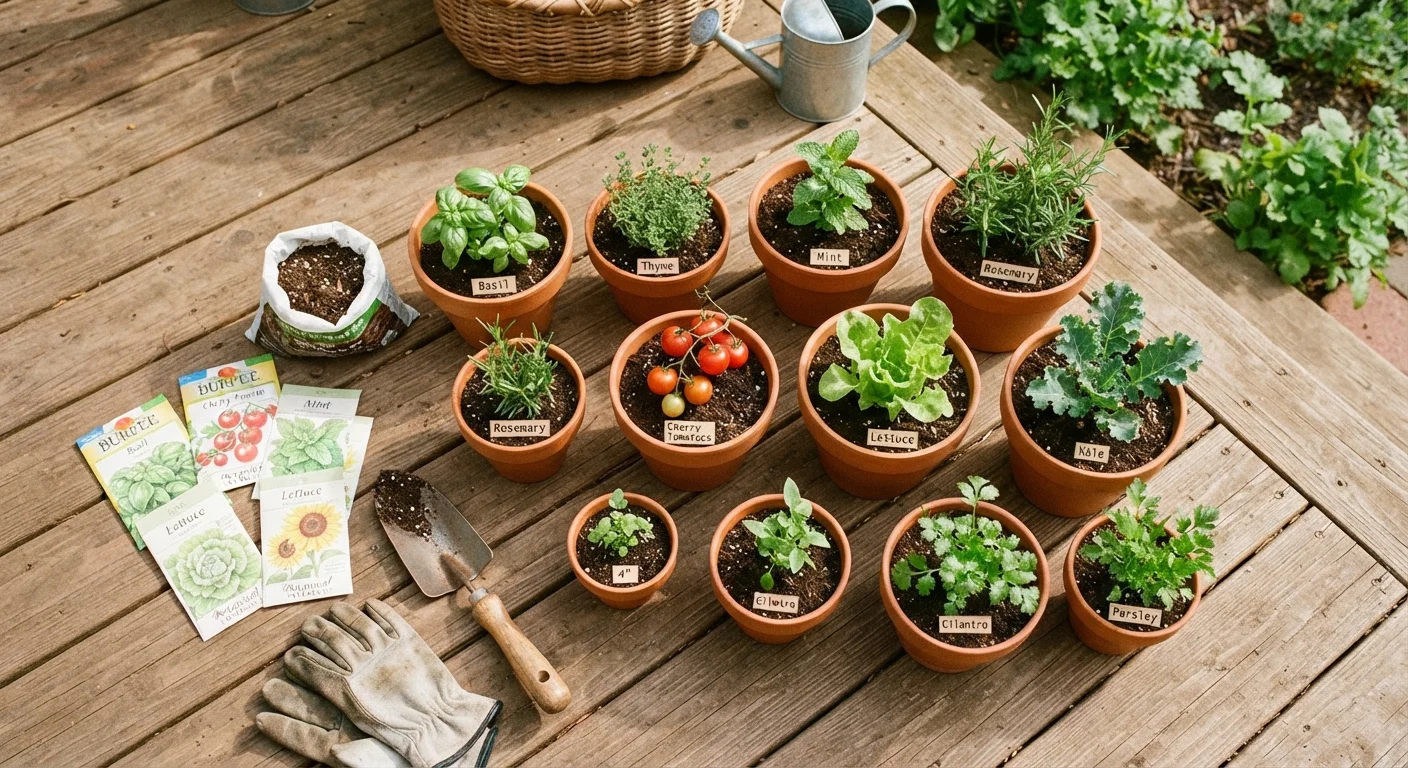
You need remarkably little to plant something and watch it grow. Here's an honest minimum toolkit:
- A hand trowel - for digging, planting, and transplanting. A basic one handles nearly every beginner task.
- A watering can or hose access - consistent moisture is non-negotiable, and hand-watering is perfectly effective at small scale.
- Containers or a planting area - repurposed buckets, nursery pots, crates, or direct ground planting all work. For a deeper look at container trade-offs, see our guide on container gardening costs and trade-offs.
- Potting mix or amended soil - this is where it's worth spending a few dollars. Poor soil is the single most common reason beginner gardens underperform.
Garden gloves and a hand fork are useful additions but can wait. Skip raised-bed kits, decorative planters, and any tool with a single specialized purpose until you've completed at least one growing season.
Repurpose Before You Buy Containers
Five-gallon buckets, used nursery pots, old colanders, and even wooden crates all make functional planters with a few drainage holes drilled in. Check Freecycle, Buy Nothing groups, or the back of garden centers - surplus containers are given away frequently. This alone can reduce your startup cost by a significant amount.
If you're weighing whether to build raised beds or plant directly in the ground, our breakdown of raised beds vs. in-ground planting covers the real cost differences over time.
Choosing What to Grow First
Your first season should prioritize plants that are fast, forgiving, and give you visible results - both to learn from and to stay motivated. High-yield, quick-maturing vegetables are ideal because they repay a small seed investment rapidly.
Strong beginner choices include:
- Radishes - ready in as little as three to four weeks; great for building confidence.
- Lettuce and salad greens - cut-and-come-again varieties give repeated harvests from one planting.
- Green beans - productive, low-maintenance, and inexpensive to seed.
- Zucchini - fast-growing and high-yielding, though it needs space.
- Herbs (basil, chives, parsley) - high everyday value, especially if you cook regularly. Growing your own can reduce grocery spend noticeably over a season.
Timing your sowing correctly also reduces wasted seed money significantly. Our seasonal planting calendar for low-cost vegetables gives clear sowing windows by crop type.
What you grow can also pair well with a broader strategy of eating affordably - fresh herbs and vegetables from even a small garden can stretch a frugal pantry further. See our guide to stocking a nutritious pantry on a shoestring for complementary ideas.
Free and Low-Cost Ways to Source Plants and Seeds
Buying plants at retail prices is rarely necessary. Many experienced gardeners actively give away surplus seedlings, divided perennials, and cuttings - especially in spring. Tapping into these networks can stock an entire garden for nothing.
Practical sources to explore:
- Community seed libraries - many public libraries lend seeds at no cost.
- Local plant swaps and gardening groups - neighborhood social media groups and community boards often list free seedlings.
- Freecycle and mutual aid networks - pots, tools, and soil amendments regularly appear for free pickup.
- Saving seed from produce - tomatoes, squash, and peppers all yield viable seed if you let one fruit fully ripen.
Our detailed guide on building a garden without buying plants covers how to find and participate in these networks effectively.
If you're gardening without a yard, many of these free resources still apply. Our piece on renter-friendly gardening explains how renters can make the most of limited space.
Common First-Year Mistakes That Cost Money
Most beginner gardening losses - financial and horticultural - come from a handful of avoidable errors.
- Overbuying seeds
- A single packet of most vegetables contains more seed than a small plot needs. Buy one packet per variety and store the rest in a cool, dry place - most seeds remain viable for two or more years.
- Planting too much at once
- A large garden requires more water, attention, and time than most beginners anticipate. Start with a small, manageable area and expand once you've learned your space.
- Skimping on soil, spending on gadgets
- Cheap, depleted potting mix or unimproved clay soil sets every plant up to struggle. Invest here first; skip the gadgets.
- Ignoring pests until damage is severe
- Many effective pest-control approaches cost nothing at all. Physical barriers, hand-picking, and companion planting can significantly reduce damage without purchasing any products. Our guide on natural pest control methods covers these approaches in detail.
Don't Skip Drainage - It Kills Plants Fast
Containers without adequate drainage holes cause roots to sit in waterlogged soil, leading to rot within days in wet weather. Always ensure any repurposed container has at least two or three drainage holes at the base before planting. This applies equally to decorative pots that are often sold without drainage.